Origin of Name
Monvillea spegazzinii forma cristata is a crested form of the Monvillea spegazzinii cactus. The genus 'Monvillea' is named in honor of a Frenchman, M. Monville, known for his contributions to cacticulture. 'Spegazzinii' is derived from the name of Carlos Luis Spegazzini, an Italian-Argentine botanist. The term 'forma cristata' indicates the crested or 'cristate' form, where the normal apical dominance is disrupted, leading to a unique, fan-like growth pattern.
Technical Description of Plant
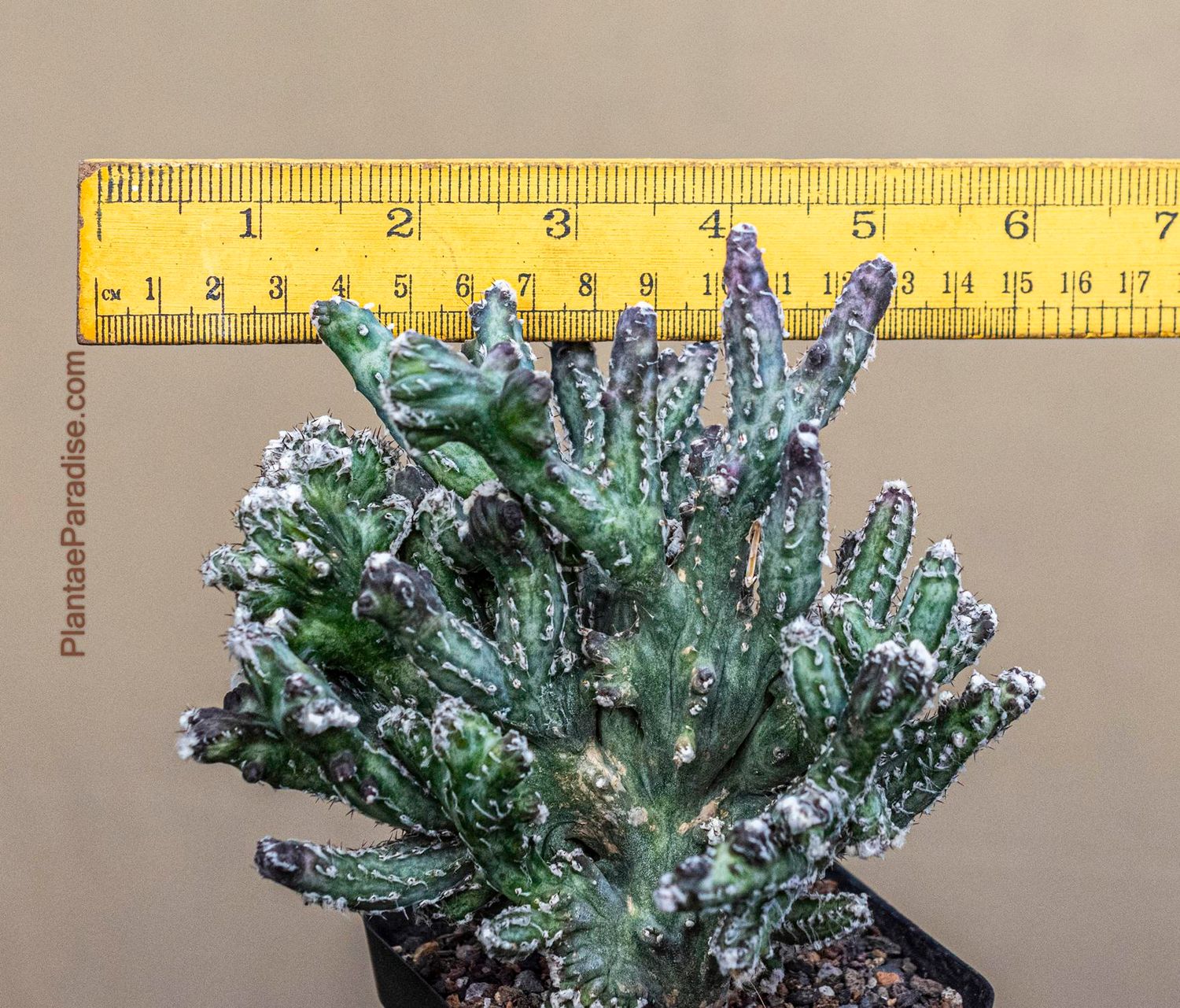
Monvillea spegazzinii forma cristata is known for its unusual and visually striking crested form. Unlike the typical columnar growth of the standard Monvillea spegazzinii, this crested form develops wavy, ribbon-like stems that fan out horizontally. These stems are green and can exhibit shades of blue or purple under stress or with age. The crested form causes the stems to grow in undulating, sculptural patterns, making each plant unique. This variety rarely flowers, but when it does, the flowers are typically white or pale pink.
Origin of Plant
Monvillea spegazzinii is native to South America, particularly found in regions of Brazil, Paraguay, and Argentina. It typically grows in dry, rocky areas. The crested form 'cristata' is a result of mutation and has been propagated for its unique ornamental appearance.
Conservation Status
As a specific cultivated form, Monvillea spegazzinii forma cristata does not have a separate conservation status. However, the propagation of these unique forms in cultivation plays an important role in reducing the collection pressure on wild cactus populations.
Care Instructions
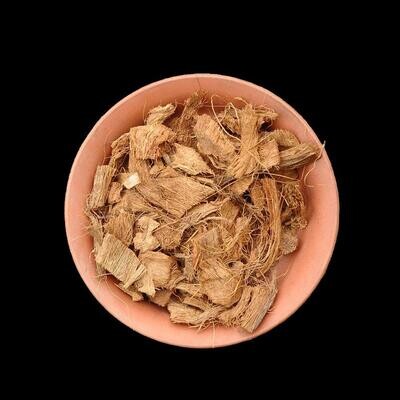
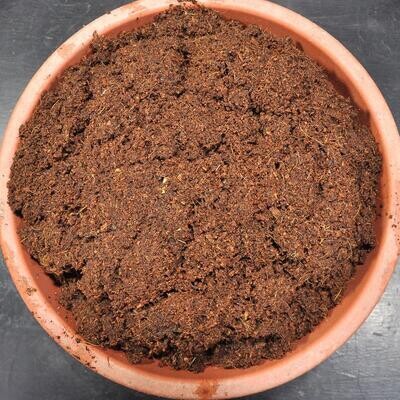
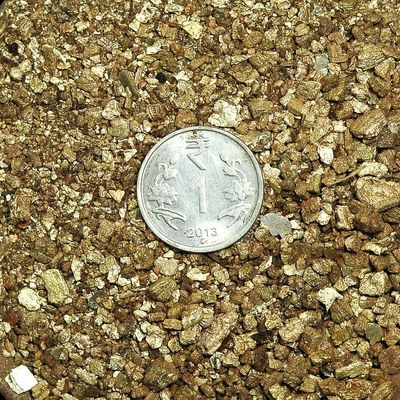
Monvillea spegazzinii forma cristata requires some basic care to thrive. It prefers bright, indirect light or partial sun. Direct, harsh sunlight can cause sunburn, so acclimation is necessary if moved outdoors. A well-draining cactus mix is essential to prevent root rot. Water moderately during the growing season and reduce watering in winter, allowing the soil to dry completely between waterings. This cactus is not frost-tolerant and should be protected from freezing temperatures. Fertilization with a cactus-specific fertilizer can be done sparingly during the growing season.