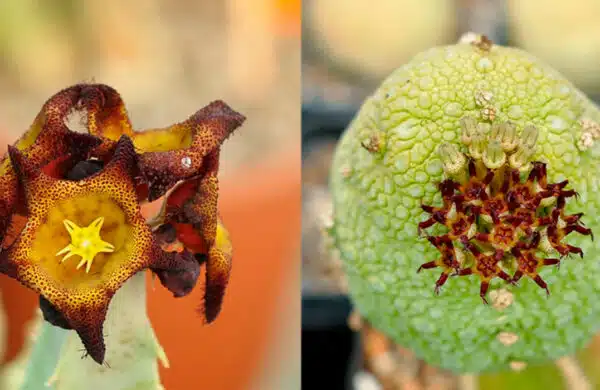
In the vast world of succulents, few plants capture curiosity quite like the Stapelia – a genus of fleshy, star-shaped succulents from the subfamily Asclepiadoideae of the Apocynaceae family (Asclepiadaceae is now obsolete). This group also includes Huernia, Orbea, and Caralluma.
What makes Stapelia remarkable isn’t just its bold geometry or low-maintenance nature – it’s the plant’s incredible pollination trick. Its flowers mimic the look and even the scent of decaying matter, luring in specific pollinators instead of butterflies or bees. The result? One of nature’s most ingenious and unusual survival stories.
1. Why Collectors Love Stapelia
Among succulent enthusiasts, Stapelia holds a cult status. Species like Stapelia gigantea and Stapelia variegata are prized for their alien-like blooms – massive, star-shaped flowers with velvety hairs, intricate vein patterns, and colors ranging from creamy yellows to deep reds.
While most succulents rely on bright colors and fragrance to attract pollinators, Stapelia uses visual and sensory mimicry to draw flies that inadvertently help pollinate it. Some species even maintain a slightly higher core temperature, completing the illusion that lures their unique pollinators.
It’s this blend of biology, deception, and resilience that makes Stapelia such a rewarding plant for collectors – a living conversation piece that never fails to intrigue.
2. Stapelia Care: Growing Conditions for Healthy Plants
Light
Stapelia thrives in bright, indirect sunlight. A few hours of morning or late-afternoon light keeps it healthy and compact. Avoid placing it in the harsh afternoon sun, which can scorch the stems.
If grown indoors, a sunny windowsill with filtered light or a spot near a south-facing window works best.
Watering
Overwatering is the most common mistake in Stapelia care.
Water thoroughly only when the soil is completely dry – typically every 10 – 14 days during the growing season (spring to autumn). Reduce watering in winter when the plant enters dormancy.
Pro tip: Never water in the heat of the day or when the soil feels warm to the touch; sudden moisture in hot soil can cause root rot.
Soil
- Like other succulents, Stapelia demands excellent drainage.
- Use a gritty, fast-draining mix – cactus soil blended with coarse sand, perlite, or pumice. Avoid rich, organic soils that retain moisture, as they promote fungal growth and rot.
- For best results, aim for a potting mix that feels dry and airy rather than moist or compact.
Temperature & Humidity
Native to arid regions of Africa, Stapelia prefers warm, dry conditions and can tolerate temperatures up to 35°C. Keep it above 10°C in cooler months.
Avoid excess humidity – Stapelia appreciates good air circulation, especially in tropical climates or indoor setups.
Pests & Problems
Watch out for:
- Root mealybugs: Inspect roots if the plant shows unexplained shriveling.
- Stem rot: Usually caused by overwatering or poor drainage.
- No blooms: Often due to low light or too much fertilizer.
When in doubt, unpot the plant, check the roots, and trim away any soft, dark areas before replanting in fresh soil.


3. Propagating Stapelia
Propagation is one of the joys of Stapelia care – simple, quick, and highly rewarding.
From Cuttings
- Cut a healthy stem and let the cut end dry for 3 – 5 days in a shaded spot.
- Once calloused, plant the cutting in dry, well-draining soil.
- Avoid watering until roots begin to form – usually after one to two weeks.
- Drying the cutting before planting prevents infection and encourages rooting from multiple points, improving plant survival.
From Seeds
- Growing from seed is possible but requires patience.
- Sow seeds in a warm, humid environment with filtered light. Keep the soil barely moist until germination, then gradually reduce watering. Seedlings are delicate and prone to rot, so handle gently and maintain airflow.
4. Common Issues & Quick Fixes
Problem
- Soft or mushy stems
- Shriveling or limp growth
- No flowers
- Rot spreading through pot
Cause
- Overwatering
- Underwatering or root damage
- Low light or excess nitrogen
- Poor hygiene
Solution
- Reduce watering; re-pot in dry soil
- Inspect roots; water after the soil dries
- Increase sunlight; avoid heavy fertilization
- Remove affected stems immediately
Keeping the environment dry and airy is the best defense against most issues.


5. Beyond Stapelia: The Wider World of Asclepiads
Stapelia may not be your typical ornamental succulent – but that’s exactly what makes it unforgettable. From its striking star-shaped blooms to its remarkable survival adaptations, this Asclepiad shows how creativity thrives even in the harshest environments.
With the right mix of sunlight, airflow, and restraint in watering, your Stapelia can thrive and bloom year after year – a living masterpiece of adaptation and beauty.
Once you’ve mastered Stapelia, explore its close relatives in the Asclepiadaceae family.
Huernia produces small, intricately patterned flowers with textured surfaces, while Orbea features beautifully speckled blooms in soft shades.
All share a preference for dry air, excellent drainage, and bright light – making them ideal companions for your Stapelia collection.