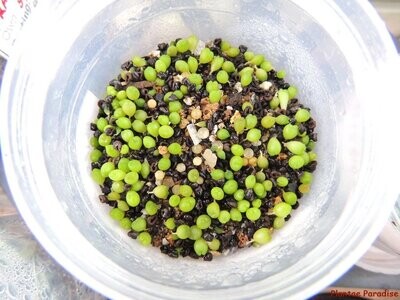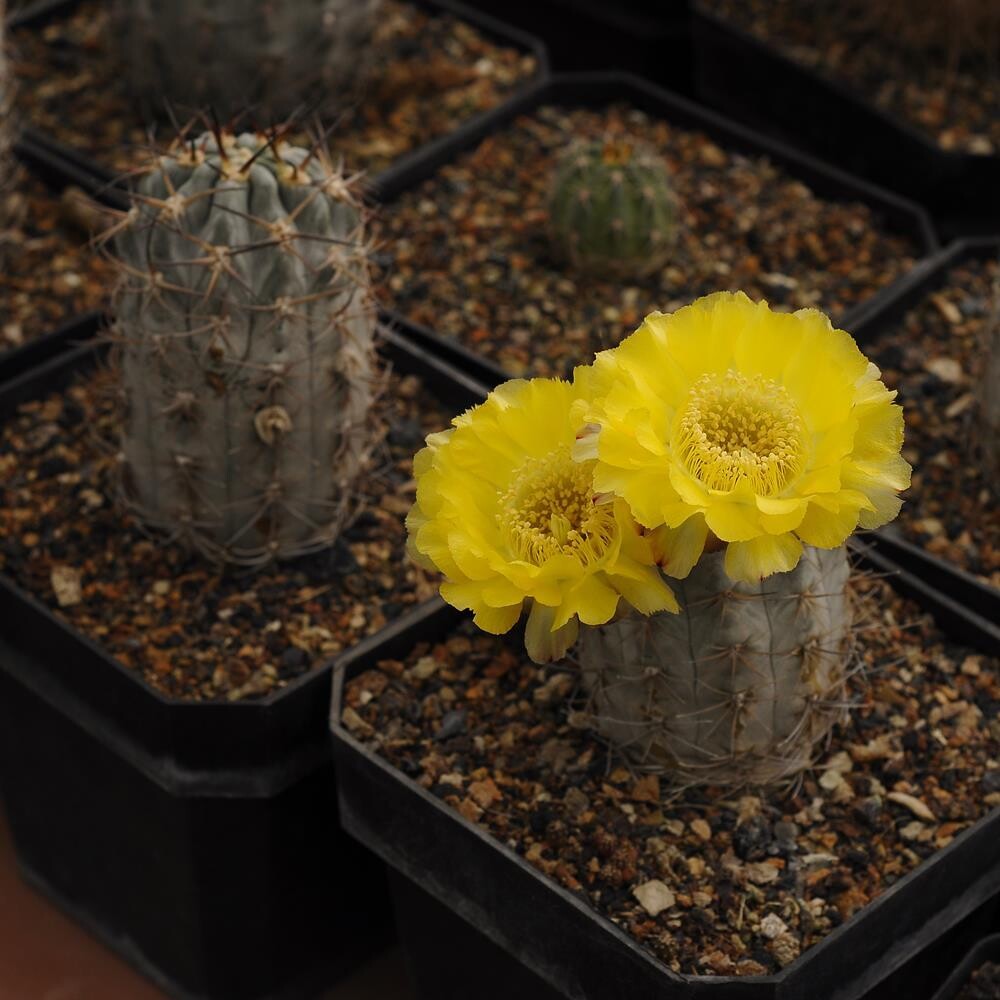
Same plant as shown will be sent. Will get chalk grey blue color as it grows.
Acanthocalycium glaucum (P394) - The Frosted Blue Beauty of Catamarca
Elevate your collection with the stunning Acanthocalycium glaucum, specifically the highly sought-after P394 field collection. Known for its mesmerizing "glaucous" blue-gray skin and its architectural spination, this cactus is a true representative of the rugged Argentine landscape. Whether you are a field-number collector or simply a lover of unique colors, this plant is a standout choice.
1. Origin of Name
The genus name "Acanthocalycium" is derived from the Greek words akantha (thorn) and kalyx (cup/calyx), referring to the characteristic prickly or spiny scales found on the floral tube (the "flower cup"). The specific epithet "glaucum" comes from the Latin glaucus, meaning "bluish-gray" or "silvery," a direct reference to the distinctive waxy, powdery coating on the plant's skin.
This specific offering carries the field number P394, which denotes the collection record of the famous cactus explorer Jörg Piltz. Piltz was instrumental in documenting the cacti of South America, and his field numbers are a mark of geographic authenticity for collectors who value knowing exactly where their plants originate.
2. Origin of Plant
This particular strain, P394, originates from the wild, arid regions South of Hualfin, in the province of Catamarca, Argentina. In its native habitat, it grows in gravelly, mineral-rich soils on dry slopes and plateaus. The province of Catamarca is legendary among succulent enthusiasts for its high-altitude, sun-drenched landscapes that produce some of the most resilient and colorful cacti in the world.
3. Description
Acanthocalycium glaucum is a solitary, globular cactus that can become slightly cylindrical as it reaches old age, typically growing to about 4–6 inches in height. Its most striking feature is its matte, blue-green to steel-gray epidermis, which is covered in a waxy "bloom" that protects it from the intense Andean sun.
The plant features 8 to 14 deep, well-defined ribs. The areoles are spaced along the ribs and produce straight, dark brown to blackish spines that fade to gray with age, providing a sharp contrast against the blue skin. In the summer, it produces large, satiny, golden-yellow flowers (reaching up to 2.5 inches in diameter). The contrast of bright yellow blooms against the frosted blue body is absolutely breathtaking.
4. Conservation Status
While Acanthocalycium glaucum is generally considered common in its restricted range, localized populations can be vulnerable to habitat disturbance. Collectors prefer plants with documented field numbers like P394 because they represent a specific genetic lineage from a known locality, emphasizing the importance of preserving these distinct wild forms through responsible nursery cultivation.
5. Care
This is a robust species that is relatively easy to grow if its basic needs are met:
- Light: Thrives in full sun or very bright, indirect light. Strong light is essential to maintain the intense blue coloration and to produce the protective waxy coating.
- Watering: Follow a standard "soak and dry" routine. Water thoroughly during the spring and summer growing season, allowing the soil to dry out completely between waterings.
- Soil: Requires a highly porous, mineral-heavy substrate. Use a mix with plenty of pumice, lava rock, or coarse grit to ensure rapid drainage.
- Temperature: It is quite hardy and can tolerate light frosts if kept completely dry. During the winter, keep the plant in a cool, bright spot and stop watering entirely to ensure a healthy dormancy.
- Tips: Avoid touching the blue skin, as the oils from your fingers can smudge the delicate glaucous "wax" coating.
6. Interesting Anecdote
The "P" in the field number P394 stands for Jörg and Brigitte Piltz, a German couple who spent decades traveling the backroads of Argentina in search of rare cacti. Their meticulously kept records allowed collectors to understand how the same species could look different depending on which side of a mountain it grew on. For a cactus lover, owning a "Piltz" plant is like owning a piece of a legendary botanical road trip through the heart of South America.
Don’t miss out on this authentic piece of Catamarca! Add the Acanthocalycium glaucum P394 to your collection today and enjoy its rare blue hues and golden blooms.