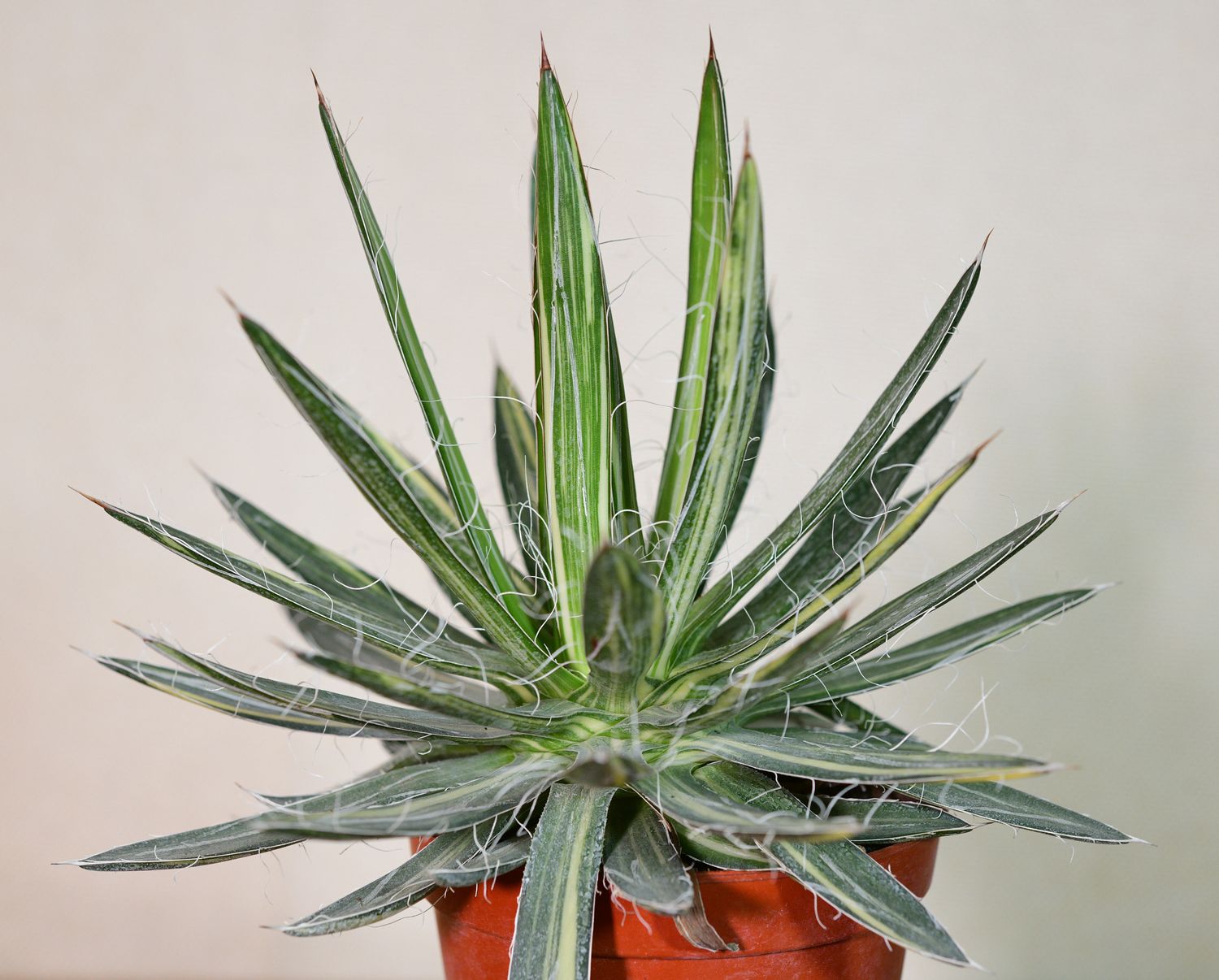
A dense, spiky rosette of slender, blue-green leaves edged in cream and trailing curly white filaments from every margin — a Japanese-named cultivar prized as the finest, most heavily variegated form of the thread-leaf agave.
Origin of Name
The genus name Agave comes from Greek agauē — the feminine form of agauos, "noble" or "illustrious" — and carries a darker backstory than most houseplant names: in Greek mythology, Agave was a Theban queen, daughter of Cadmus and mother of Pentheus, who in Euripides' tragedy The Bacchae tears her own son apart in a Bacchic frenzy, mistaking him for a lion. Carl Linnaeus formally established the plant genus Agave in 1753, most likely drawn to the word's sense of "stately" or "illustrious" for the dramatic, towering flower spikes these plants send up once in a lifetime, rather than any deliberate nod to the myth itself.
The species epithet filifera is Latin for "thread-bearing" — filum ("thread") plus -fera ("bearing") — describing the curling white fibers that peel away from the leaf margins, first used by the German-born botanist Prince Joseph zu Salm-Reifferscheidt-Dyck, better known simply as Salm-Dyck, a major 19th-century authority on cacti and succulents. The subspecies name schidigera follows the same logic from Greek schida ("splinter" or "sliver") plus -gera ("bearing"), coined by French botanist Charles Lemaire, who originally described it as its own species in 1859; German botanist B. Ullrich reclassified it as a subspecies of A. filifera in 1992 after closer study of the wider filifera group.
The cultivar name, 'Shira Ito No Ohi,' is Japanese: shira-ito means "white thread," and ohi (properly ōhi) means "queen" — together, "Queen of White Thread," a direct and fitting tribute to this form's especially dense, bright white marginal filaments and crisp cream leaf edging. Like many of the most prized variegated agave cultivars in circulation, its precise origin and breeder are undocumented; it most likely originated among Japanese succulent collectors, who have long specialized in selecting and naming the finest variegated forms of popular agave species, though even specialist nurseries who sell it openly say they don't know for certain where the clone first came from.
Origin of Plant
Agave filifera subsp. schidigera is native to Mexico, found growing wild across the states of Chihuahua, Durango, Sinaloa, and Sonora, typically on steep, rocky cliff faces and in open, sun-exposed sites within oak woodlands at elevations between roughly 900 and 2,500 meters. In the wild, the species has long been useful as well as ornamental: its tough leaf fibers have traditionally been used for rope, and, like several related agave species, it has been used in the production of spirits similar to tequila and mezcal. 'Shira Ito No Ohi' itself is a cultivated selection rather than a wild-collected form, prized specifically for variegation not typically seen in wild populations.
Description
This is a slow-growing, solitary rosette — it does not readily produce offsets, which is one reason well-grown specimens have historically commanded high prices among collectors. Mature plants reach roughly 30–55 cm (12–22 in) tall and somewhat wider, with narrow, rigid, dark green leaves edged in a crisp creamy-white band, each leaf tapering to a sharp reddish-brown terminal spine. The defining feature is the mass of fine, curly white fibers that peel away from the leaf margins in all directions, giving the whole rosette a soft, cobwebbed texture that contrasts strikingly with its otherwise architectural, spine-tipped form. Like all agaves, it's monocarpic: after years or decades of growth, a mature rosette sends up a single tall flowering stalk, flowers once, and then dies — though offsets, when a plant does produce them, can carry the clone on afterward.
Conservation Status
Agave filifera as a species is assessed as Least Concern, with a broad, stable wild population across central Mexico, and has received the Royal Horticultural Society's Award of Garden Merit. 'Shira Ito No Ohi' itself, as a cultivated variegated selection, has no conservation status of its own — it exists only in cultivation, propagated by division of the rare offset or, more often, by tissue culture, given how reluctant this particular clone is to produce offsets naturally.
Care
Light: Full sun to light shade outdoors; indoors, place in the brightest possible window to maintain compact, well-colored growth.
Watering: Water thoroughly and allow the soil to dry out completely between waterings during spring through autumn; reduce to sparing, roughly monthly watering in winter. Container-grown plants need more frequent watering than those in the ground.
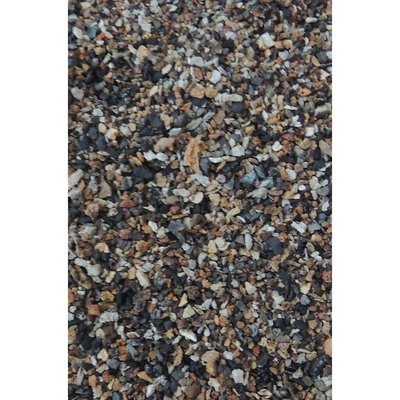
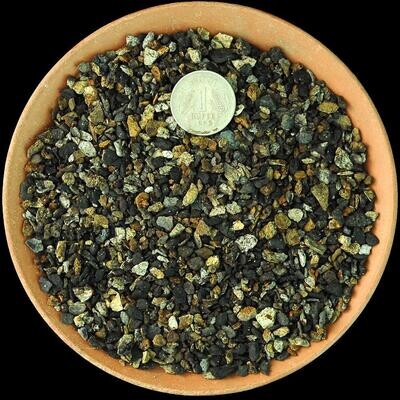
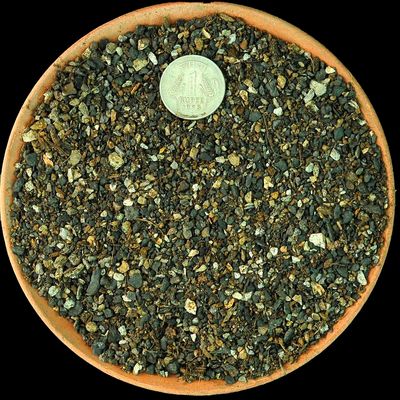
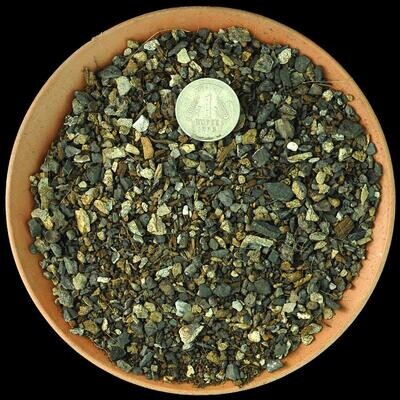
Soil: A gritty, fast-draining succulent or cactus mix — ordinary potting soil amended generously with pumice, perlite, or coarse sand.
Temperature: Hardy to light frost once established (roughly USDA zones 9a–10b), but best protected from hard freezes; container culture makes it easy to move indoors over winter in colder climates.
General tips: Feed lightly, if at all, during the first couple of growing seasons — established plants need very little supplemental fertilizer. Repot only when clearly pot-bound, using fresh, fast-draining soil, and hold off watering for about a week afterward to let any root damage callus over. Handle with care: the leaf tips are genuinely sharp.
An Interesting Note
Variegated agave cultivars like this one occupy a strange corner of the succulent world: the pale, thread-heavy margins that make 'Shira Ito No Ohi' so desirable are, technically, patches of tissue with reduced chlorophyll — a mutation that would be a disadvantage in the wild, where every leaf needs to photosynthesize efficiently to survive years of drought before that one final bloom. In cultivation, though, that same "flaw" is exactly what collectors pay a premium for, turning a trait natural selection would ordinarily weed out into one of the most sought-after features in the entire genus.