The Japanese Lucky Crown: Agave potatorum 'Kissho Kan' Lime Variegated
Color varies with light.
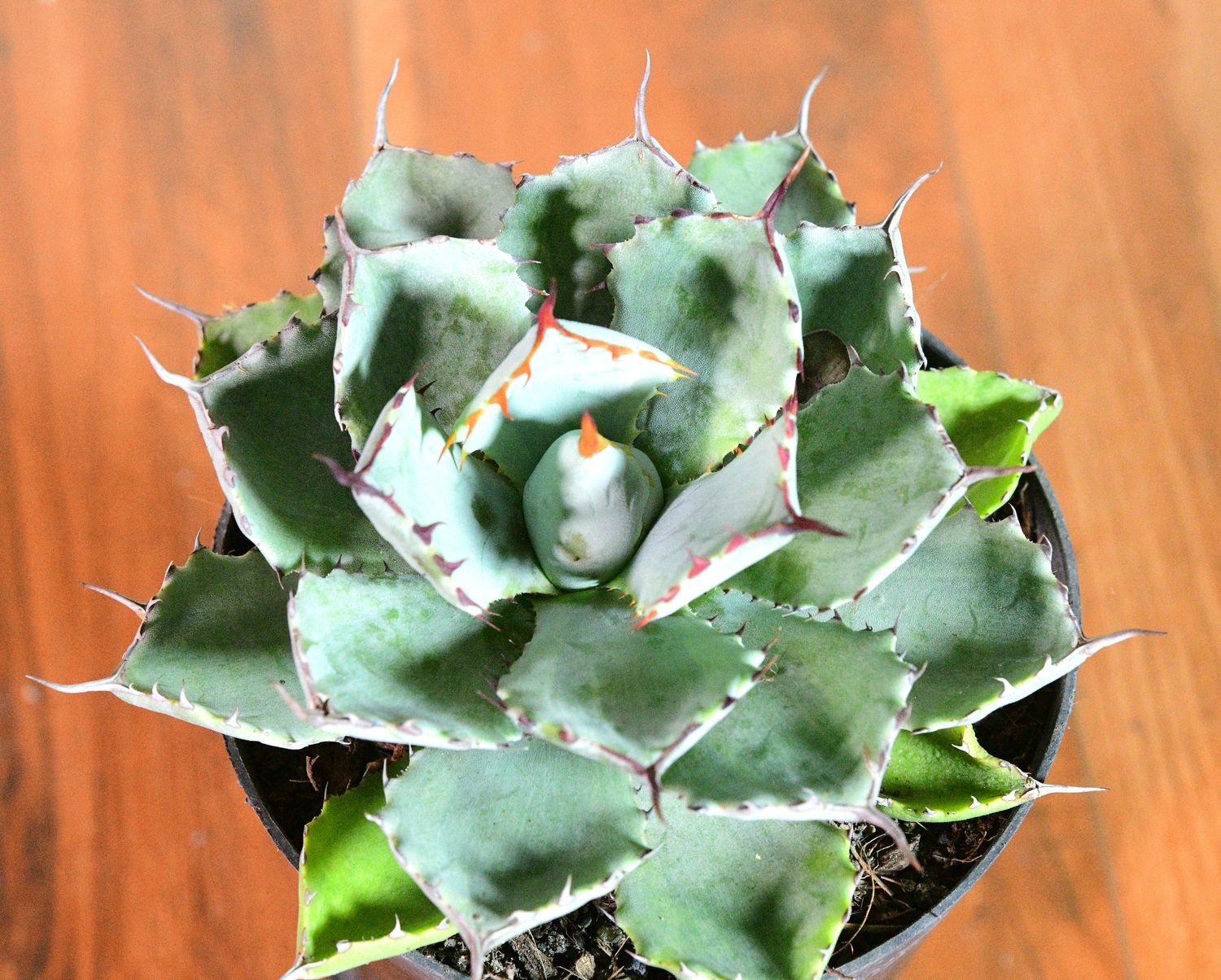
An architectural masterpiece of Japanese horticulture, this compact cultivar offers striking lime-green marginal variegation contrasted against blue-grey skin, making it a highly collectible specimen for structural displays.
1. Origin & History of Name The name 'Kissho Kan' (吉祥冠) is of Japanese origin, translating roughly to "Lucky Crown" or "Crown of Auspiciousness."
2. Morphology This dwarf cultivar forms a perfectly symmetrical, solitary rosette. The leaves are obovate and glaucous (covered in a waxy bloom), displaying a powdery blue-grey center that transitions sharply into vibrant lime-green margins. The epidermis is thick and rigid, terminating in distinct, reddish-brown marginal teeth and a twisted terminal spine. Over time, the variegation may deepen in intensity depending on light exposure, highlighting the geometric precision of the phyllotaxy (leaf arrangement).
3. Habitat & Origin This plant is a nursery-produced cultivar (horticultural selection) developed in Japan; it does not exist in the wild. As it is propagated via offsets or tissue culture rather than wild collection, it is an environmentally sustainable choice that does not deplete natural populations of the parent species, Agave potatorum, which is native to the semi-arid highlands of Puebla and Oaxaca, Mexico.
4. Cultivation Profile
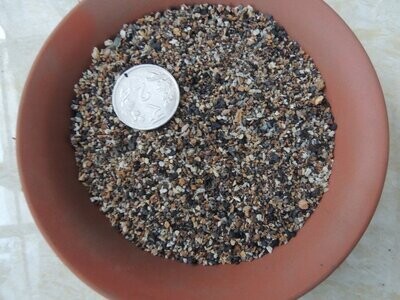
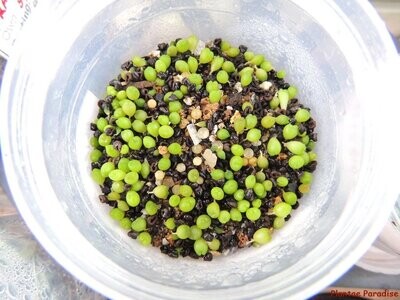
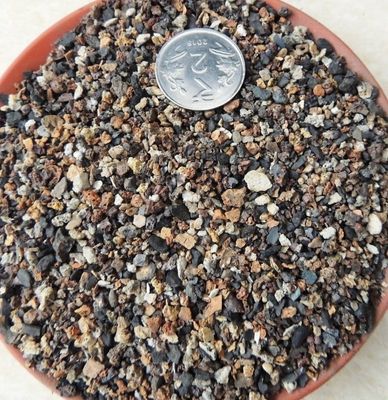
- Substrate: Requires a highly porous, mineral-heavy mix to prevent root rot. Use a blend of 70% inorganic material (pumice, perlite, or grit) and 30% organic compost or cocopeat. In Indian conditions, ensure the pot has excellent drainage to handle high humidity.
- Light: Thrives in bright, indirect light. In the Indian plains, provide filtered morning sun but strictly avoid direct exposure to the harsh midday sun (12 PM – 4 PM), which can scorch the variegated margins.
- Water/Dormancy: Water thoroughly when the substrate is completely dry (roughly every 7-10 days in summer). Significantly reduce watering during the Indian monsoon to prevent fungal issues and during winter dormancy (December–January). Always water the soil, avoiding the rosette center.
5. Scientific/Historical Anecdote While Agaves are famously monocarpic (blooming once before dying), dwarf cultivars like 'Kissho Kan' are prized because they often take decades to flower. This allows the plant to maintain its "Lucky Crown" shape for many years. Historically, the selection of such variegation (chimeral mutations) became a specialized art form in Japanese horticulture during the 20th century, elevating the humble Mexican Agave potatorum into a symbol of refined aesthetic status in Asian bonsai and succulent collections.