

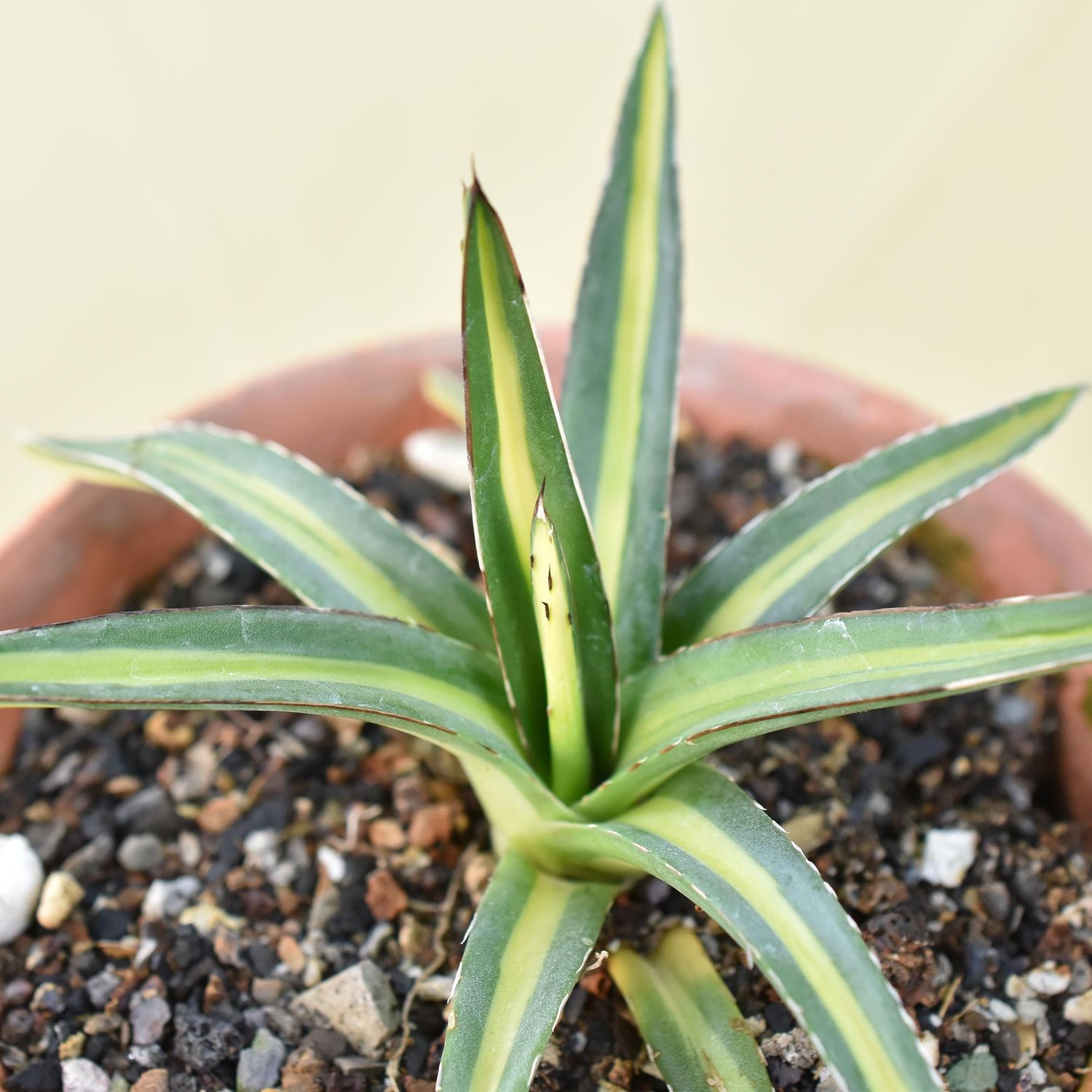
Agave victoriae-reginae mediopicta variegated
Product Details
Royal Geometry: Agave victoriae-reginae 'Mediopicta Alba'
This ultra-rare cultivar represents the pinnacle of succulent aesthetics, featuring a central cream-white variegation that highlights its precise, architectural symmetry.
- Origin & History of Name: The genus name Agave comes from the Greek agauos (illustrious or noble).
- Morphology: This plant is a slow-growing, globose rosette.
- Habitat & Origin: While the base species is endemic to the Chihuahuan Desert in Coahuila, Mexico, the 'Mediopicta' form is a specialized cultivar. It is primarily produced through tissue culture or offsets to ensure the stability of the variegation. These specimens are commercially produced, ensuring that slow-growing wild populations remain undisturbed and protected from poaching.
- Cultivation Profile:
- Substrate: Use a high-drainage mineral-based mix (volcanic rock, coarse sand, and grit). Avoid heavy clay or peat, which can lead to basal rot in the high humidity of the Indian subcontinent.
- Light: Requires bright, indirect light or morning sun. In the Indian summer, the white variegated centers are sensitive; provide 50% shade cloth protection during peak afternoon hours to prevent sunburn.
- Water/Dormancy: Extremely drought-tolerant.
- Scientific/Historical Anecdote: Agave victoriae-reginae is a "monocarpic" species, meaning it blooms only once at the end of its life (often after 20-30 years), producing a massive flower spike up to 4 meters tall.

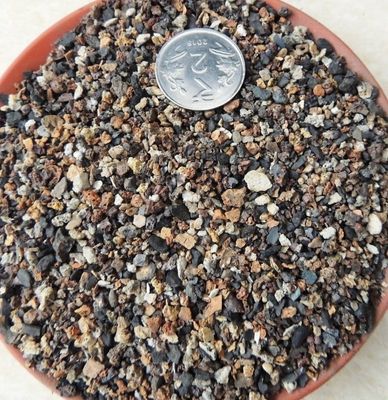
Cactus & Succulent Planting Mix FINE (aka Cactus Soil Mix or Succulent Soil Mix)
Cactus & Succulent Planting Mix FINE (aka Cactus Soil Mix or Succulent Soil Mix)
Fine-Grain Potting Mix for Cactus & Succulent Roots
SKU MNS001
₹35.51

Cactus & Succulent Planting Mix COARSE (aka Cactus Soil Mix or Succulent Soil Mix)
Cactus & Succulent Planting Mix COARSE (aka Cactus Soil Mix or Succulent Soil Mix)
Washed, Free-Draining Mineral Mix for Cactus & Succulents
SKU MNS003
₹40.51

Cactus Seed Planting Mix
Cactus Seed Planting Mix
Sterile, Fine-Grain Media for Cactus & Succulent Seeds
SKU MNS005
₹70.51