

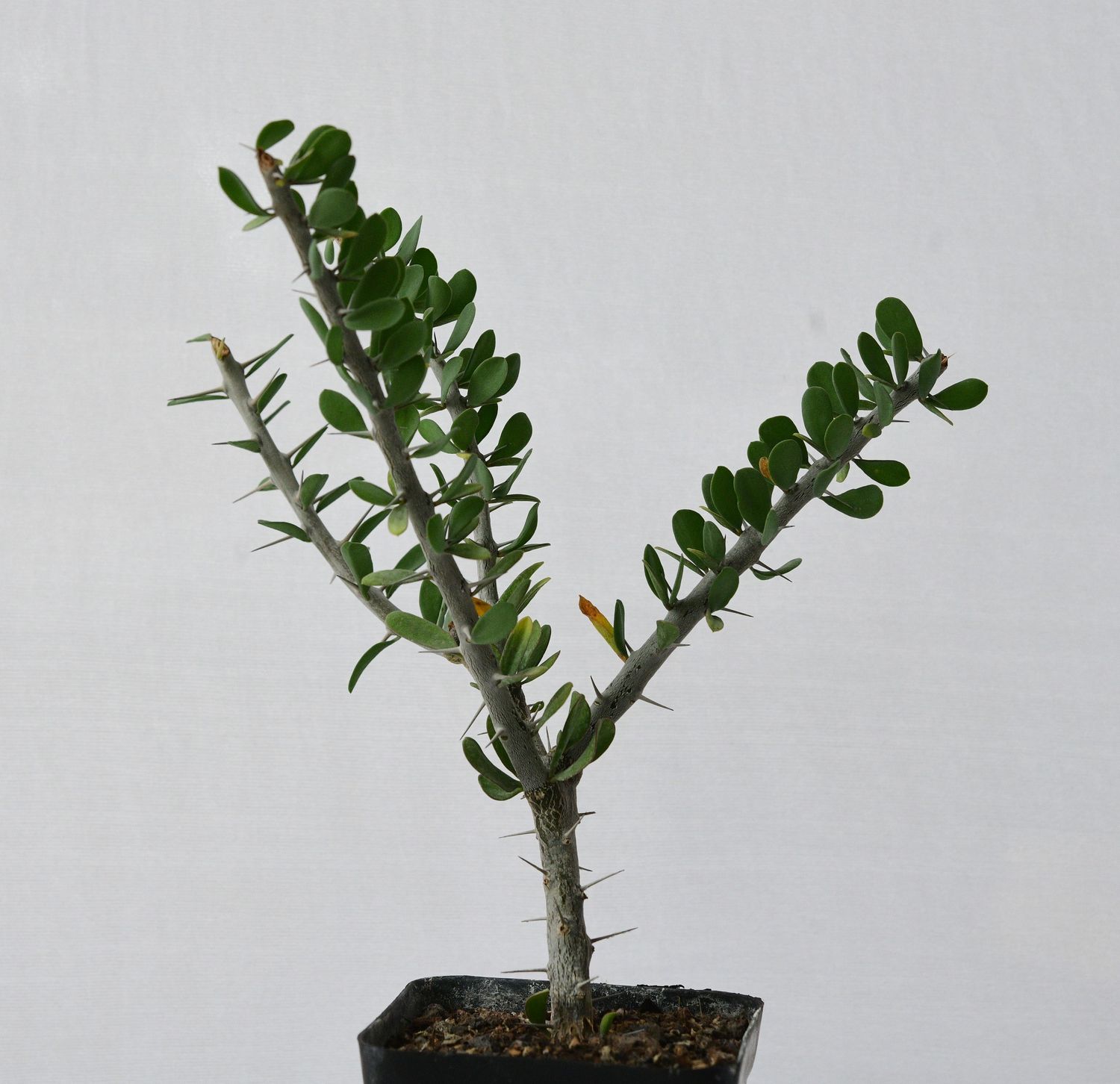
Madagascar's Architectural Marvel: Alluaudia humbertii
An exceptional xerophytic specimen offering a striking, skeletal silhouette perfect for collectors seeking structural elegance and resilience.
1. Origin & History of Name
The genus Alluaudia was established in 1903 by botanist Emmanuel Drake del Castillo, honoring Charles A. Alluaud, a French entomologist and explorer who collected extensively in Madagascar.
2. Morphology
This species is characterized by its intricate, interlocking branch structure, forming a dense shrub or small tree. The stems possess a photosynthetic cortex (bark capable of photosynthesis), allowing the plant to generate energy even during leafless dormancy. The small, obovate leaves appear in pairs alongside rigid, gray spines on specialized short shoots known as brachyblasts.
3. Habitat & Origin
Alluaudia humbertii is a wild species endemic to the arid spiny thickets of southwestern Madagascar, specifically around the Toliara region and the Mahafaly Plateau.
4. Cultivation Profile
- Substrate: Utilize a highly porous, mineral-based mix (70% pumice, perlite, or gravel; 30% sterile garden soil/cocopeat). Excellent drainage is critical to prevent root rot during the Indian monsoon season.
- Light: Requires full, direct sunlight for dense growth. It thrives in the intense solar exposure typical of the Indian plains and Deccan Plateau.
- Water & Dormancy:
- Growing Season (Summer/Monsoon): Water thoroughly only when the substrate is completely dry. In high-humidity coastal Indian cities (e.g., Mumbai, Chennai), reduce frequency.
- Dormancy (Winter): The plant is deciduous and may drop leaves.
Keep the substrate nearly bone-dry from November to February to mimic its natural dry season rest period.
5. Scientific Anecdote
The family Didiereaceae, to which Alluaudia belongs, represents a classic case of convergent evolution. Although native only to Madagascar, these plants evolved physical traits—such as water-storing stems and spines—that are strikingly similar to the Cactaceae family of the Americas. This adaptation allows them to thrive in identical arid niches on opposite sides of the globe despite being genetically distinct lineages.