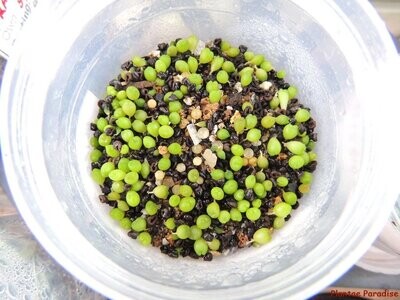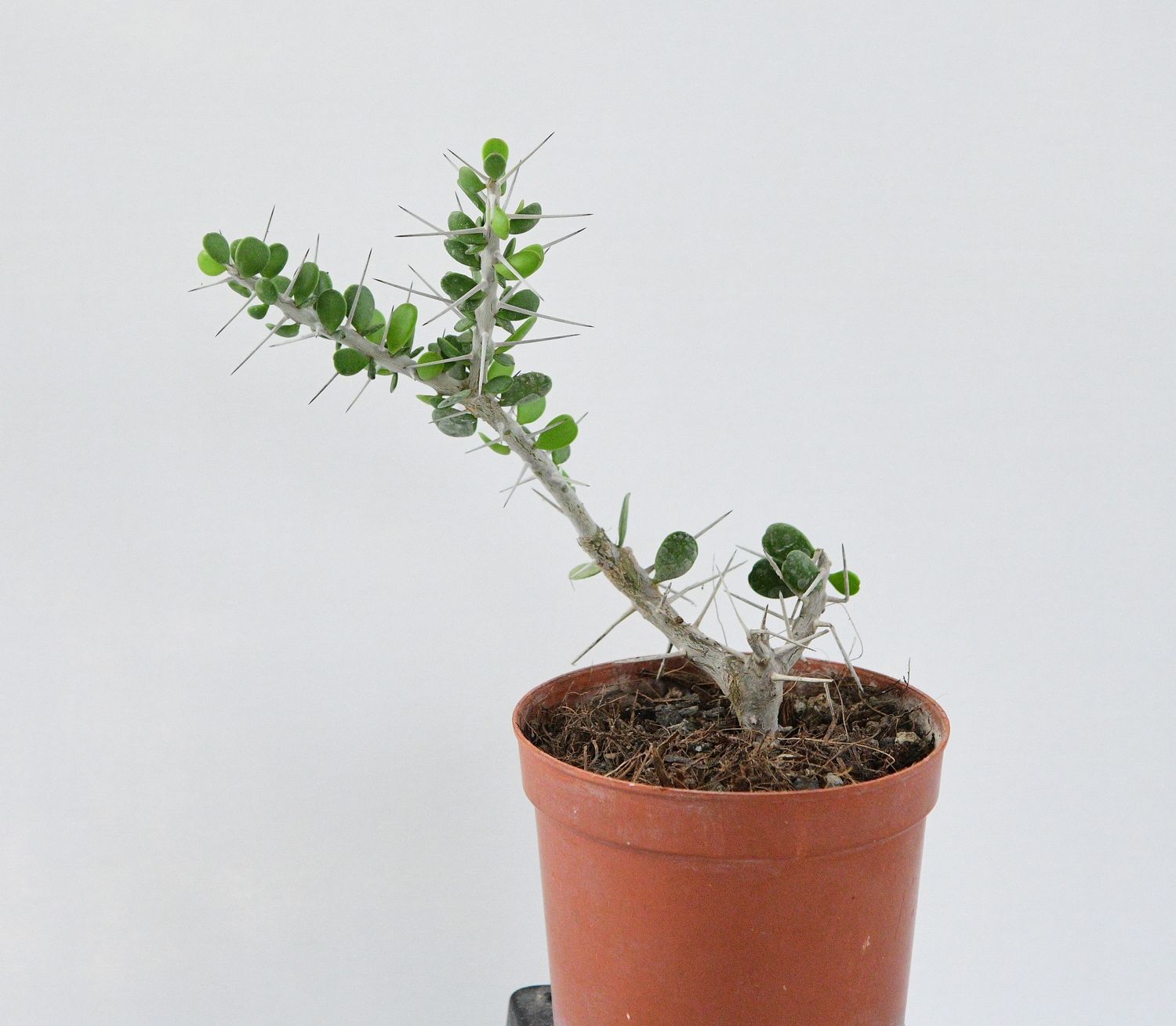
The Living Sculpture of Madagascar: Alluaudia comosa
A rare, architectural specimen boasting a distinctive flattened crown of dense, spiny branches that serves as a centerpiece for any serious xeric collection.
1. Origin & History of Name The genus Alluaudia was established in 1903 by botanist Emmanuel Drake del Castillo, named in honor of François Alluaud, a French entomologist and explorer who collected extensively in Madagascar. The specific epithet comosa is derived from the Latin comosus, meaning "tufted" or "leafy," referring to the species' characteristic habit of forming a dense, tufted crown of branches at the apex of the trunk, distinguishing it from its taller relative, A. procera.
2. Morphology Alluaudia comosa is a woody, dioecious succulent shrub characterized by a thick, upright central trunk that branches into a dense, flat-topped crown (corymbose habit). The stems are armed with grey, conical spines arranged in pairs or singular patterns along the epidermis.
3. Habitat & Origin This is a wild species endemic to the semi-arid, calcareous plateaus of southwestern Madagascar, specifically the Toliara province.
4. Cultivation Profile (Indian Context)
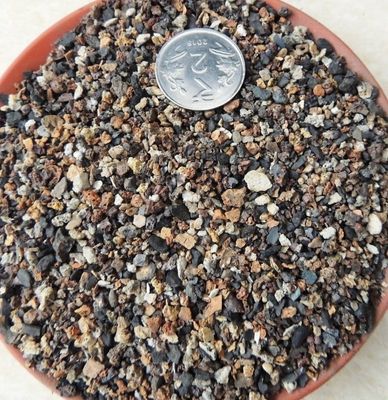
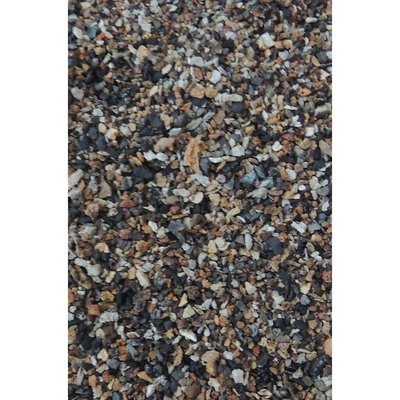
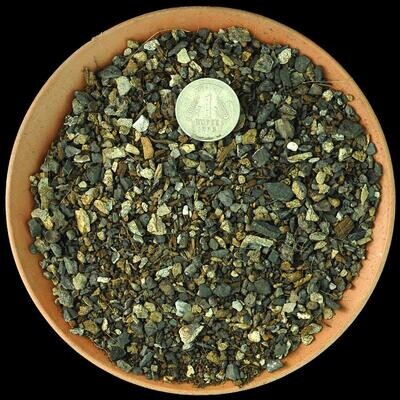
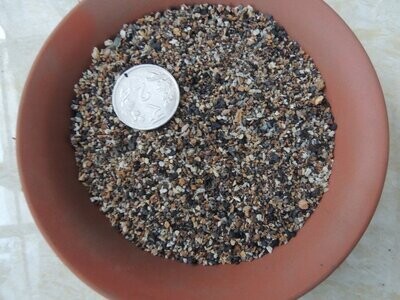
- Substrate: Requires a highly porous, rapid-draining mineral mix. Use 70% inorganic material (pumice, perlite, or gravel) mixed with 30% sterile garden soil or cocopeat to prevent root rot during Indian humidity.
- Light: Demands full, direct sunlight (6–8 hours daily). In the Indian plains, it thrives in outdoor heat; shade will cause etiolation and weak spine formation.
- Water/Dormancy: Water thoroughly only when the substrate is completely dry during summer. Drastically reduce watering in winter. Crucial: Protect from continuous heavy rains during the Indian monsoon; excessive moisture combined with humidity leads to rapid fungal decay.
5. Scientific/Historical Anecdote The family Didiereaceae, to which Alluaudia belongs, represents a remarkable case of convergent evolution. While they look strikingly similar to the Fouquieriaceae (Ocotillo) of North America and certain cacti, they are genetically distinct and evolved these water-storing, spiny traits completely independently to survive the harsh environment of Madagascar's Spiny Forest.