

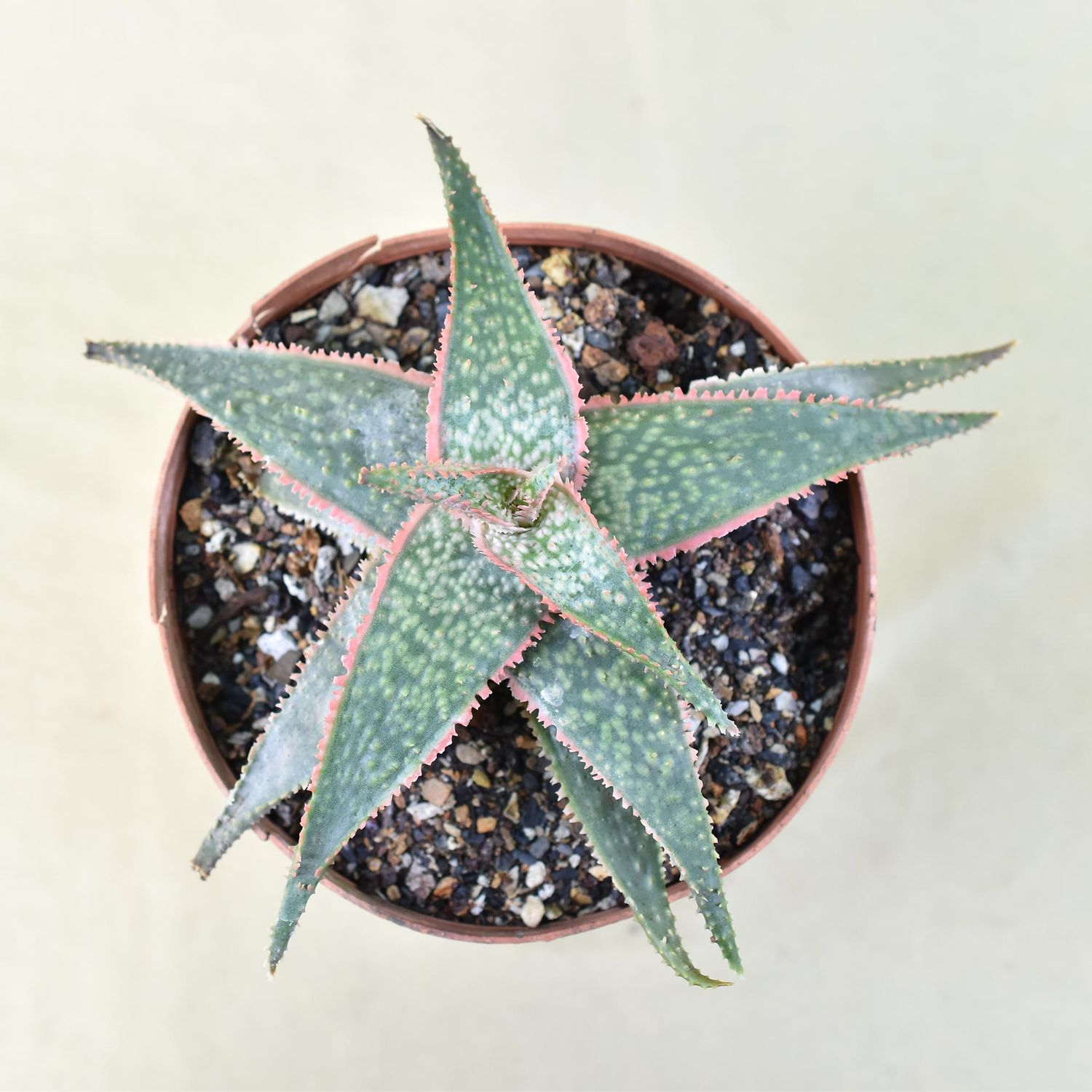
Aloe 'Green Sand'
Product Details
Desert Elegance: Aloe 'Green Sand'
An architectural masterpiece of textured glaucous tones, prized by collectors for its rare granular epidermis.
- Origin & History of Name: The name 'Green Sand' is a descriptive compound derived from the Middle English grene and the Old English sand. It was chosen by breeders to highlight the plant's unique "sand-paper" texture and its specific verdant hue, which differs from the typical blue-grey of most xeric Aloes. This cultivar was formally named to distinguish its distinct tactile mutation from its parent species within the Asphodelaceae family.
- Morphology: This succulent is characterized by a compact, solitary rosette of lanceolate leaves. Its most striking feature is the papillose epidermis—a surface covered in minute, raised tubercles that create a gritty, sand-like texture. Unlike many hybrids, it maintains a deep emerald pigmentation with subtle denticulate (toothed) margins that provide a sharp, geometric silhouette.
- Habitat & Origin: Aloe 'Green Sand' is a dedicated cultivar, bred selectively in nursery environments for the ornamental trade.
It is not found in the wild. This breeding process ensures sustainability, as it prevents the poaching of wild Aloe species from their native African habitats, offering a greenhouse-hardy alternative for global enthusiasts. - Cultivation Profile (Indian Context):
- Substrate: Use a strictly mineral-based mix consisting of 70% volcanic pumice or crushed gravel and 30% organic compost to prevent root rot during high-humidity seasons.
- Light: Requires bright, indirect sunlight. In the Indian subcontinent, protection from the harsh 12:00 PM – 4:00 PM summer sun is essential to prevent leaf scorch.
- Water/Dormancy: Adhere to a "soak and dry" method. Withhold water almost entirely during the monsoon season if humidity is above 80%, as the plant enters a semi-dormant state and is prone to fungal pathogens.
- Scientific/Historical Anecdote: While this cultivar is modern, the genus Aloe has been documented since the Ebers Papyrus of 1550 BCE.
Interestingly, the "sand-like" texture seen in 'Green Sand' is an evolutionary adaptation in the wild (termed verrucose growth) designed to break up airflow across the leaf surface, effectively reducing transpiration and helping the plant survive extreme xeric conditions.
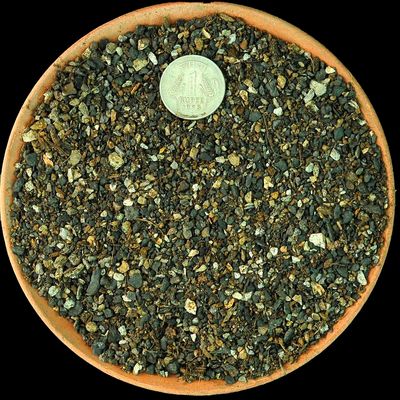

Cactus & Succulent Planting Mix COARSE (aka Cactus Soil Mix or Succulent Soil Mix)
Cactus & Succulent Planting Mix COARSE (aka Cactus Soil Mix or Succulent Soil Mix)
Washed, Free-Draining Mineral Mix for Cactus & Succulents
SKU MNS003
₹44.85



Cactus & Succulent Planting Mix FINE (aka Cactus Soil Mix or Succulent Soil Mix)
Cactus & Succulent Planting Mix FINE (aka Cactus Soil Mix or Succulent Soil Mix)
Fine-Grain Potting Mix for Cactus & Succulent Roots
SKU MNS001
₹39.85