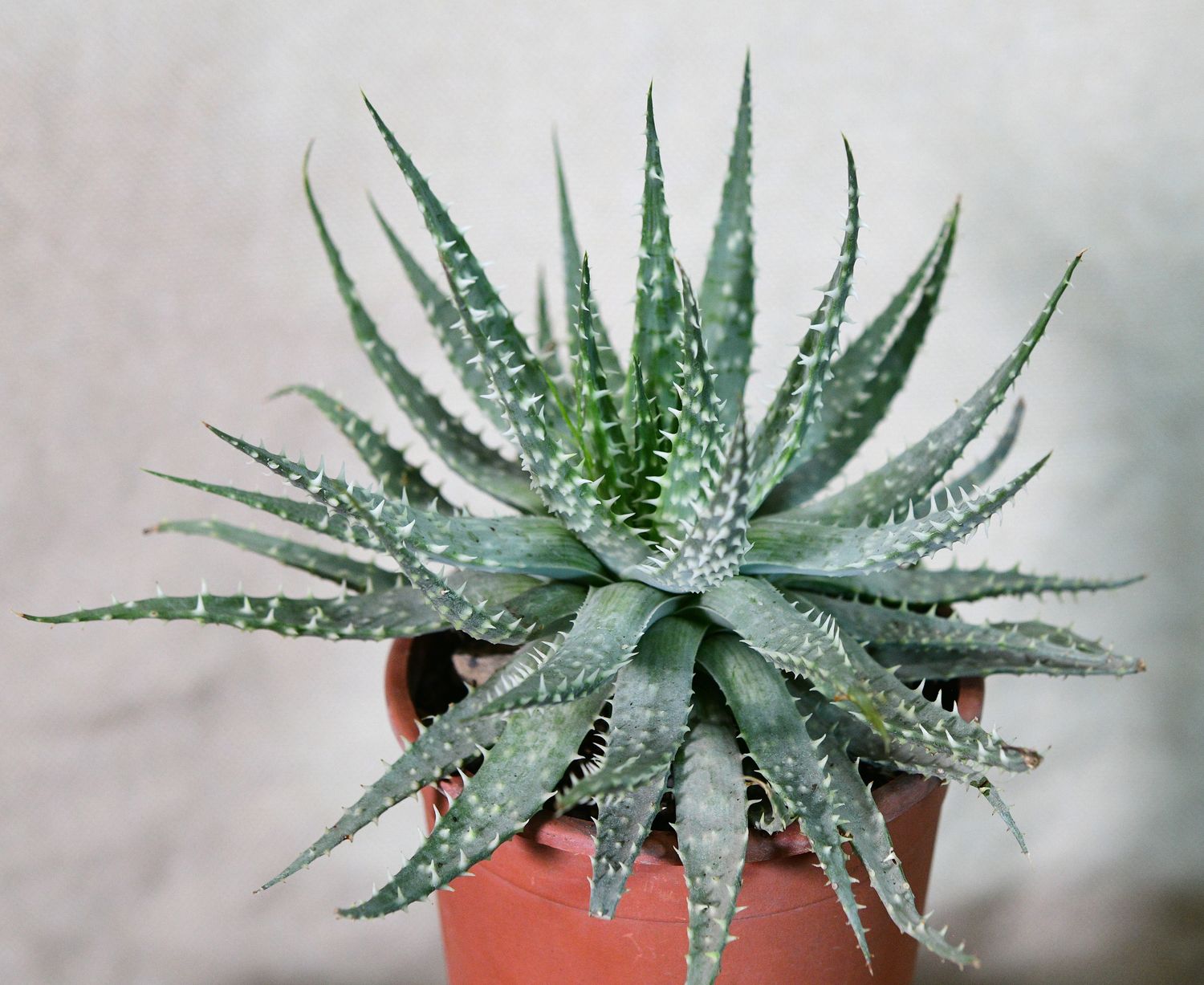
Aloe humilis x pratensis
Product Details
Architectural Elegance: Aloe humilis x pratensis
A rare architectural hybrid blending the fierce spination of the Spider Aloe with the robust, symmetrical form of the Meadow Aloe.
- Origin & History of Name: The name is a botanical portmanteau reflecting its parentage. Humilis is Latin for "low-growing" or "humble," referring to the Spider Aloe’s petite stature.
Pratensis translates to "of the meadows," denoting the open grasslands where the Meadow Aloe originates. This hybrid was developed to capture the best traits of the Series Humiles and Series Purpurascentes within the Aloe genus. - Morphology: This hybrid displays a dense, rosulate growth habit. Its thick, lanceolate leaves feature a glaucescent (waxy blue-grey) epidermis, which serves as a natural UV filter. The most striking feature is the dramatic spination; white, cartilaginous teeth line the leaf margins and frequently appear on the leaf surfaces (tubercles), creating a distinct tactile texture.
- Habitat & Origin: This is a horticultural cultivar, not found in the wild. It is the result of selective breeding aimed at producing a more resilient and aesthetically aggressive specimen than its parent species. Our specimens are propagated via sustainable offset division to ensure genetic purity and reduce pressure on wild Aloe populations in Southern Africa.
- Cultivation Profile:
- Substrate: Use a strictly mineral-based mix. A ratio of 70% inorganic material (pumice, perlite, or crushed brick) to 30% organic matter is ideal to prevent root rot.
- Light: Requires bright, indirect sunlight. In the Indian subcontinent, provide 40-50% shade during peak summer afternoons (March–June) to prevent leaf scorch.
- Water/Dormancy: Follow a "soak and dry" cycle. In India, water sparingly during the monsoon to avoid humidity-related fungal issues. The plant undergoes semi-dormancy during the peak of summer; reduce watering frequency during this time.
- Scientific/Historical Anecdote: While Aloe humilis was known to European botanists as early as the 1700s, it was famously illustrated by Maria Sibylla Merian. Early collectors were fascinated by its "proliferous" nature—its ability to rapidly produce "pups"—which made it a prized curiosity in 18th-century Dutch glasshouses long before modern hybridization produced the robust pratensis crosses seen today.
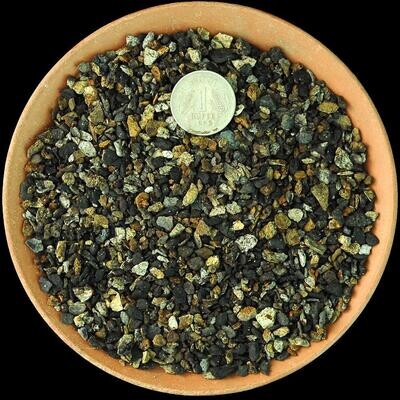
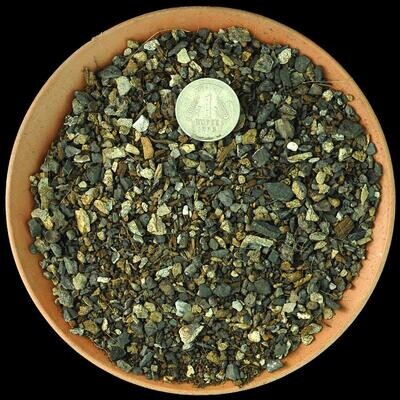
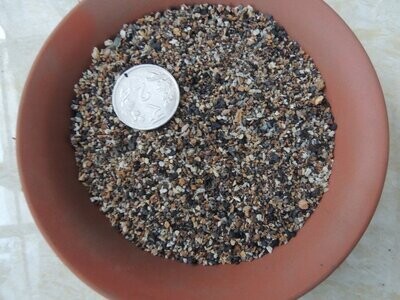
Cactus & Succulent Planting Mix COARSE (aka Cactus Soil Mix or Succulent Soil Mix)
Cactus & Succulent Planting Mix COARSE (aka Cactus Soil Mix or Succulent Soil Mix)
Washed, Free-Draining Mineral Mix for Cactus & Succulents
SKU MNS003
₹44.85
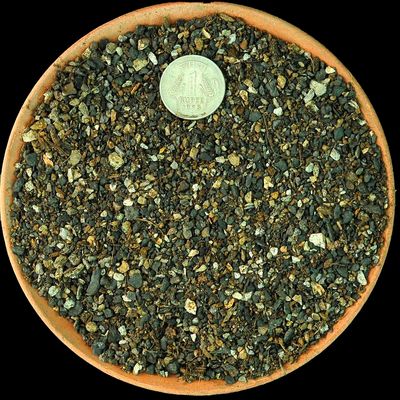
Cactus Seed Planting Mix
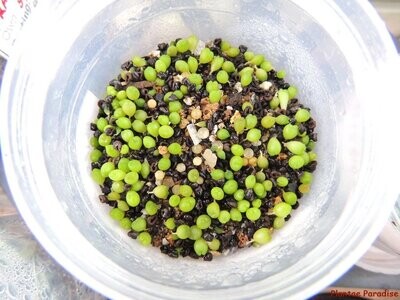
Cactus Seed Planting Mix
Sterile, Fine-Grain Media for Cactus & Succulent Seeds
SKU MNS005
₹74.85