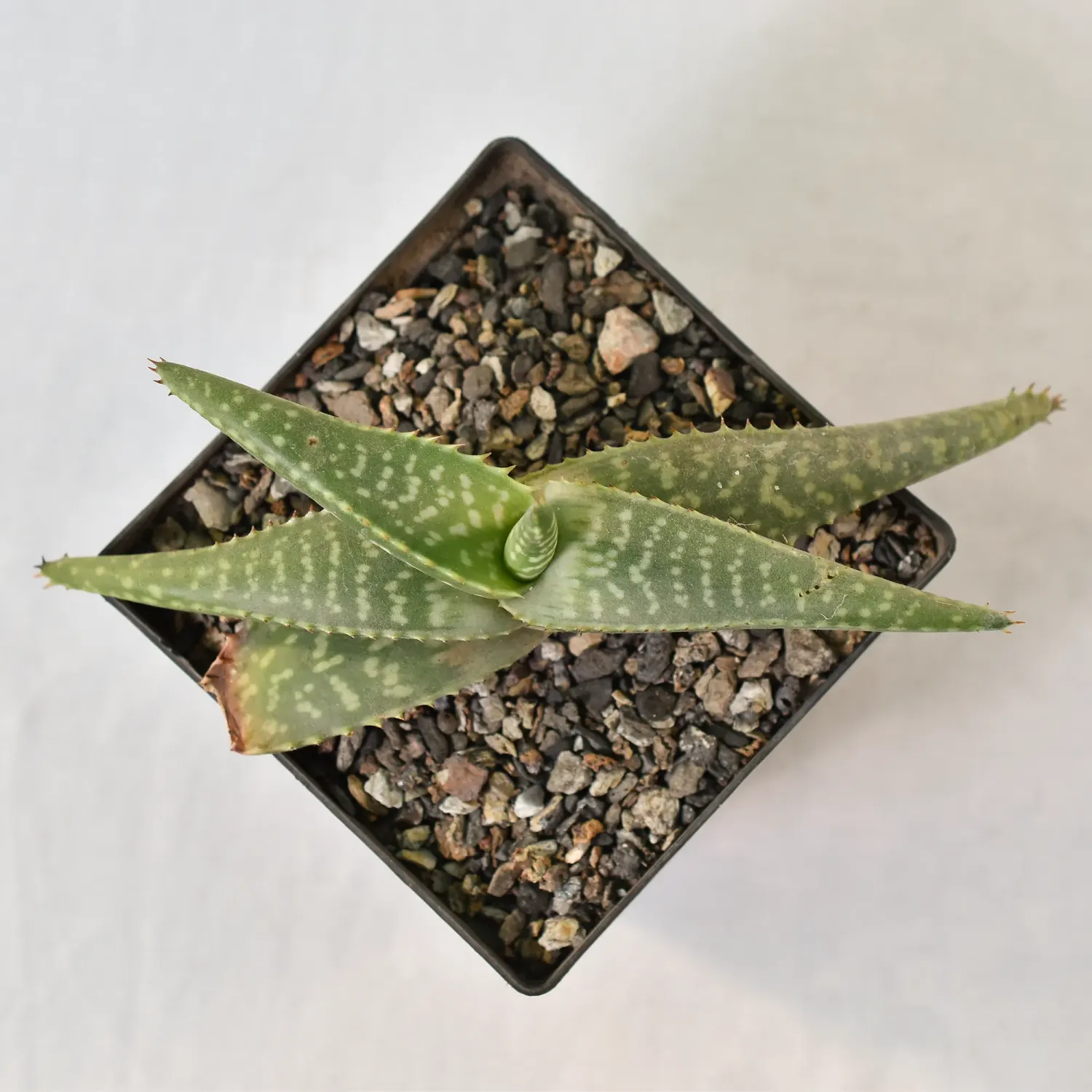
Aloe Maculata
Product Details
The Soap Aloe: Architectural Beauty in Aloe Maculata
An iconic succulent centerpiece prized for its striking spotted foliage and resilient, sculptural form.
- Origin & History of Name: The name Aloe maculata is derived from the Latin word maculata, meaning "spotted," referencing the distinct pale markings on its leaves. Historically, it was long classified as Aloe saponaria, a name rooted in the Latin sapo (soap), because the sap from its leaves creates a soapy lather when mixed with water—a trait historically utilized by local populations in its native regions for laundering.
- Morphology: This stemless succulent features a rosette of broad, lance-shaped leaves. Its epidermis is characterized by longitudinal rows of white, oblong spots that contrast against a deep green to reddish-brown base. The leaf margins are armed with prominent, sharp dark-brown teeth. Unlike many Aloes, its inflorescence is flat-topped (capitate), producing vibrant orange-to-red tubular flowers that are highly attractive to pollinators.
- Habitat & Origin: Aloe maculata is a wild species native to South Africa, specifically ranging from the Cape Peninsula through the KwaZulu-Natal province. It is a highly adaptable species found in diverse terrains from rocky outcrops to grasslands. Our specimens are sustainably propagated via offsets (pups) to ensure no impact on wild populations.
- Cultivation Profile:
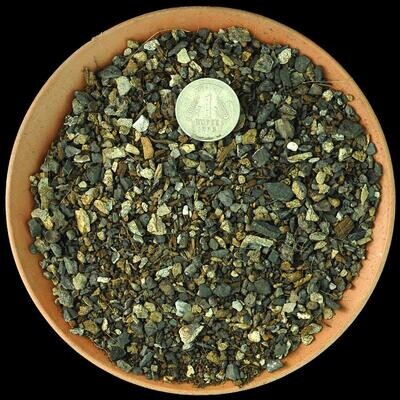
- Substrate: A strictly well-draining, mineral-based mix. Use a ratio of 50% coarse sand/perlite and 50% garden soil to prevent root rot during Indian monsoons.
- Light: Thrives in full sun to bright indirect light. In the intense heat of Northern or Central India, provide afternoon shade to prevent leaf scorch.
- Water/Dormancy: Water deeply when the substrate is completely dry. Reduce watering significantly during the winter months or peak monsoon humidity. It is drought-tolerant but appreciates consistent moisture during the hot pre-monsoon summer.
- Scientific/Historical Anecdote: While often confused with Aloe vera, Aloe maculata is scientifically distinct due to its flat-topped flower clusters. In 17th-century European botany, it was one of the earliest South African succulents to be documented and brought to the Royal Botanic Gardens, Kew, where it became a foundational species for early succulent classification in the West.
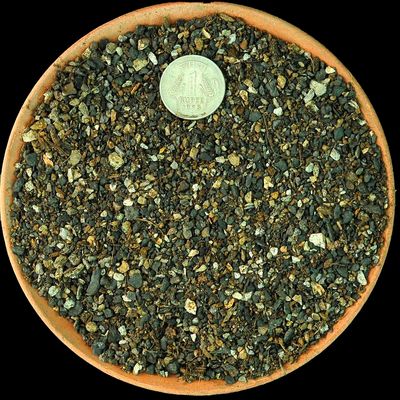


Cactus Seed Planting Mix
Cactus Seed Planting Mix
Sterile, Fine-Grain Media for Cactus & Succulent Seeds
SKU MNS005
₹74.85
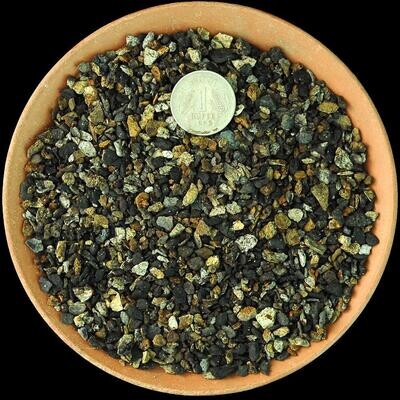
Cactus & Succulent Planting Mix COARSE (aka Cactus Soil Mix or Succulent Soil Mix)
Cactus & Succulent Planting Mix COARSE (aka Cactus Soil Mix or Succulent Soil Mix)
Washed, Free-Draining Mineral Mix for Cactus & Succulents
SKU MNS003
₹44.85