

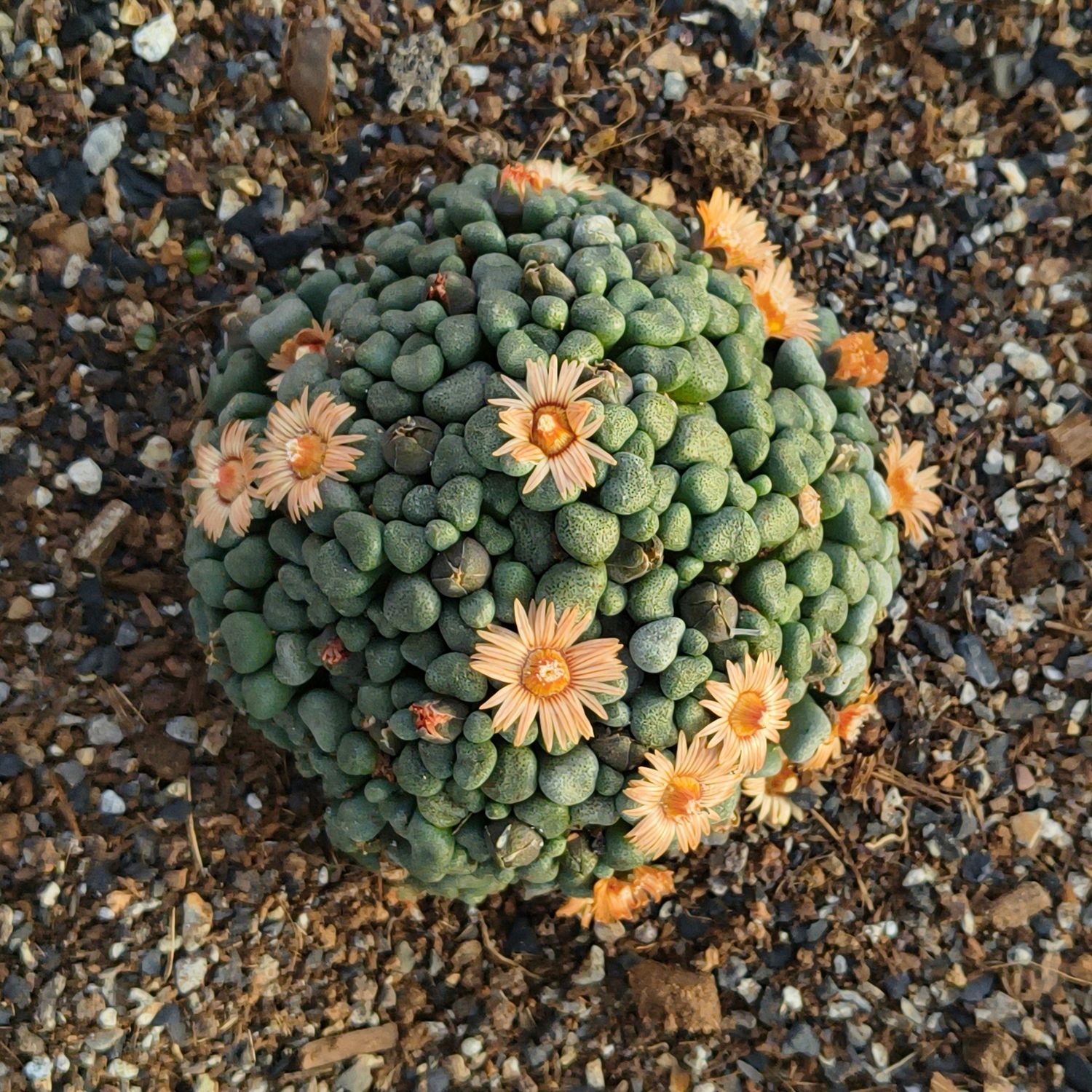
Aloinopsis schooneesii
Product Details
Pebble-Mimic Masterpiece: Aloinopsis schooneesii
A captivating South African gem featuring jewel-like succulent leaves and a hidden, sculptural caudex for the discerning collector.
- Origin & History of Name: The genus name Aloinopsis translates from Greek to "resembling an Aloe," though it belongs to the Aizoaceae family.
- Morphology: This species is characterized by its compact, spatulate leaves that form tight, rounded clusters.
- Habitat & Origin: This is a wild species native to the Eastern Cape province of South Africa.
- Cultivation Profile:
- Substrate: Use a strictly mineral-based mix (70% grit/pumice/coarse sand, 30% organic matter) to prevent moisture retention around the caudex.
- Light: Requires bright, indirect sunlight; in the Indian context, provide 40-50% shade during peak summer afternoons to prevent epidermal scorching.
- Water/Dormancy: This is a winter-grower.
- Scientific/Historical Anecdote: Aloinopsis schooneesii is a master of "mimicry."

Cactus & Succulent Planting Mix COARSE (aka Cactus Soil Mix or Succulent Soil Mix)
Cactus & Succulent Planting Mix COARSE (aka Cactus Soil Mix or Succulent Soil Mix)
Washed, Free-Draining Mineral Mix for Cactus & Succulents
SKU MNS003
₹40.51

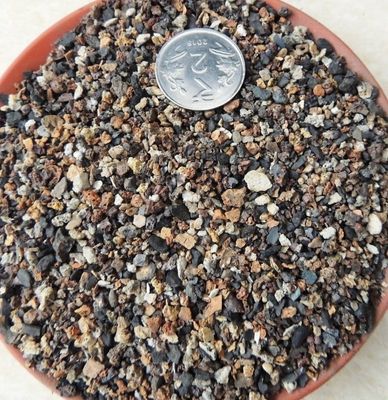
Cactus & Succulent Planting Mix FINE (aka Cactus Soil Mix or Succulent Soil Mix)
Cactus & Succulent Planting Mix FINE (aka Cactus Soil Mix or Succulent Soil Mix)
Fine-Grain Potting Mix for Cactus & Succulent Roots
SKU MNS001
₹35.51

Cactus Seed Planting Mix
Cactus Seed Planting Mix
Sterile, Fine-Grain Media for Cactus & Succulent Seeds
SKU MNS005
₹70.51