

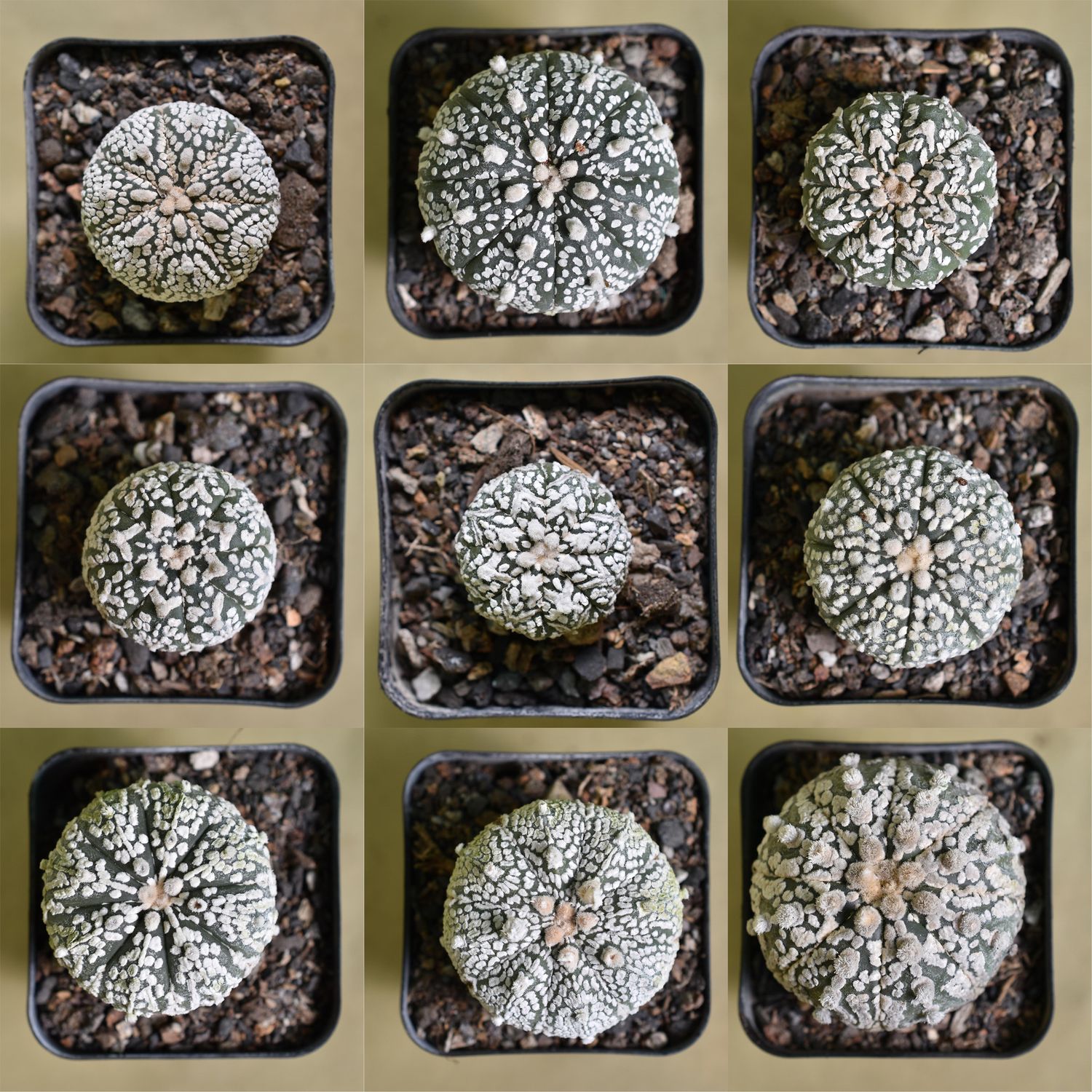
Astrophytum asterias cv Super Kabuto
Product Details
The Celestial Masterpiece: Astrophytum asterias cv. Super Kabuto
A pinnacle of succulent breeding, this 'Living Rock' is a must-have mosaic of white flocking and geometric perfection.
- Origin & History of Name: The genus name Astrophytum is derived from the Greek aster (star) and phyton (plant). The cultivar name "Super Kabuto" was coined in the late 1970s by Japanese nurseryman Masaomi Takeo. "Kabuto" is the Japanese word for a samurai helmet, referencing the plant’s dome-like shape and the ornate, armor-like appearance of its white trichomes.
- Morphology: This spineless cactus features a globose, depressed-spherical stem. Its defining characteristic is the epidermis, which is densely covered in large, white trichomes (felt-like tufts) that form a mosaic pattern, distinct from the smaller dots of the standard species.
It typically possesses eight flat costae (ribs) divided by a vertical line of woolly areoles. Unlike many cacti, it lacks traditional spines, relying on its cryptic coloration for protection. - Habitat & Origin: Astrophytum asterias is native to the Rio Grande Valley in Texas and parts of Mexico, but the "Super Kabuto" is a cultivar.
It originated from a single mutant individual discovered in a Japanese garden center in 1981. Because the wild species is endangered and CITES-protected, purchasing this nursery-bred cultivar is the most sustainable way to enjoy the species without impacting wild populations. - Cultivation Profile (Indian Context):
- Substrate: Use a strictly mineral-based mix (70% crushed brick, pumice, or perlite and 30% coarse sand/loam). Avoid peat-heavy "potting soils" which retain too much humidity in Indian climates.
- Light: High intensity, filtered sunlight. In the Indian summer, provide 30-50% shade cloth protection during peak afternoon (12 PM – 4 PM) to prevent epidermis scorching.
- Water/Dormancy: Water deeply only when the substrate is bone-dry during the growing season (March–October). During the monsoon and winter, suspend watering entirely. Ensure maximum ventilation to prevent fungal rot caused by high humidity.
- Scientific/Historical Anecdote: The "Super Kabuto" lineage is a miracle of chance. The original plant found by Masaomi Takeo was a solitary mutation among thousands of standard seedlings.
Because it was a singular discovery, almost every Super Kabuto in the world today is a descendant of that one "Star-Samurai" ancestor, preserved through decades of meticulous backcrossing and selection by Japanese masters.
New
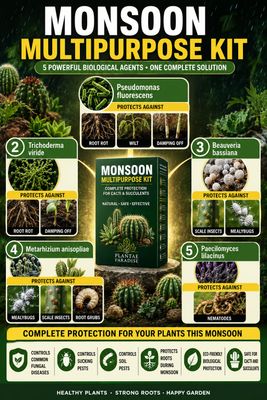
Monsoon Guardian Kit (5 in 1)
Monsoon Guardian Kit (5 in 1)
Complete 5-in-1 biological protection kit for cacti & succulents
SKU MNS024
₹850.00

Cactus & Succulent Planting Mix COARSE (aka Cactus Soil Mix or Succulent Soil Mix)
Cactus & Succulent Planting Mix COARSE (aka Cactus Soil Mix or Succulent Soil Mix)
Washed, Free-Draining Mineral Mix for Cactus & Succulents
SKU MNS003
₹44.85

