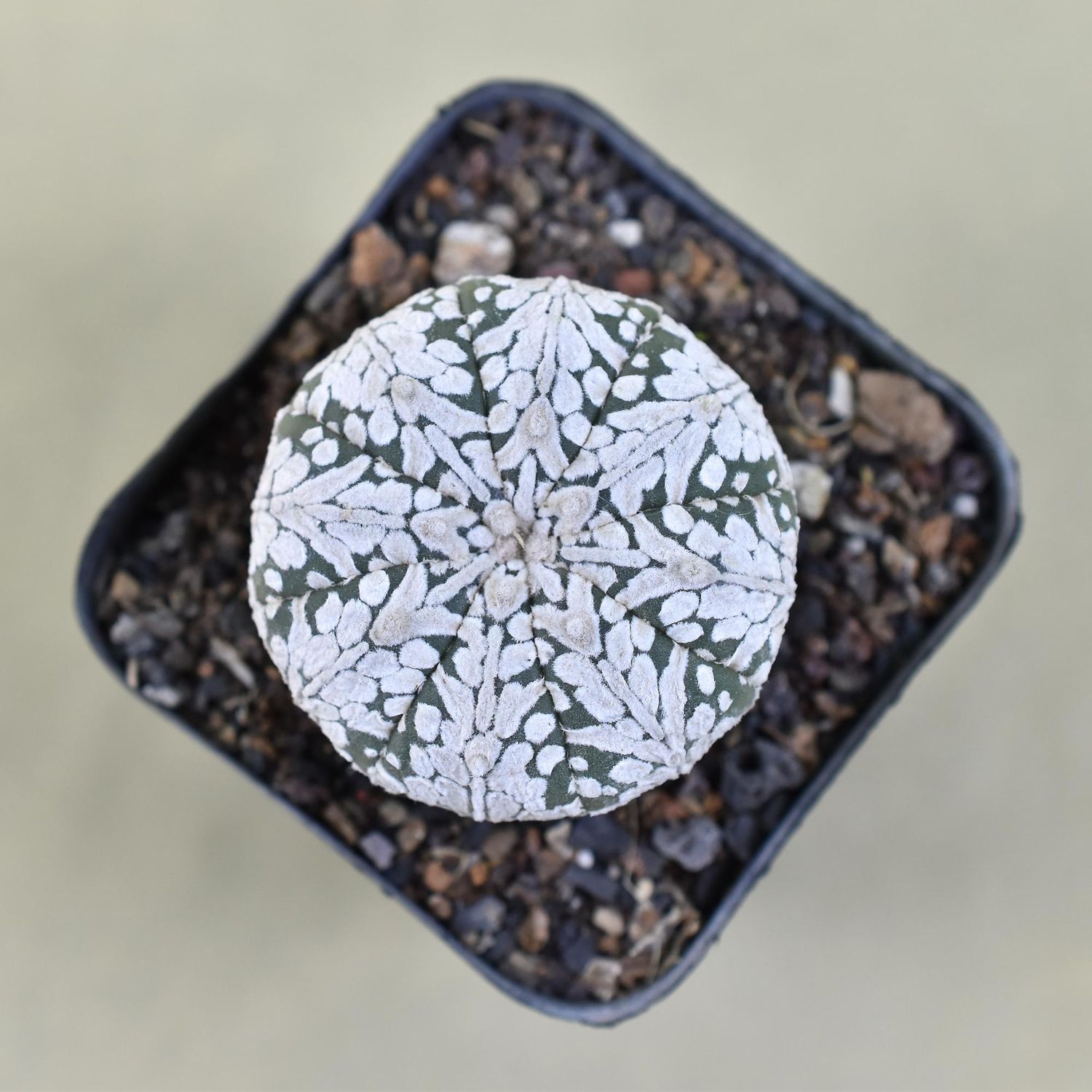
Astrophytum asterias Super Kabuto V Type
Product Details
Geometric Masterpiece: Astrophytum asterias 'Super Kabuto V Type'
An exceptionally rare Japanese cultivar featuring striking V-shaped white flocking on a spineless, star-shaped body, making it a prized specimen for serious collectors.
- Origin & History of Name The genus name Astrophytum derives from the Greek astron (star) and phyton (plant), referring to its star-like shape.
- Morphology This spineless cactus presents a depressed-globular stem divided into eight distinct ribs. The dark green epidermis is densely covered in white trichomes (flocking) arranged in a specific "V" or chevron pattern along the ribs, distinguishing it from the standard A. asterias. The areoles are prominent and woolly, often lacking spines entirely. This "Super" form is characterized by larger, denser white flecks compared to the standard "Kabuto," creating a high-contrast mosaic effect.
- Habitat & Origin While Astrophytum asterias is native to the Tamaulipan thorn scrub of Texas and Mexico, the 'Super Kabuto V Type' is strictly a horticultural cultivar.
- Cultivation Profile
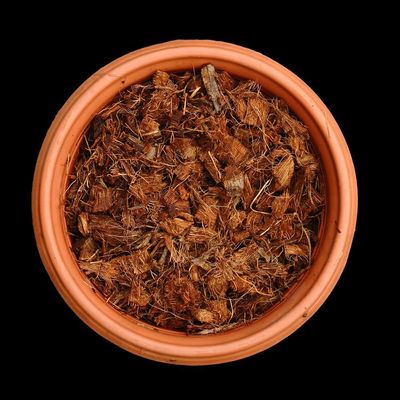
- Substrate: Requires a highly porous, mineral-based mix (70-80% grit, pumice, or akadama; 20-30% organic compost/coco-peat). Avoid heavy garden soil to prevent root rot.
- Light: Thrives in bright, filtered sunlight. In the Indian climate, provide protection from the harsh midday summer sun (using a 50% green shade net) to prevent scorching, but ensure ample light to maintain the density of the white flocking.
- Water/Dormancy: Water sparingly only when the substrate is completely dry. In India, water roughly once a week during active growth (March–October). withhold water almost entirely during the winter dormancy (December–February) to prevent splitting or rot.
- Scientific/Historical Anecdote The original "Kabuto" mutation was reportedly discovered in a field of wild seedlings in 1981 by a Japanese enthusiast. It was initially thought to be a disease or genetic defect. However, Japanese breeders isolated the trait, proving that the dense white flecking was stable, eventually leading to the highly ornamental 'Super Kabuto' lines that command high prices in global markets today.
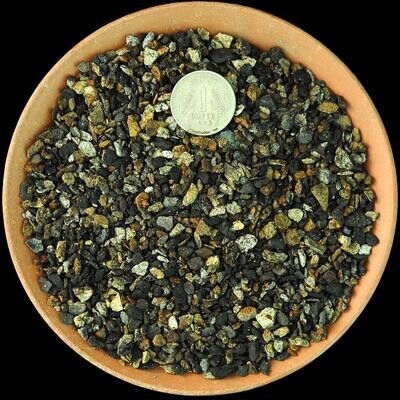
Cactus & Succulent Planting Mix COARSE (aka Cactus Soil Mix or Succulent Soil Mix)
Cactus & Succulent Planting Mix COARSE (aka Cactus Soil Mix or Succulent Soil Mix)
Washed, Free-Draining Mineral Mix for Cactus & Succulents
SKU MNS003
₹38.74
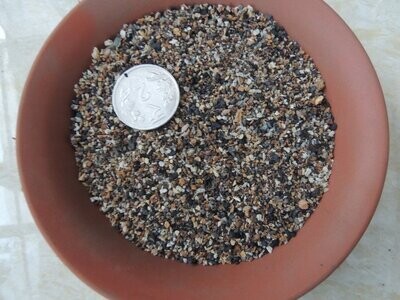
Cactus Seed Planting Mix
Cactus Seed Planting Mix
Sterile, Fine-Grain Media for Cactus & Succulent Seeds
SKU MNS005
₹66.35