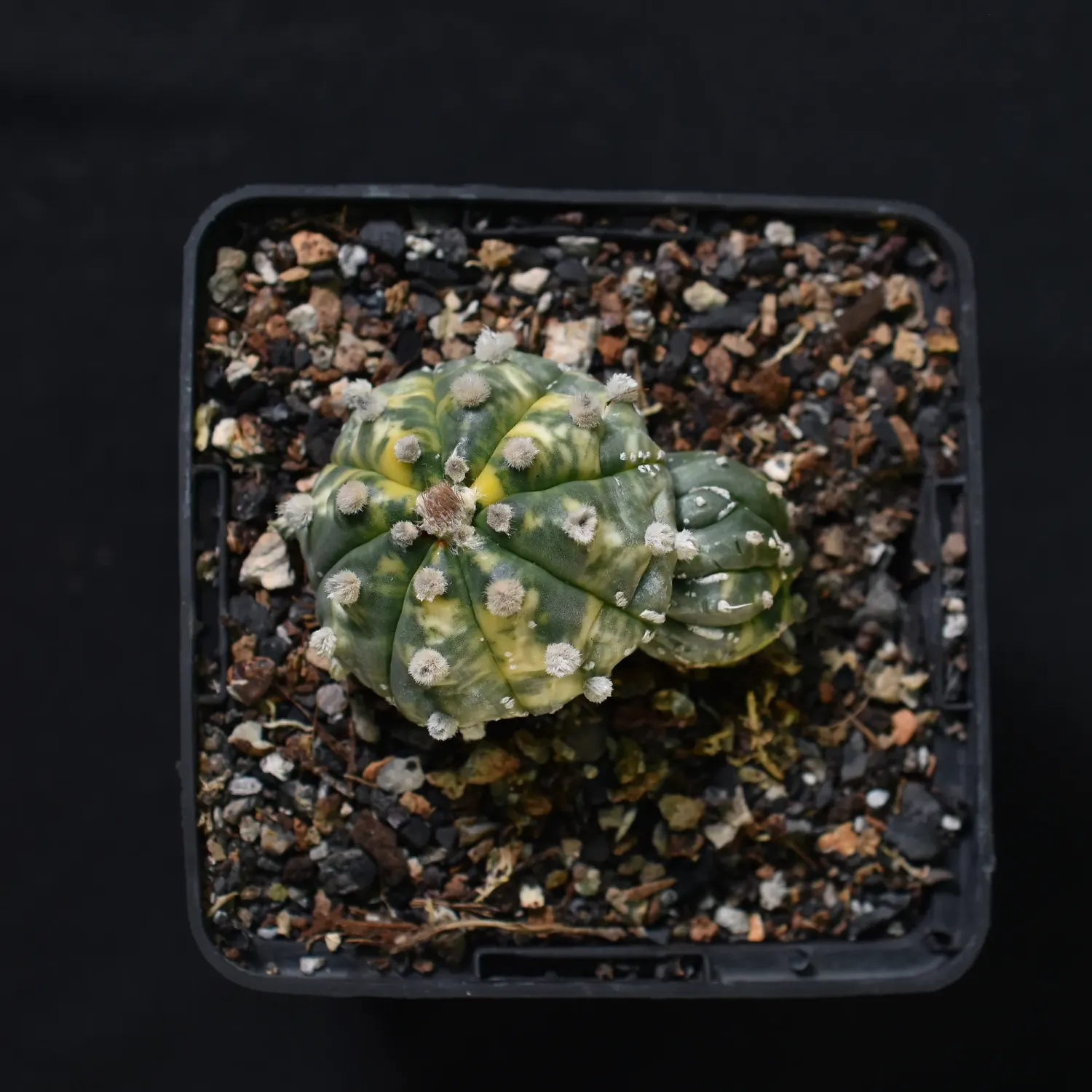
Astrophytum asterias Variegated
Product Details
Celestial Radiance: Astrophytum asterias Variegated
A living masterpiece of botanical geometry, this chlorophyll-deficient rarity is a pinnacle acquisition for the discerning succulent connoisseur.
- Origin & History of Name: The genus name Astrophytum is derived from the Greek words aster (star) and phyton (plant), referring to its star-like radial symmetry. The specific epithet asterias also stems from the Greek for "starfish." It was first described by botanist Joseph Gerhard Zuccarini in 1845, having been discovered in Mexico. The "Variegated" designation indicates a genetic mutation where the plant lacks green pigment (chlorophyll) in certain tissues, resulting in vibrant yellow, orange, or red patterns.
- Morphology: This spineless cactus features a depressed-globose epidermis (outer skin) characterized by 8 flat costae (ribs).
- Habitat & Origin: While the base species is native to the Rio Grande Valley in Texas and parts of Tamaulipas, Mexico, the variegated form is a specialized cultivar primarily refined by Japanese and Thai breeders. This specific specimen is nursery-bred; as A. asterias is critically endangered in the wild and listed under CITES Appendix I, purchasing lab-propagated cultivars is the only sustainable way to own this species.
- Cultivation Profile (Indian Context):
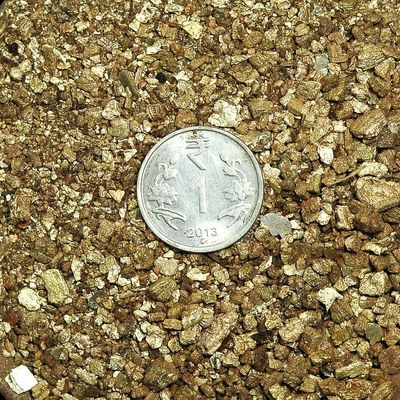
- Substrate: Use a strictly mineral-based mix (70% crushed pumice, lava rock, or perlite and 30% coarse river sand/grit) to prevent root rot in high-humidity regions.
- Light: Requires bright, filtered sunlight.
- Water/Dormancy: Deep soak only when the body feels slightly soft. Strict dry dormancy is required during the monsoon (if humidity is excessive) and from December to February to mimic its natural arid cycles.
- Scientific/Historical Anecdote: For decades after its initial discovery, Astrophytum asterias was "lost" to science. It wasn't until 1923 that botanist Alberto Viereck rediscovered it growing flush with the ground in the Mexican desert. Because the plant grows flat against the soil and mimics the surrounding pebbles, it is often nearly invisible in its natural habitat until it produces its large, yellow, silk-like flowers.
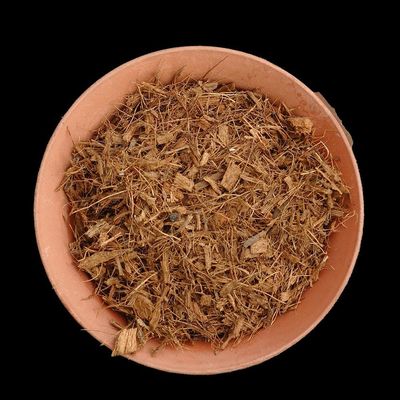
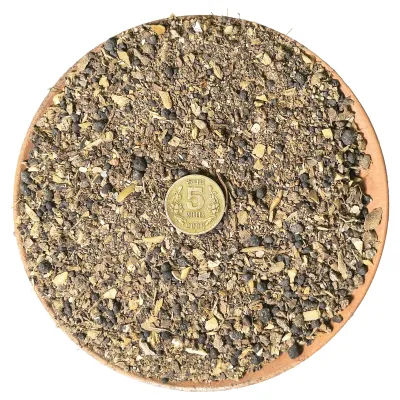
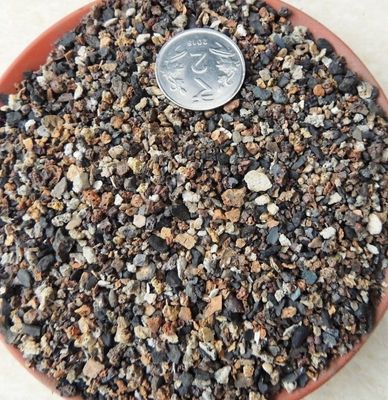
Cactus & Succulent Planting Mix FINE (aka Cactus Soil Mix or Succulent Soil Mix)
Cactus & Succulent Planting Mix FINE (aka Cactus Soil Mix or Succulent Soil Mix)
Fine-Grain Potting Mix for Cactus & Succulent Roots
SKU MNS001
₹33.74