

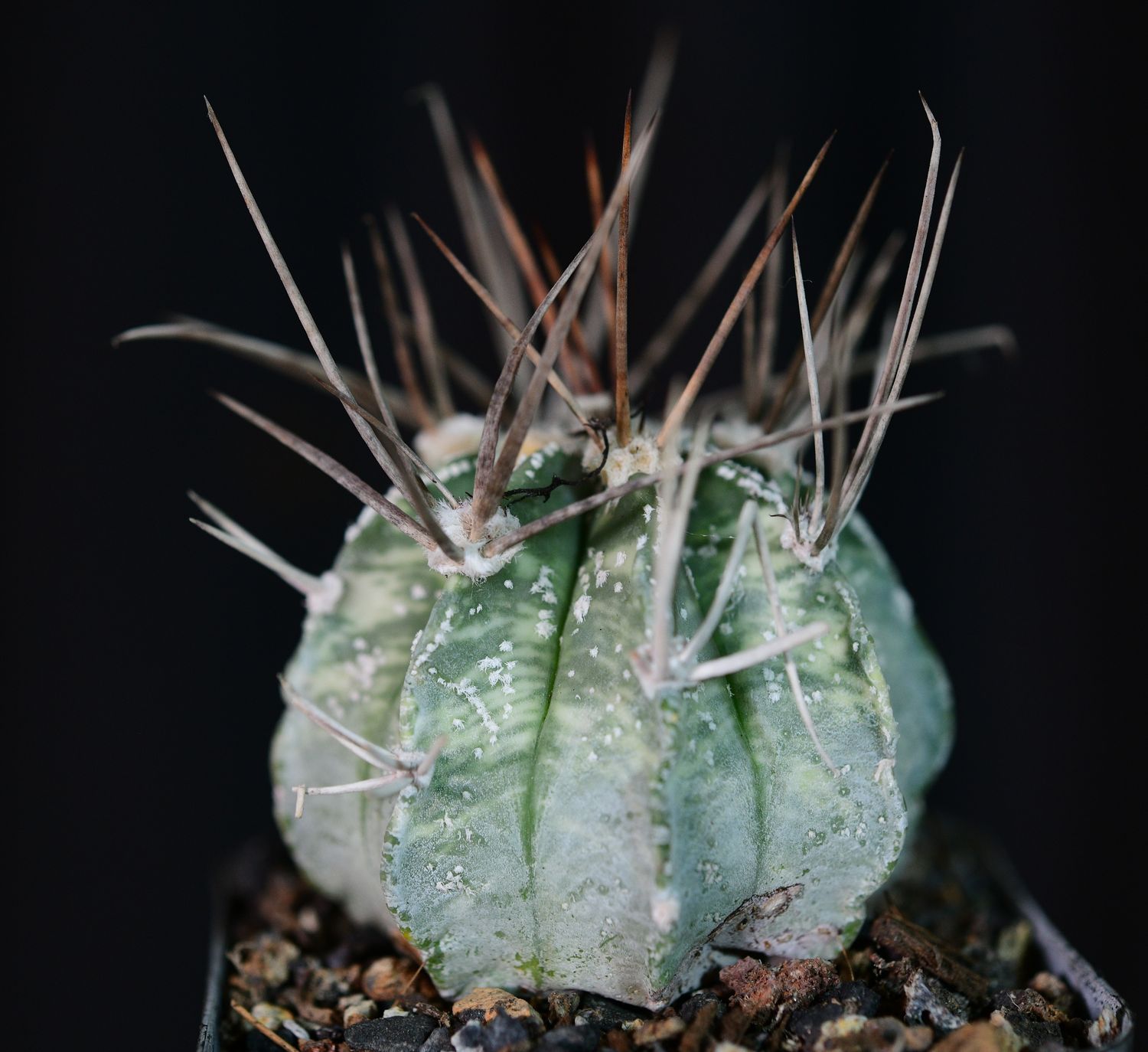
Astrophytum capricorne Variegated
Product Details
Cosmic Goat's Horn: Astrophytum capricorne Variegated
A celestial masterpiece for the serious collector, featuring rare golden variegation and dramatic, twisting spines.
- Origin & History of Name: The genus name Astrophytum is derived from the Greek words astron (star) and phyton (plant), referring to its star-like shape when viewed from above.
The specific epithet capricorne stems from the Latin caper (goat) and cornu (horn), a nod to the plant’s distinctive, curling spines. It was formally described by German botanist Joseph zu Salm-Reifferscheidt-Dyck in 1851. - Morphology: This specimen features a globose to cylindrical epidermis (outer skin) divided by prominent costae (ribs). It is distinguished by its variegation, where a genetic mutation inhibits chlorophyll, creating striking yellow or cream sectors. The plant is adorned with white flocking (trichomes) and long, dark, pliable spines that mimic dried grass to provide camouflage and sun protection.
- Habitat & Origin: While the base species is native to the Chihuahuan Desert in Northern Mexico, this variegated form is a cultivar, primarily refined through selective breeding in Japan and Thailand. Our specimens are nursery-grown via sustainable propagation practices to protect wild populations from poaching.
- Cultivation Profile:
- Substrate: Use a strictly mineral-based mix (70% grit/pumice, 30% organic matter). In the Indian climate, ensure high porosity to prevent root rot during humidity spikes.
- Light: High-intensity filtered sunlight. Provide 50% shade cloth during harsh Indian summers (April–June) to prevent scorching of the variegated tissue.
- Water/Dormancy: Deep soak only when the substrate is bone-dry. Strictly suspend watering during the winter dormancy (December–February) and reduce frequency during the monsoon to avoid fungal issues.
- Scientific/Historical Anecdote: Astrophytum species are unique in the cactus world for their "flocking"—those tiny white dots on the skin.
Under a microscope, these are actually tufts of highly specialized hair-like scales. Scientists believe these scales function like a built-in sunscreen and may even help the plant absorb moisture directly from evening dew in arid environments.
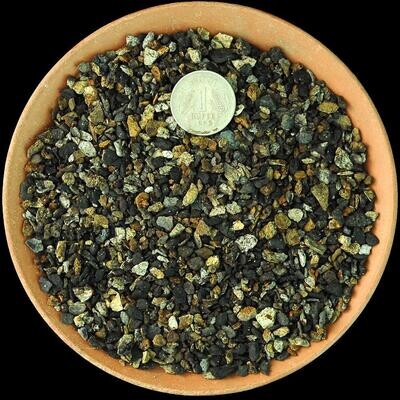
Cactus & Succulent Planting Mix COARSE (aka Cactus Soil Mix or Succulent Soil Mix)
Cactus & Succulent Planting Mix COARSE (aka Cactus Soil Mix or Succulent Soil Mix)
Washed, Free-Draining Mineral Mix for Cactus & Succulents
SKU MNS003
₹44.85
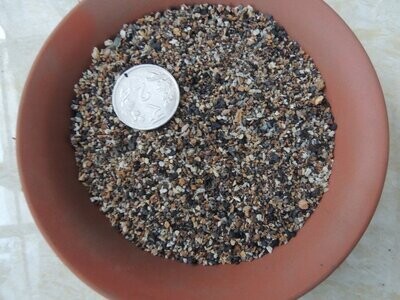
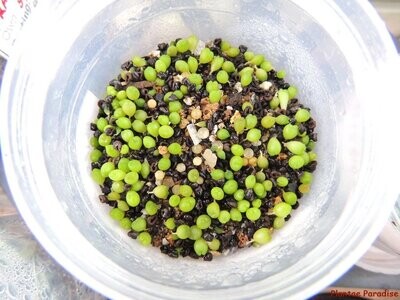
Cactus Seed Planting Mix
Cactus Seed Planting Mix
Sterile, Fine-Grain Media for Cactus & Succulent Seeds
SKU MNS005
₹74.85
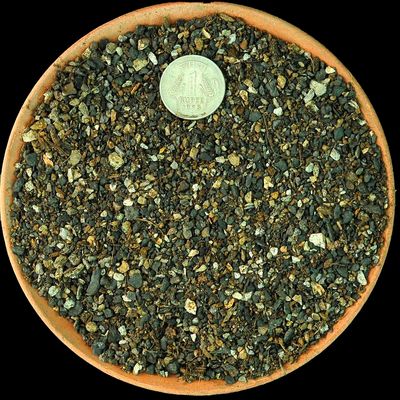
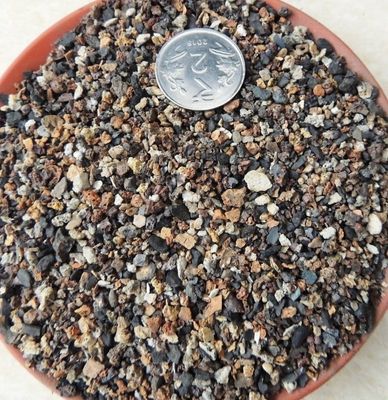
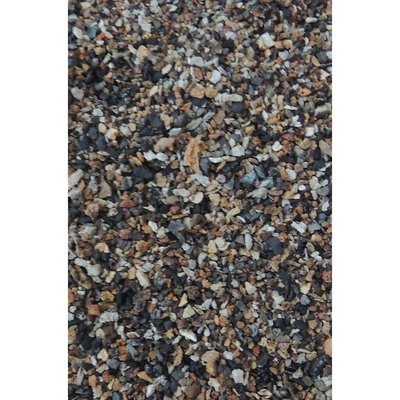
Cactus & Succulent Planting Mix FINE (aka Cactus Soil Mix or Succulent Soil Mix)
Cactus & Succulent Planting Mix FINE (aka Cactus Soil Mix or Succulent Soil Mix)
Fine-Grain Potting Mix for Cactus & Succulent Roots
SKU MNS001
₹39.85