Living Sculpture: Astrophytum myriostigma cv. Fukuryu
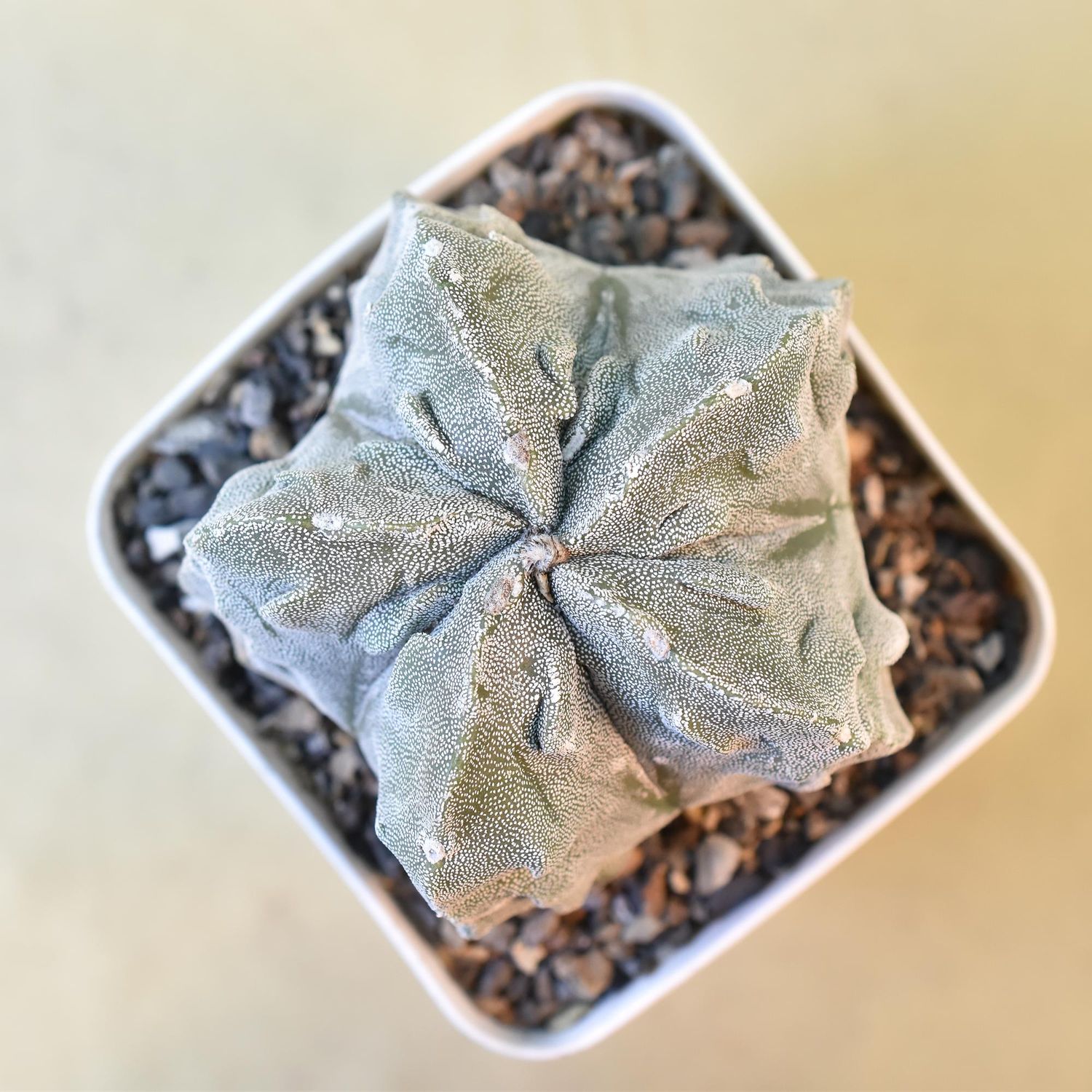
This highly prized Japanese cultivar offers collectors a unique, sculptural geometry characterized by its distinctive complex ribbing and intricate surface texture.
1. Origin & History of Name
The genus name derives from the Greek astron (star) and phyton (plant), referencing its star-shaped aerial profile. The species epithet myriostigma translates to "countless dots," describing the speckled epidermis. The cultivar name "Fukuryu" is of Japanese origin, roughly translating to "Lucky Dragon" or "Prosperous Dragon."2 This name was assigned by Japanese horticulturists to denote the specific mutation causing multiple, undulating ribs, distinguishing it from the standard form.
2. Morphology
This cultivar is defined by its structural anomaly regarding costae (ribs).3 Unlike the standard quadricostatum or five-ribbed varieties, the Fukuryu develops irregular, supplementary ribs or "blisters" between the primary ribs, creating a faceted, wrinkled topography. The epidermis is densely covered in fine white trichomes (flocking), which serve a biological function of reflecting intense solar radiation and give the plant a silvery, stone-like aesthetic. It is entirely spineless.
3. Habitat & Origin
The standard Astrophytum myriostigma is native to the Chihuahuan Desert in Mexico, specifically growing in calcium-rich limestone soils. However, the cv. Fukuryu is strictly a horticultural cultivar. It is the result of decades of selective breeding, primarily in Japan, and does not exist in the wild. All specimens are nursery-propagated, ensuring zero impact on natural habitats.
4. Cultivation Profile
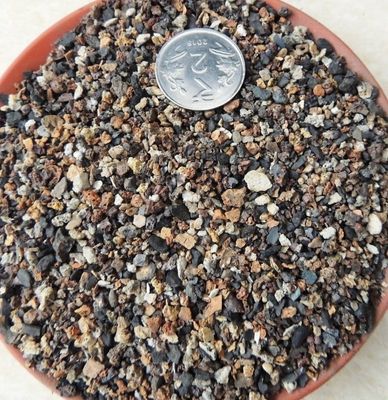
- Substrate: Requires a highly porous, mineral-based mix (70% pumice, perlite, or cinder; 30% sterile soil/compost) to mimic limestone cliffs. Avoid heavy clay or garden soil common in India.
- Light: Thrives in bright, filtered light. In the Indian context, use 50% shade cloth during peak summer (May–June) to prevent scorching, but ensure full exposure during cooler months to maintain compact growth.
- Water & Dormancy: Water deeply only when the substrate is completely dry. Crucially, withhold water during the high-humidity Indian monsoon season to prevent rot. Maintain a dry dormancy period in winter (December–February).
5. Scientific/Historical Anecdote
When Astrophytum myriostigma was first scientifically described by Charles Lemaire in 1839, its lack of spines and rock-like camouflage fascinated botanists. It is a prime example of convergent evolution, where the plant has evolved to mimic the limestone rocks among which it grows, allowing it to hide from herbivores without the energy cost of producing sharp spines.