

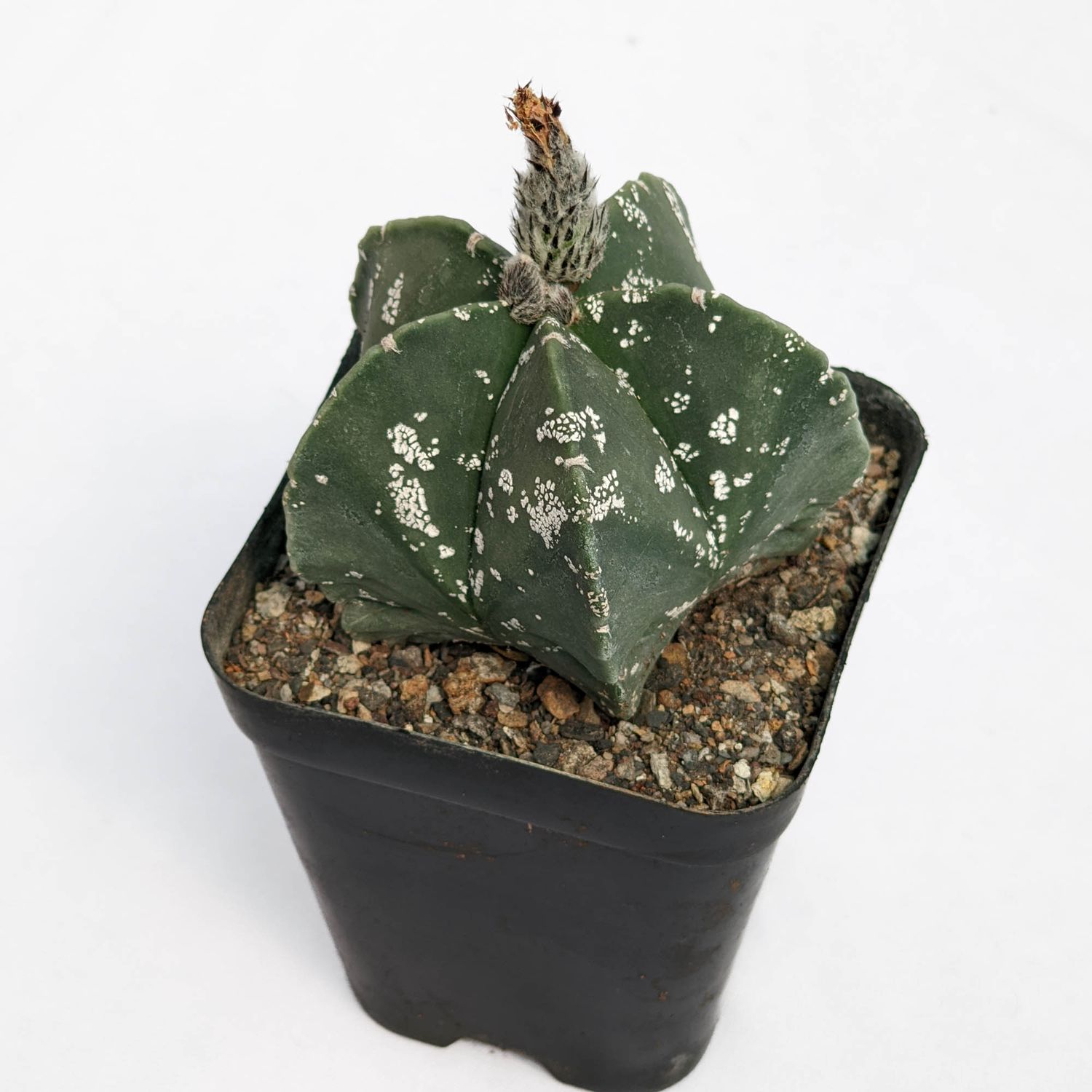
Astrophytum myriostigma CV NUDUM HAKUUN
Product Details
Celestial Symmetry: Astrophytum myriostigma cv. Nudum Hakuun
Own a living masterpiece of Japanese breeding, where cloud-like patterns meet the elegance of a spineless form.
- Origin & History of Name: The genus name Astrophytum is derived from the Greek astron (star) and phyton (plant), referencing its star-shaped profile. The cultivar name "Hakuun" translates from Japanese as "White Cloud," a poetic reference to the distinct maculated patches that develop on the epidermis. "Nudum" indicates the absence of the typical white trichomes (flecks) found on standard species.
- Morphology: This cultivar is characterized by a globose to columnar green epidermis that is entirely smooth (nudum). Unlike the standard species, it features irregular, white, felt-like patches resembling clouds. It typically possesses five prominent costae (ribs), giving it a geometric appearance. The plant is spineless, with woolly areoles situated along the rib margins.
- Habitat & Origin: This is a specialized cultivar of Japanese origin, selectively bred from the wild Astrophytum myriostigma native to the Chihuahuan Desert in Mexico. As a nursery-produced cultivar, it is a highly sustainable choice for collectors, ensuring no impact on wild populations.
- Cultivation Profile:
- Substrate: Use a strictly mineral-based mix (70% grit/pumice/perlite, 30% organic matter) to prevent root rot in humid Indian climates.
- Light: Bright, filtered sunlight. In the Indian summer, provide 50% shade cloth to prevent epidermal scorching.
- Water/Dormancy: Water thoroughly only when the medium is completely dry. In North India, observe strict winter dormancy (November–February) by withholding water; in South/Coastal India, reduce watering during the monsoon to account for high atmospheric humidity.
- Scientific/Historical Anecdote: Astrophytum myriostigma was first described by the French botanist Antoine Lemaire in 1839. While the wild type is covered in tiny white scales to reflect intense desert UV rays, Japanese breeders spent decades perfecting the "Hakuun" mutation, transforming a survival mechanism into a sought-after aesthetic pattern that mimics a drifting cloud.
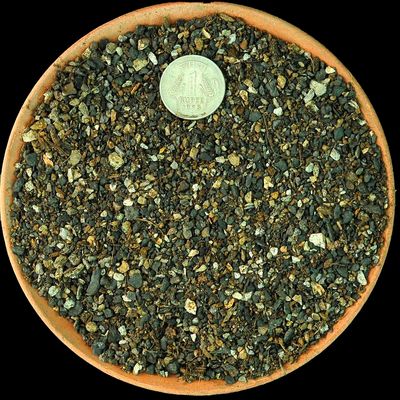
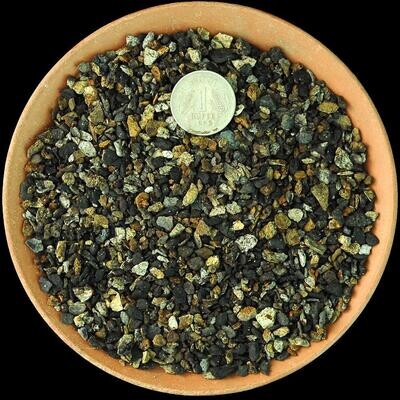
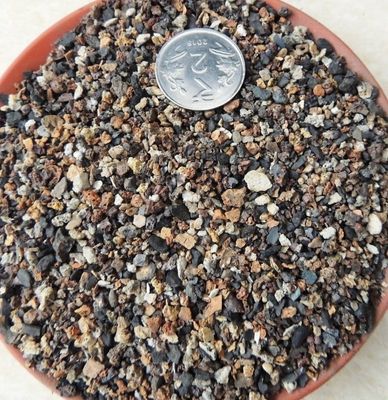
Cactus & Succulent Planting Mix COARSE (aka Cactus Soil Mix or Succulent Soil Mix)
Cactus & Succulent Planting Mix COARSE (aka Cactus Soil Mix or Succulent Soil Mix)
Washed, Free-Draining Mineral Mix for Cactus & Succulents
SKU MNS003
₹44.85
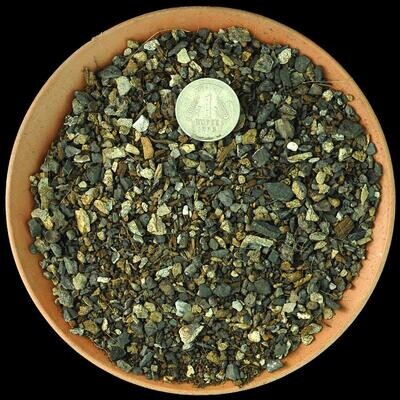
Cactus & Succulent Planting Mix FINE (aka Cactus Soil Mix or Succulent Soil Mix)
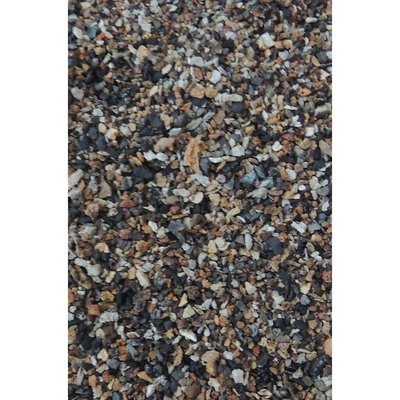
Cactus & Succulent Planting Mix FINE (aka Cactus Soil Mix or Succulent Soil Mix)
Fine-Grain Potting Mix for Cactus & Succulent Roots
SKU MNS001
₹39.85