Astrophytum myriostigma cv Onzuka
Product Details
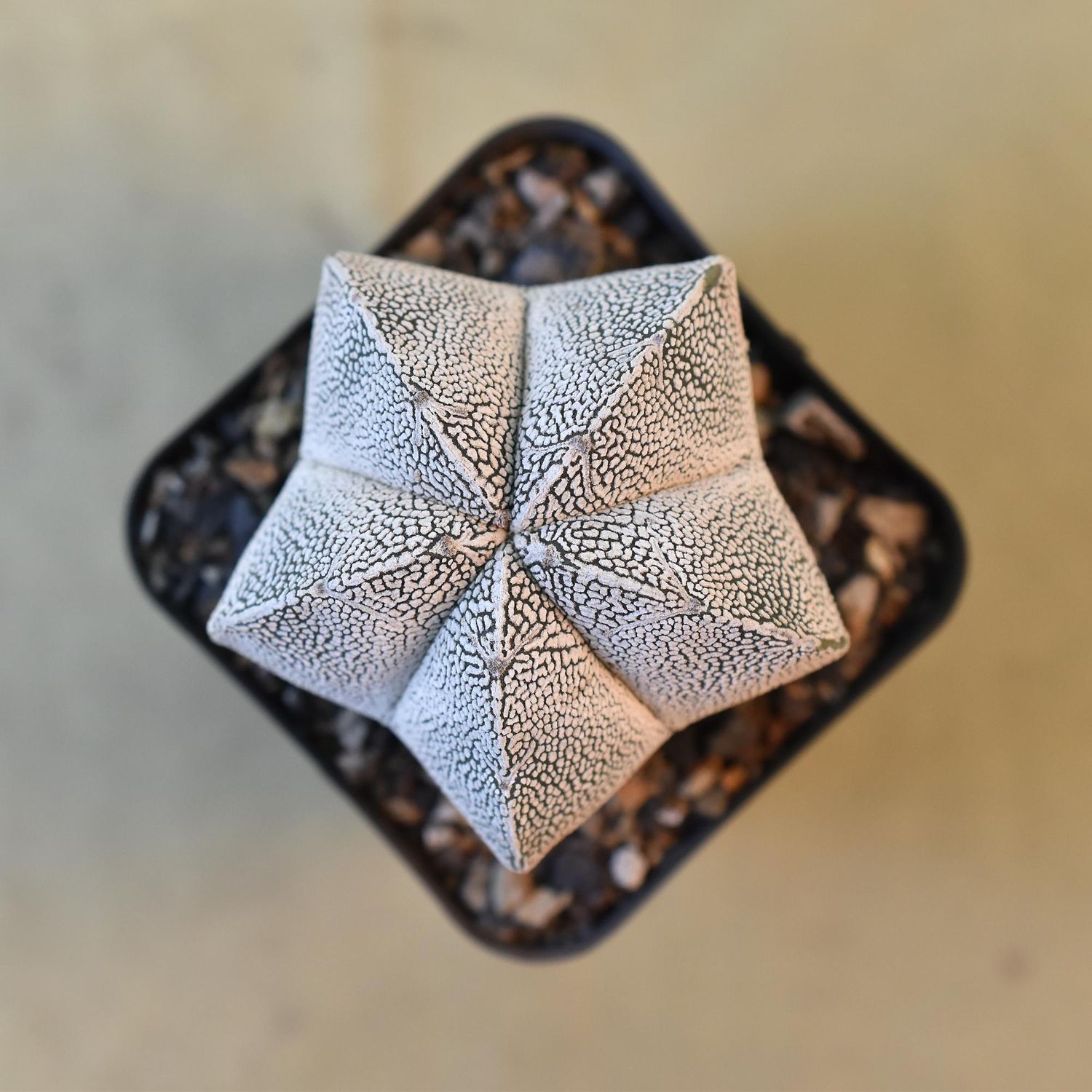
The Snowy Geometric Marvel: Astrophytum myriostigma cv. Onzuka
A highly coveted Japanese cultivar distinguished by its intense, snow-white flocking and architectural symmetry, offering a rare aesthetic for the serious collector.
- Origin & History of Name The genus name Astrophytum derives from the Greek astron (star) and phyton (plant), referring to the plant's star-shaped ribs.
- Morphology This cultivar is defined by its exaggerated trichomes (white hairy scales).
- Habitat & Origin This is strictly a horticultural cultivar and does not exist in the wild. It originated in Japan through selective breeding of Astrophytum myriostigma.
- Cultivation Profile (Indian Context)
- Substrate: Use a strictly mineral-based, gritty mix (70-80% pumice, perlite, or gravel; 20-30% organic soil) to ensure rapid drainage. Avoid heavy clay or garden soil common in India, as this plant is highly susceptible to root rot.
- Light: Requires bright, filtered sunlight. While it tolerates heat, the harsh midday summer sun in India (especially May–June) can scorch the epidermis; use 50% shade cloth during peak hours.
- Water/Dormancy: Water thoroughly only when the substrate is bone dry. During the Indian monsoon, keep the plant completely dry and sheltered from rain to prevent fungal issues. Induce a dry dormancy during the cool winter months (December–February) to promote health and potential flowering.
- Scientific/Historical Anecdote The 'Onzuka' is famously referred to as "Kabuto" in Japan, implying a resemblance to the helmet of a samurai. When Mr. Onzuka first presented this mutation, it was initially dismissed by some growers as a diseased plant due to its unusual, heavy white spotting, before eventually becoming one of the most significant breakthroughs in cactus hybridization history.