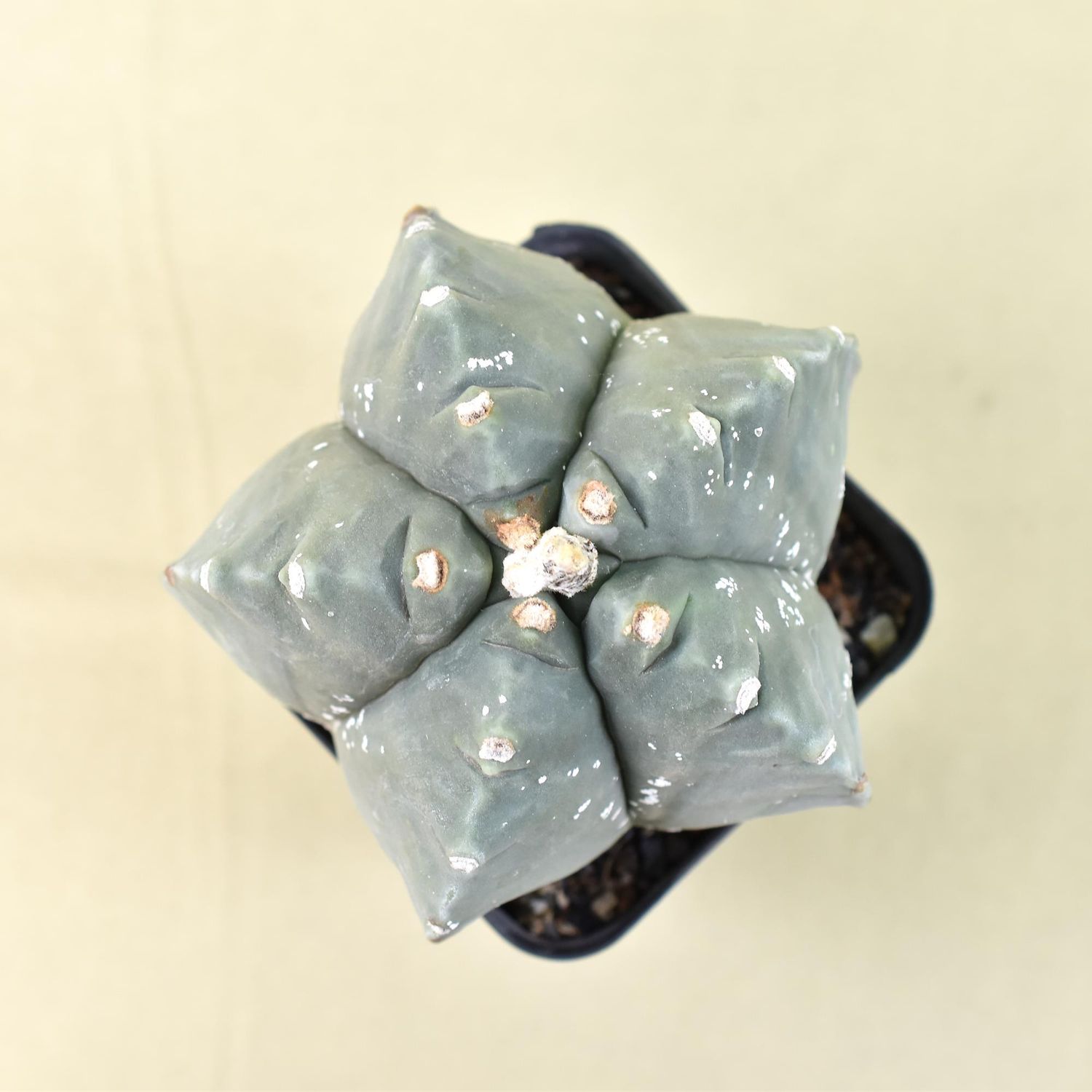
The Living Tortoise Shell: Astrophytum myriostigma var. nudum cv. 'Kikko'
A highly prized Japanese cultivar featuring a spineless, emerald-green architectural form that mimics the geometric beauty of a tortoise carapace.
1. Origin & History of Name
The genus name Astrophytum is derived from the Greek astron (star) and phyton (plant), describing the plant's star-like shape viewed from above.
2. Morphology
This spineless cactus is prized for its glabrous (smooth), bright green epidermis free of the white trichomes found on the standard species.
3. Habitat & Origin
While the standard Astrophytum myriostigma is endemic to the highlands of northeastern Mexico (Chihuahuan Desert), the 'Kikko' form is a strictly horticultural cultivar. It originated in Japan through selective breeding of genetic mutations. As a nursery-produced specimen, it is 100% sustainable and does not impact wild populations.
4. Cultivation Profile (Indian Context)
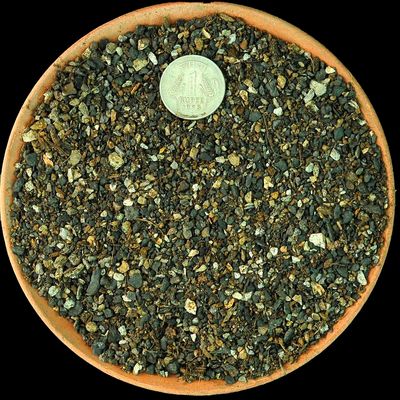
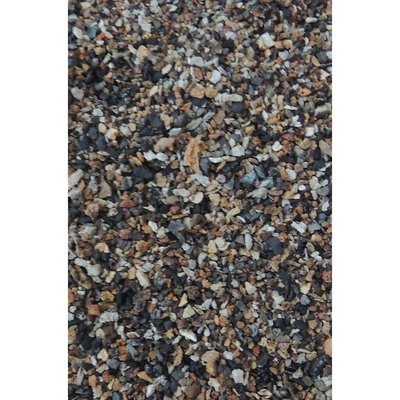
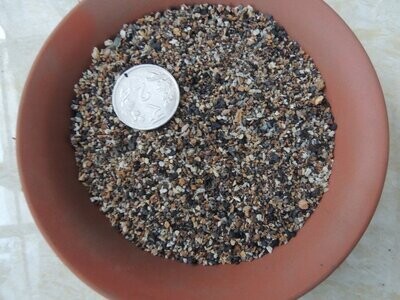
- Substrate: Requires a highly porous, mineral-heavy mix to prevent root rot in humid conditions. Use 70% inorganic material (pumice, perlite, or river sand) mixed with 30% high-quality potting soil.
- Light: Thrives in bright, filtered light. In the harsh Indian summer, use a green shade net (50% density) to prevent epidermal scorching. Avoid full afternoon sun.
- Water/Dormancy: Follow a "soak and dry" method during the growing season (March–October). During the Indian winter (November–February), strictly withhold water to induce dormancy, which mimics the dry winter of its genetic ancestors and encourages better shape retention.
5. Scientific/Historical Anecdote
The 'Kikko' trait—the turtle-shell notching—is a stabilized mutation that disrupts the plant's apical dominance and rib formation. Historically, Astrophytum species were nicknamed "Bishop's Cap" due to their resemblance to a mitre.