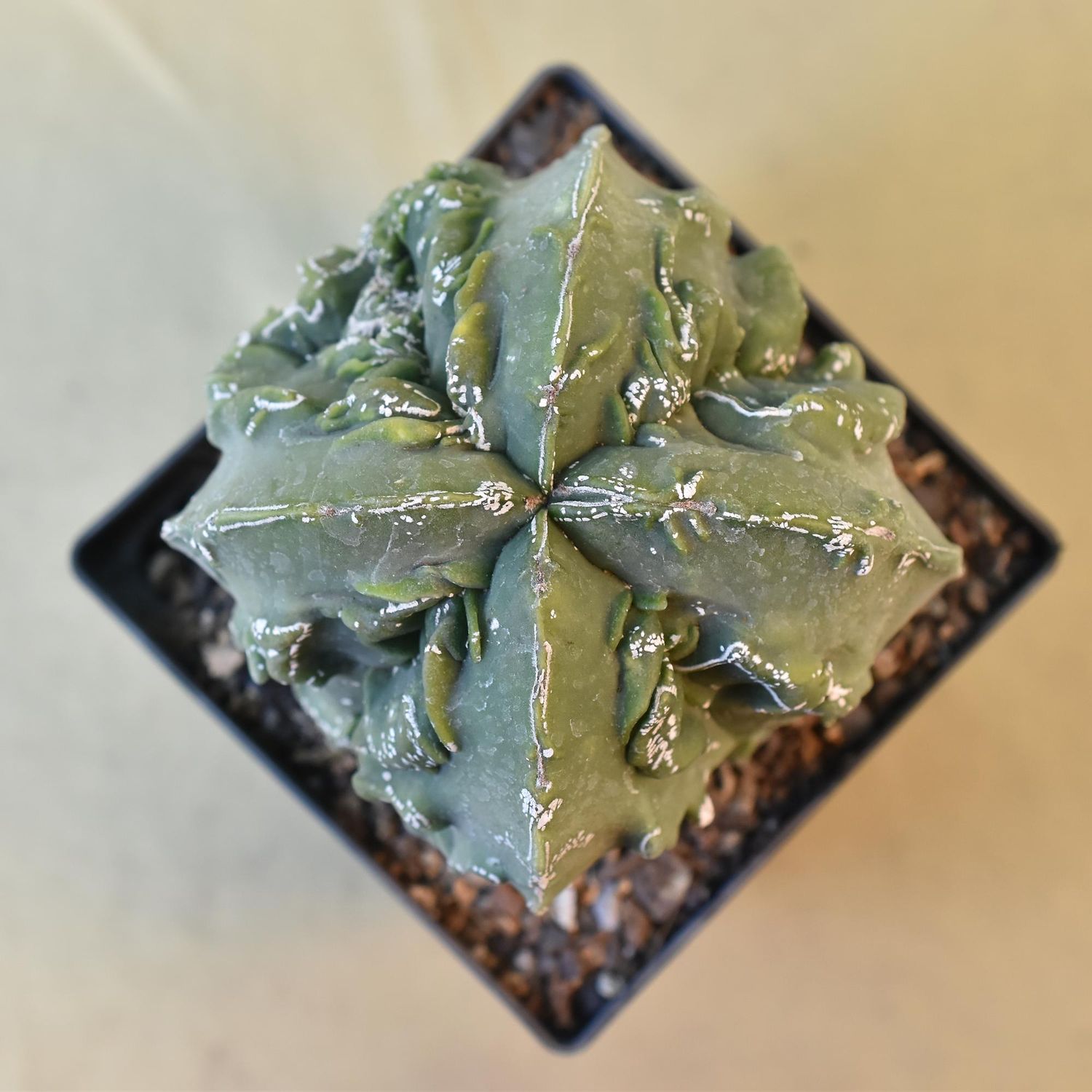
Astrophytum myriostigma Nudum Quadricostatum Fukuryu
Product Details
Architectural Wonder: Astrophytum myriostigma ‘Nudum Quadricostatum Fukuryu’
A geometric masterpiece for the discerning collector, this spineless rarity redefines the classic Bishop’s Cap with its unique ribbed architecture.
- Origin & History of Name: The genus name Astrophytum derives from the Greek astron (star) and phyton (plant).
- Morphology: This succulent features a smooth, deep green epidermis devoid of the typical white trichomes (scales) found on standard species.
- Habitat & Origin: This is a specialized cultivar, not a wild-occurring plant. While the base species A. myriostigma originates from the Chihuahuan Desert in Mexico, this specific form was meticulously developed through selective breeding by Japanese succulent masters. Our specimens are nursery-grown via sustainable propagation, ensuring no impact on wild desert populations.
- Cultivation Profile:
- Substrate: Use a strictly mineral-based mix (70% inorganic). In India, a blend of crushed pumice, perlite, and coarse river sand with minimal leaf mold works best to prevent root rot.
- Light: Requires bright, indirect sunlight.
- Water/Dormancy: Water thoroughly only when the medium is completely dry. During the monsoon, withhold water if humidity is high. In winter, maintain strict dormancy with zero water from November to February to mimic its natural cycle.
- Scientific/Historical Anecdote: The Astrophytum genus was first described by French botanist Charles Lemaire in 1839. He was so struck by the plant’s star-like shape that he initially categorized it as a "Star Cactus." Interestingly, the "Nudum" mutation is often more sensitive to UV light than the flecked varieties, as it lacks the protective white scales that act as a natural sunscreen for the plant in the harsh Mexican sun.
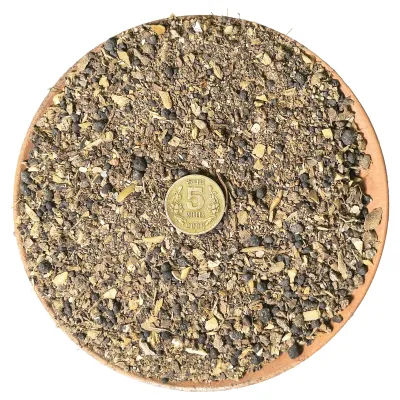
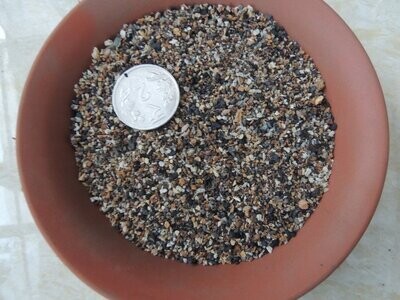
Cactus Seed Planting Mix
Cactus Seed Planting Mix
Sterile, Fine-Grain Media for Cactus & Succulent Seeds
SKU MNS005
₹66.35