Celestial Architecture: Astrophytum myriostigma Variegated
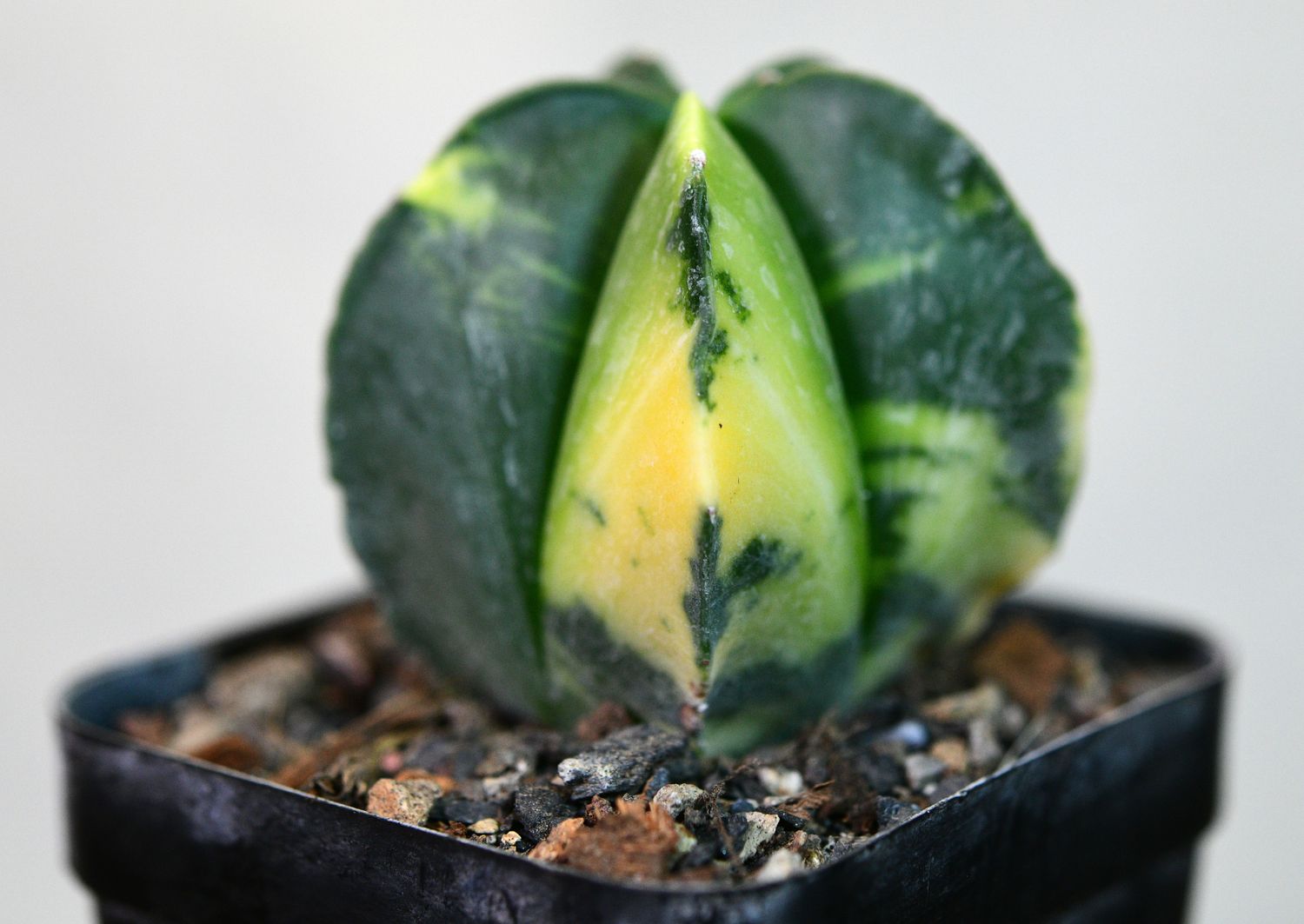
A rare, spineless cultivar coveted by collectors for its striking yellow-green marbling and geometric, star-like symmetry.
1. Origin & History of Name The genus name Astrophytum is derived from the Greek astron (star) and phyton (plant), referring to its distinct star-shaped viewing angle.
2. Morphology This cultivar is defined by its spineless, globular to cylindrical stem, typically divided into five distinct ribs or "costae." The epidermis features characteristic trichomes (white, flock-like scales) that serve to camouflage and protect the plant.
3. Habitat & Origin While the standard Astrophytum myriostigma is endemic to the highlands of northeastern Mexico (specifically the Chihuahuan Desert), the variegated form is exclusively a horticultural cultivar. It does not exist in wild populations but is maintained through selective breeding and propagation in nurseries. This specimen is ethically propagated, ensuring no depletion of wild flora.
4. Cultivation Profile (Indian Context)
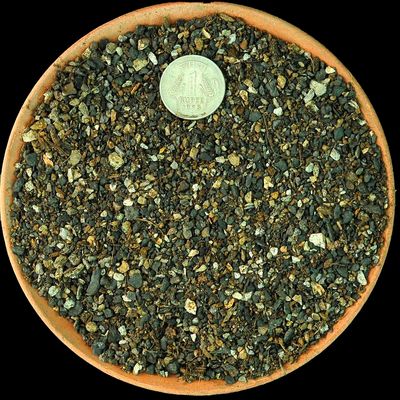
- Substrate: Requires a highly porous, mineral-heavy mix to prevent root rot in Indian humidity. Use 70% inorganic material (pumice, perlite, or river sand) and 30% vermicompost or cocopeat.
- Light: Thrives in bright light. In the Indian plains, provide morning sun but shield from harsh midday rays (12 PM – 4 PM) using a green net (50% shade) to preserve the yellow variegation from scorching.
- Water & Dormancy: Follow a "soak and dry" method. Water thoroughly only when the substrate is bone dry. Significantly reduce watering during the Indian winter (November–February) to induce semi-dormancy, and protect strictly from excess moisture during the monsoon season.
5. Scientific/Historical Anecdote When originally discovered by Henri-Guillaume Galeotti in 1837, this plant was so unlike known cacti—lacking spines and resembling stone—that it was initially categorized as Cereus callicoche. It is frequently nicknamed the "Bishop’s Cap" or "Bishop's Mitre" because its geometric shape bears a striking resemblance to the traditional ceremonial headdress worn by bishops.