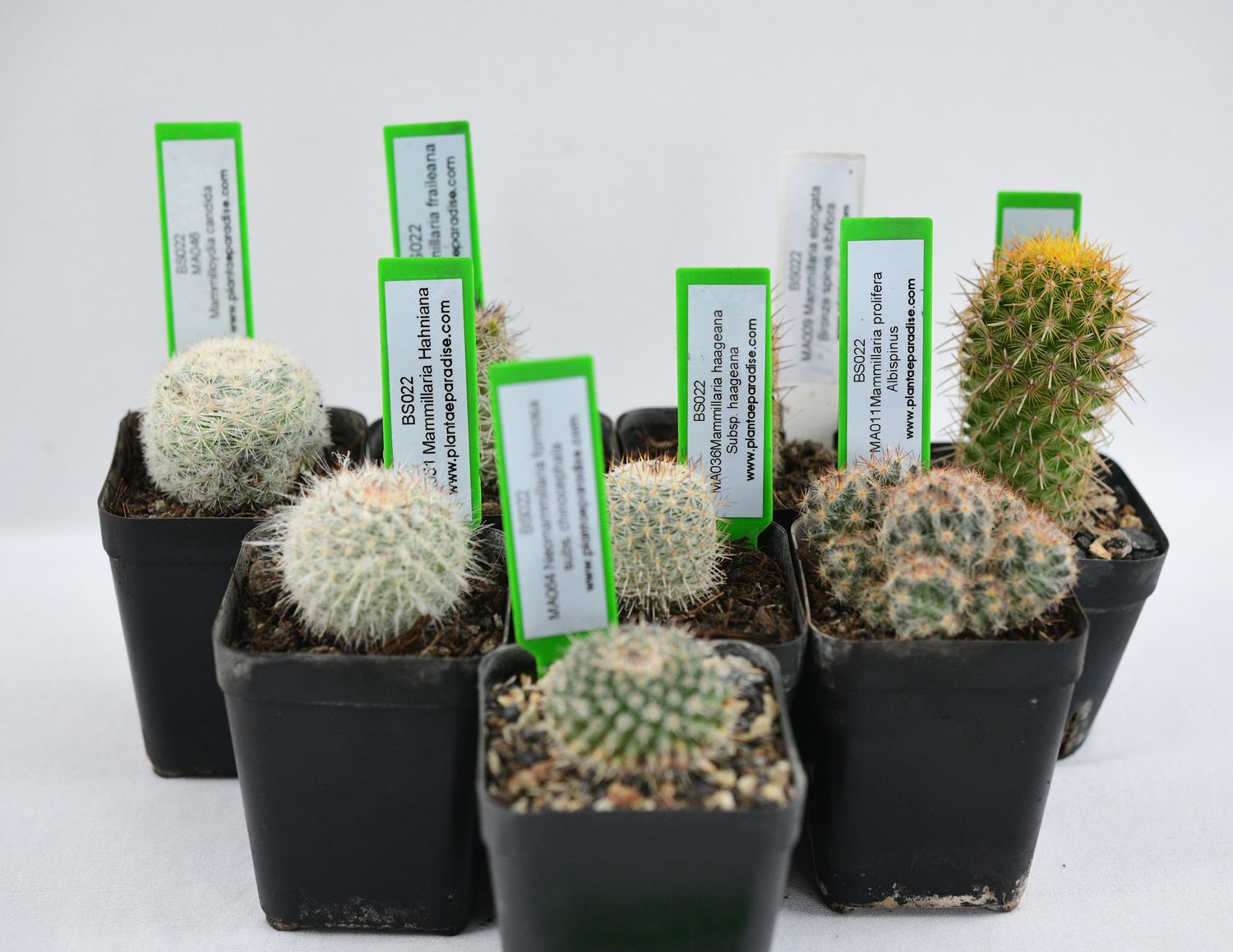
An 8-plant collector's set spotlighting the incredible variety within Mammillaria and its close relatives — from silky white-haired classics to bronze-spined rarities and Mexican field-collected forms. A fantastic entry point for building a serious pincushion cactus collection.
1. Mammilloydia candida (MA046)
A beautiful white-spined pincushion cactus densely covered in fine, snowy spines that give it a soft, glowing appearance. Compact, clustering, and a real standout for collectors who love texture.
2. Mammillaria fraileana (MA018)
A charming, clustering Baja California native with golden-hooked spines and vivid magenta-pink blooms in season. Easy-growing and floriferous — a rewarding addition to any collection.
3. Mammillaria elongata "Bronze Spines" f. albiflora (MA009)
A striking bronze-spined form of the popular "Ladyfinger Cactus," offset by contrasting white flowers. Fast-clustering and eye-catching — a rare color variant collectors love to hunt down.
4. Mammillaria eriacantha Lau 1104 (Jalapa-Palma Sola, Mex.) (MA021)
A field-collected form from a documented Mexican locality (Lau 1104), prized by specialists for its provenance and fine golden spination. A genuine collector's piece with habitat data attached.
5. Mammillaria hahniana (MA051)
The beloved "Old Lady Cactus" — globular and densely wrapped in long white hairs alongside fine spines, crowned with a ring of vivid pink flowers. A classic, must-have Mammillaria.
6. Mammillaria haageana subsp. haageana (MA036)
A neat, cylindrical pincushion with fine comb-like spines and a reliable ring of pink blooms. A hardy, easy-care classic beloved by beginner and expert growers alike.
7. Mammillaria prolifera f. albispinus (MA011)
A rapidly clustering white-spined form known for producing offsets in abundance, quickly forming dense, eye-catching mounds. Great value for collectors who love a fast-multiplying specimen.
8. Neomammillaria formosa subsp. chinocephala (MA064)
A rare, densely-spined globular form valued for its tight, symmetrical spination and collector pedigree. A distinctive addition for those chasing lesser-seen Mammillaria relatives.