

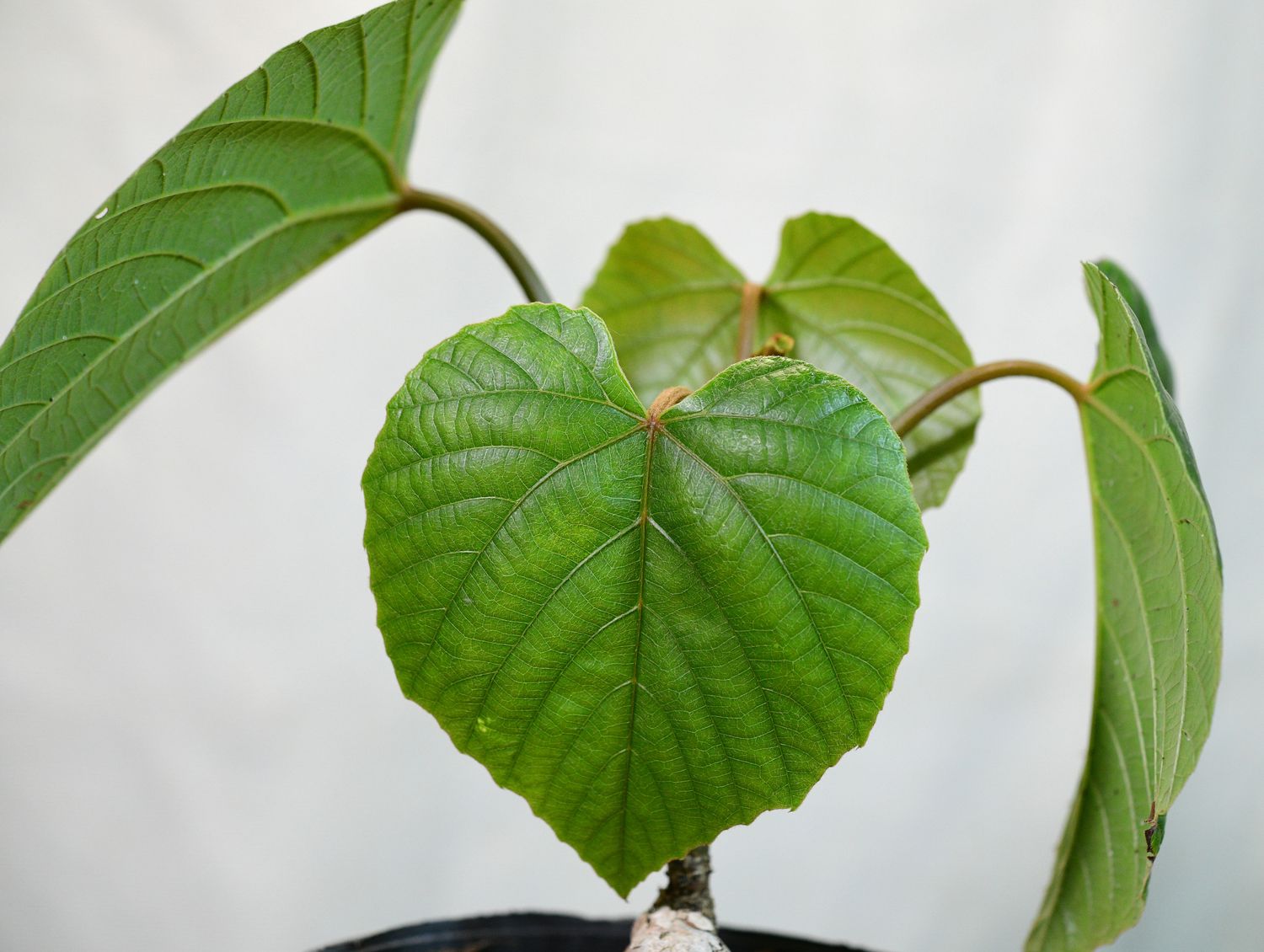
The Cambodian Caudex: Ampelocissus martini
A rare, tuber-forming vitaceous marvel offering exotic, velvet-textured foliage and the architectural allure of a wild geophyte for the discerning collector.
1. Origin & History of Name
The genus name Ampelocissus is derived from the Greek ampelos (vine) and kissos (ivy), referencing its climbing habit and foliage shape.
2. Morphology
This species is prized for its caudiciform habit, developing a woody, subterranean to semi-exposed tuber that serves as a water reservoir.
3. Habitat & Origin
Ampelocissus martini is a wild species native to the seasonally dry tropical forests of Cambodia, Vietnam, and Thailand.
4. Cultivation Profile
- Substrate: Requires a coarse, well-draining, mineral-rich mix. A blend of 50% garden soil, 30% pumice or perlite, and 20% vermicompost works well. Avoid heavy clay that retains excessive moisture around the tuber.
- Light: Thrives in bright, filtered light. In the Indian climate, protect from the harsh midday sun (12 PM–4 PM) to prevent leaf scorch, but avoid deep shade which causes etiolation.
- Water & Dormancy: Strictly seasonal. During the Indian monsoon and warm growing season, water thoroughly when the top inch of soil is dry. In winter, the vine may shed leaves and enter dormancy; significantly reduce watering (once a month) to prevent tuber rot until new growth emerges in spring.
5. Scientific/Historical Anecdote
While ornamental in the global market, Ampelocissus martini has utilitarian roots in its native Cambodia. The dark purple, thick-skinned berries are rich in tartaric acid and have been historically harvested by locals not just for fresh consumption, but to produce a tart wild wine and vinegar, showcasing the deep ethnobotanical link between the genus and fermentation history.