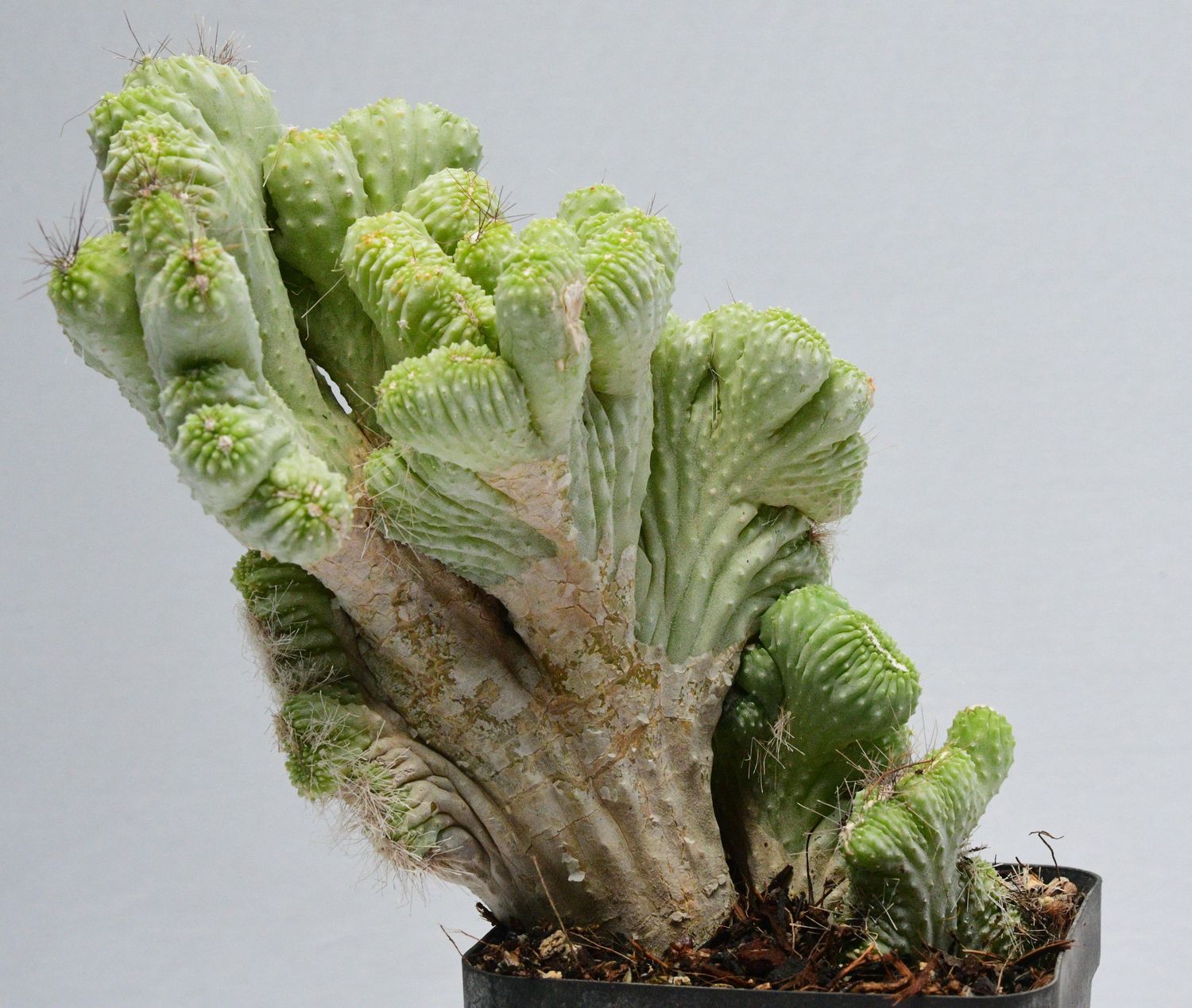
Architectural Marvel: Cereus CV. Wild Crest
A sculptural masterpiece of dense, winding convolutions, this rare cultivar offers a living gallery of natural geometry for the discerning collector.
1. Origin & History of Name
The name Cereus is derived from the Latin word for "wax" or "torch," historically referencing the candle-like silhouette of the genus.
2. Morphology
This specimen exhibits fasciation, a mutation where the apical meristem (growth tip) produces a flattened, ribbon-like structure.
3. Habitat & Origin
The Cereus CV. Wild Crest is a cultivar and does not exist in the wild; it is an anthropogenic selection of the South American Cereus hildmannianus. This specific form was stabilized through selective propagation in nurseries. Our specimens are propagated via sustainable stem cuttings, ensuring no impact on wild populations and maintaining the genetic integrity of the crest.
4. Cultivation Profile
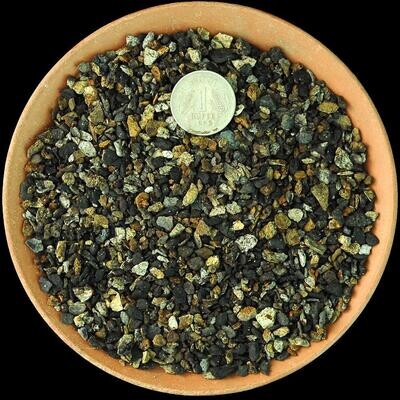
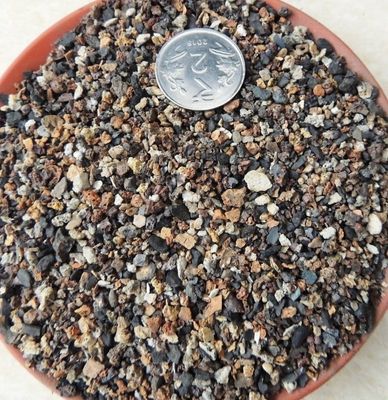
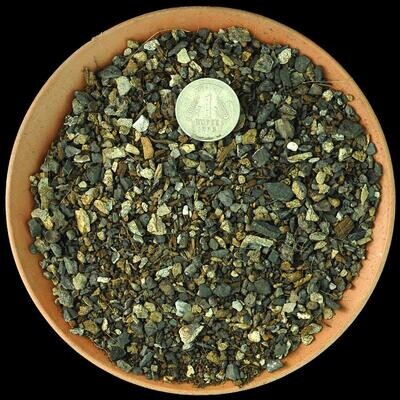
- Substrate: Requires a gritty, mineral-based mix. A ratio of 60% inorganic material (pumice, perlite, or crushed brick) to 40% organic matter is ideal for the Indian climate to prevent root rot.
- Light: High-intensity light is required. In the Indian subcontinent, provide bright, indirect sunlight or morning sun. Protect from the scorching 12:00 PM – 3:00 PM peak summer sun to avoid epidermal scorching.
- Water/Dormancy: Follow a "soak and dry" method. During the monsoon, withhold water entirely if humidity is above 80%. In winter (dormancy), water sparingly—once every 4–6 weeks—to mimic the arid conditions of its ancestral lineage.
5. Scientific/Historical Anecdote
The genus Cereus was one of the first cactus groups described by early European botanists in the 16th century.