

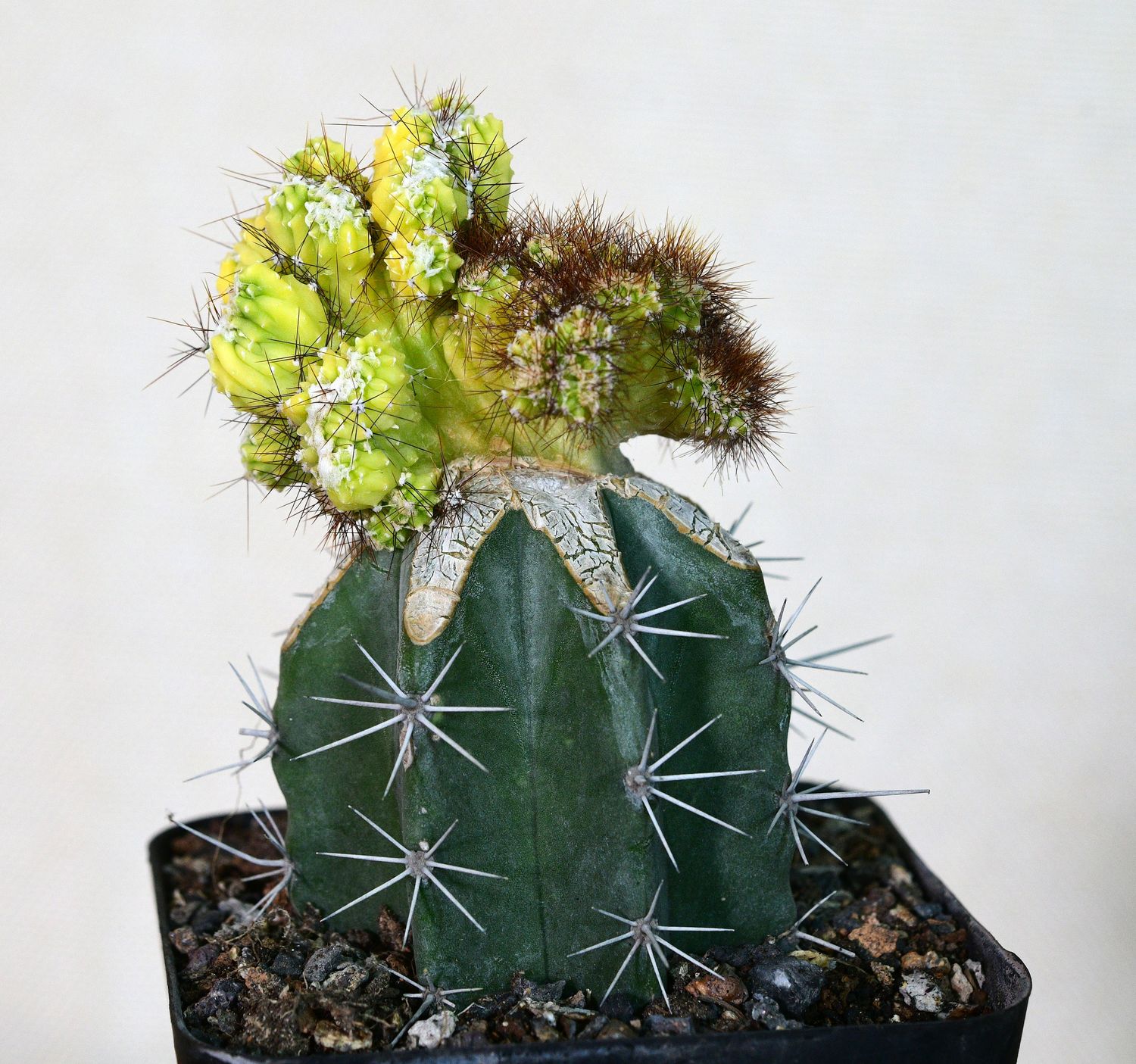
Cereus peruvianus Var. Monstruosus F. Variegatus crest
Product Details
Sculptural Splendor: Cereus peruvianus var. monstruosus f. variegatus
A rare, living masterpiece defined by its unpredictable structural mutations and vivid cream-to-gold variegation.
- Origin & History of Name: The genus name Cereus stems from the Latin word for "torch" or "wax candle," referring to the upright, candelabra-like growth habit.
"Peruvianus" suggests an early (though partially debated) association with Peru. The "Monstruosus" epithet was historically used by botanists to describe "monstrous" or chaotic growth patterns, while "Variegatus" denotes the genetic mutation causing a lack of chlorophyll in certain patches of the epidermis. - Morphology: This cactus features a "monstrose" growth habit, where the typical symmetrical ribs (costae) break down into irregular, knobby tubercles.
Its epidermis displays a striking marble-like variegation, transitioning from deep glaucous green to pale yellow. Unlike the standard species, its areoles are scattered unpredictably, often resulting in a stunted, sculptural form rather than a straight column. - Habitat & Origin: This specific form is a cultivar; while the base species is native to rocky outcrops in South America (specifically Brazil and Argentina), the variegated monstrose mutation is a product of selective greenhouse cultivation.
These specimens are propagated via cuttings from stable mother plants to ensure the continuation of their unique genetic traits without impacting wild populations. - Cultivation Profile:
- Substrate: A strictly mineral-based mix (70% grit/pumice/perlite, 30% organic matter). Avoid standard garden soil which retains too much moisture in humid Indian climates.
- Light: Bright, indirect light or filtered sunlight. In India, protect from the harsh 12:00 PM – 4:00 PM sun to prevent "sunscald" on the sensitive variegated tissue.
- Water/Dormancy: Drench thoroughly only when the medium is bone-dry.
During the monsoon, withhold water entirely if humidity is high. Reduce watering significantly from November to February during its semi-dormant phase.
- Scientific/Historical Anecdote: The Cereus peruvianus group has long been a source of taxonomic confusion. For decades, it was the "catch-all" name for almost any large, columnar cactus found in European gardens. In fact, many plants sold under this name are actually Cereus hildmannianus, a distinction only clarified through modern DNA sequencing and more rigorous botanical observation of their nocturnal white flowers.
New


Monsoon Guardian Kit (5 in 1)
Monsoon Guardian Kit (5 in 1)
Complete 5-in-1 biological protection kit for cacti & succulents
SKU MNS024
₹850.00
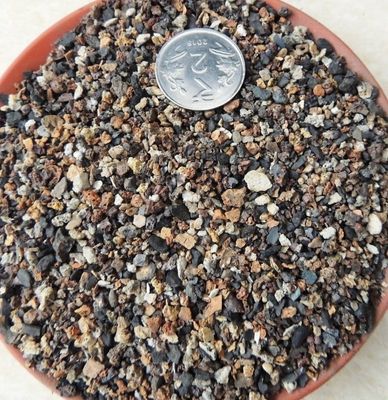
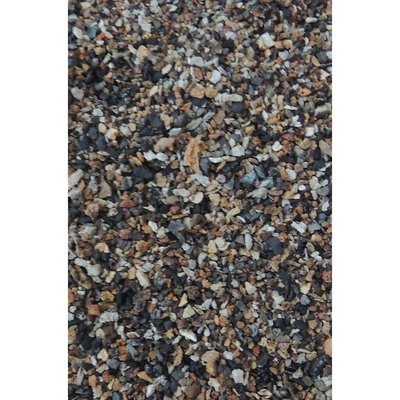
Cactus & Succulent Planting Mix FINE (aka Cactus Soil Mix or Succulent Soil Mix)
Cactus & Succulent Planting Mix FINE (aka Cactus Soil Mix or Succulent Soil Mix)
Fine-Grain Potting Mix for Cactus & Succulent Roots
SKU MNS001
₹39.85