

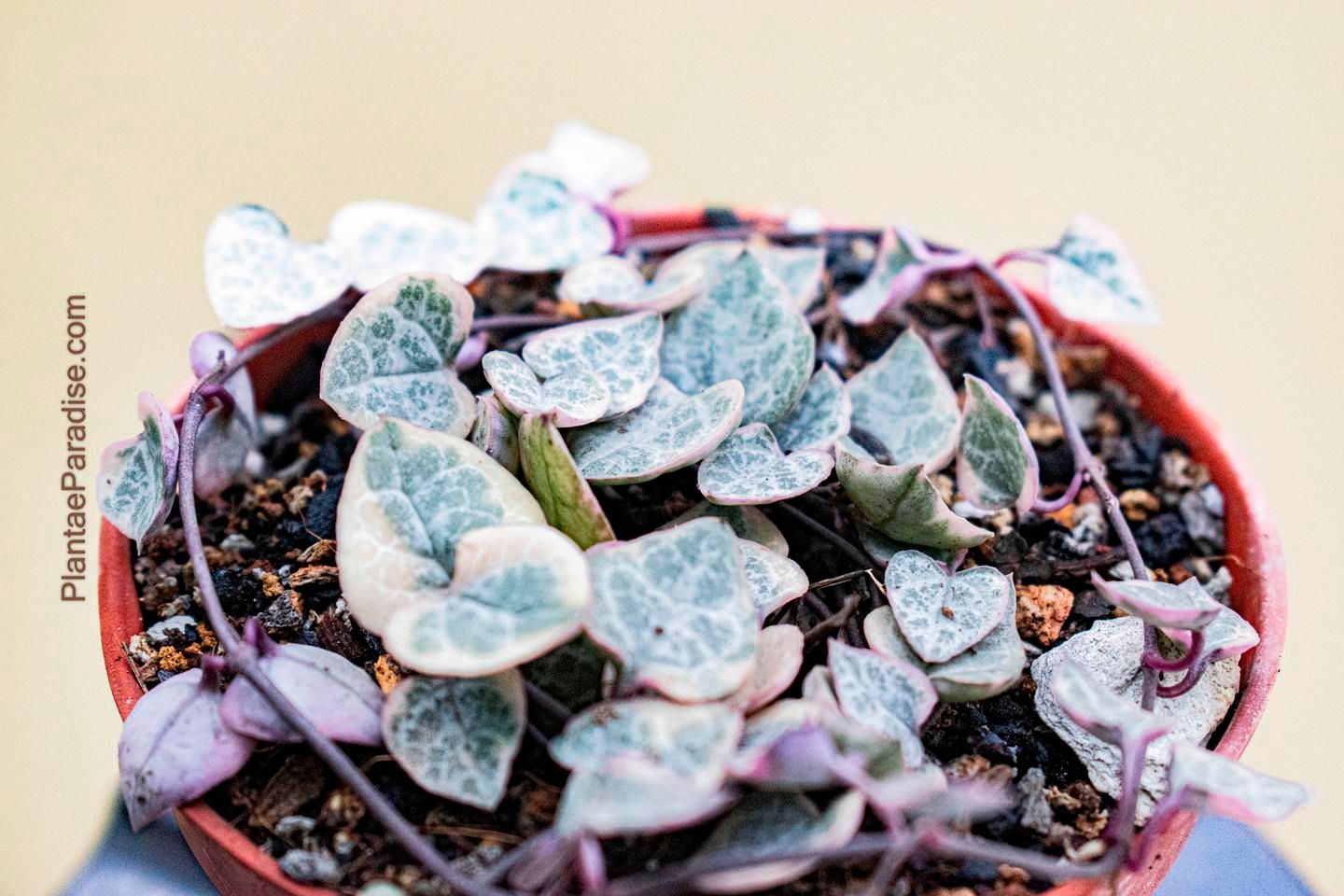
Ceropegia woodii variegata — Variegated String of Hearts
1. Origin of Name:
The genus Ceropegia derives from Greek, meaning “horned,” referencing the tubular, sometimes horn-like flowering structures of the plants within this genus. The species woodii honors the South African botanist John Medley Wood, who extensively studied native flora. The variegata cultivar highlights its striking variegated leaves—adorned with creamy-white or pale yellow patches and edges—making it visually distinctive from the classic green variety. Widely called the String of Hearts, this name captures the plant's charming, trailing stems and heart-shaped leaves, evoking a romantic and delicate aesthetic.
2. Origin of Plant:
Native to South Africa and Namibia, Ceropegia woodii thrives in dry, rocky, semi-desert environments where it often clings to cliffs or sprawls across rocky soils to seek sunlight. Discovered in its native habitat in the early 20th century, it quickly gained popularity as an ornamental houseplant due to its graceful, trailing habit, easy care, and beautiful foliage. The variegated cultivar has been selectively propagated for its ornamental appeal, offering an enhanced, decorative version of the species.
3. Description:
This delicate, tuberous succulent vine features slender, wiry stems that trail and drape — perfect for hanging baskets, containers, or as a ground cover. Its fleshy, heart-shaped leaves are typically about 1-2 inches long and display a mesmerizing variegation pattern—cream, pale yellow, or light green patches contrasted with the darker green base in the traditional variety. The plant produces tiny, star-shaped, magenta or light purple flowers in summer, cloaked in tubular structures that resemble miniature lanterns. Its captivating leaves and dainty flowers make it a romantic, eye-catching addition to any arrangement.
4. Conservation Status:
- Ceropegia woodii variegata* is widely propagated and cultivated globally. It is not threatened or endangered; its popularity in indoor gardening and as a trailing accent ensures sustainable cultivation. Responsible propagation practices and ethical sourcing help preserve wild populations in South Africa and Namibia.
5. Care:
- Watering: Water sparingly, allowing the soil to dry out between watering. Reduce watering in winter when growth slows. Overwatering can cause tuber rot.
- Soil: Use a fast-draining, sandy or cactus potting mix enriched with perlite or coarse sand. Good drainage is crucial for healthy roots.
- Light: Prefers bright, indirect sunlight but can tolerate some direct morning or evening sun. Too little light reduces variegation, while too much direct sun may scorch leaves.
- Temperature: Best grown in temperatures between 65°F and 80°F (18°C to 27°C). Protect from frost—best suited for indoor environments or frost-free outdoor spaces.
- Additional Tips: Fertilize lightly during the growing season with a diluted succulent or houseplant fertilizer. Its trailing form makes it ideal for hanging baskets, ledges, or cascading over containers, adding a delicate, romantic touch to any indoor or outdoor setting.