Origin of Name
Chamaecereus silvestrii's name derives from its unique characteristics and botanical lineage. The genus name "Chamaecereus" comes from the Greek words "chamai," meaning ground or low to the ground, and "cereus," referring to a wax candle or the columnar shape of many cacti in this category, highlighting the plant's low-growing, spreading habit. The species name "silvestrii" honors Professor Silvestri, an Italian botanist, acknowledging his contributions to botany. Commonly known as the Peanut Cactus, this name reflects the small, peanut-sized segments of the plant, especially noticeable as the plant clusters and spreads.
Technical Description of Plant
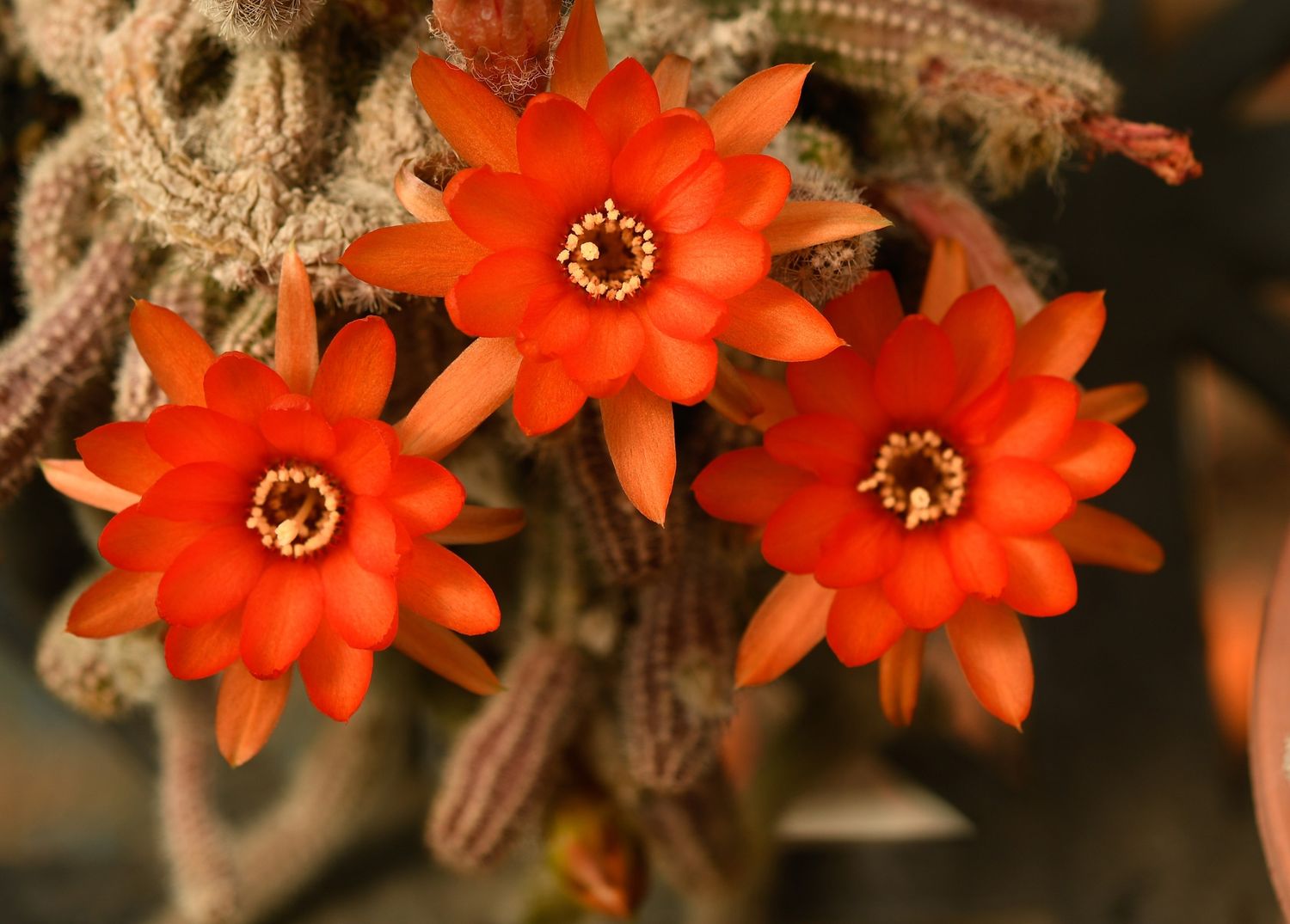
Chamaecereus silvestrii is a small, mat-forming cactus known for its bright green, elongated, finger-like stems that resemble a cluster of peanuts. These stems are densely packed together, forming low, spreading clumps that can cover the soil's surface in a pot. The plant is particularly admired for its vibrant orange-red flowers that bloom in spring and early summer, providing a striking contrast against the green stems. Each flower is relatively large compared to the size of the stem, adding to the plant's ornamental appeal.
Origin of Plant
Native to Argentina, Chamaecereus silvestrii is adapted to rocky outcrops and slopes, thriving in well-drained soils. Its natural habitat has equipped it with characteristics ideal for surviving in arid environments, making it a hardy plant capable of withstanding periods of drought.This species is supposed to be endemic to Argentina, occurring between Tucumán and Salta. Echinopsis chamaecereus was collected by the botanist Carlo Spegazzini and described at the beginning of the XX century. However, the plant was never found again in the area during several expeditions on horseback by expert Roberto Kiesling, who only found in the area the widespread Echinopsis saltensis.
Conservation Status
As of the latest assessments, Chamaecereus silvestrii does not have a specific conservation status and is not listed as endangered. However, like all native flora, it benefits from conservation efforts that protect natural habitats and ensure sustainable collection practices.
Care Instructions
Chamaecereus silvestrii thrives in bright, indirect sunlight but can tolerate direct sunlight, especially in cooler climates or during the less intense morning hours. It prefers well-draining cactus mix soil to prevent root rot. Water moderately during the growing season, allowing the soil to dry completely between waterings, and reduce watering in the winter to a minimum. This cactus is relatively cold-tolerant compared to many succulents but should be protected from frost. Fertilize lightly with a cactus-specific fertilizer in the spring to encourage blooming. Due to its spreading habit, the Peanut Cactus is ideal for wide, shallow pots or as a unique addition to rock gardens and succulent displays.