

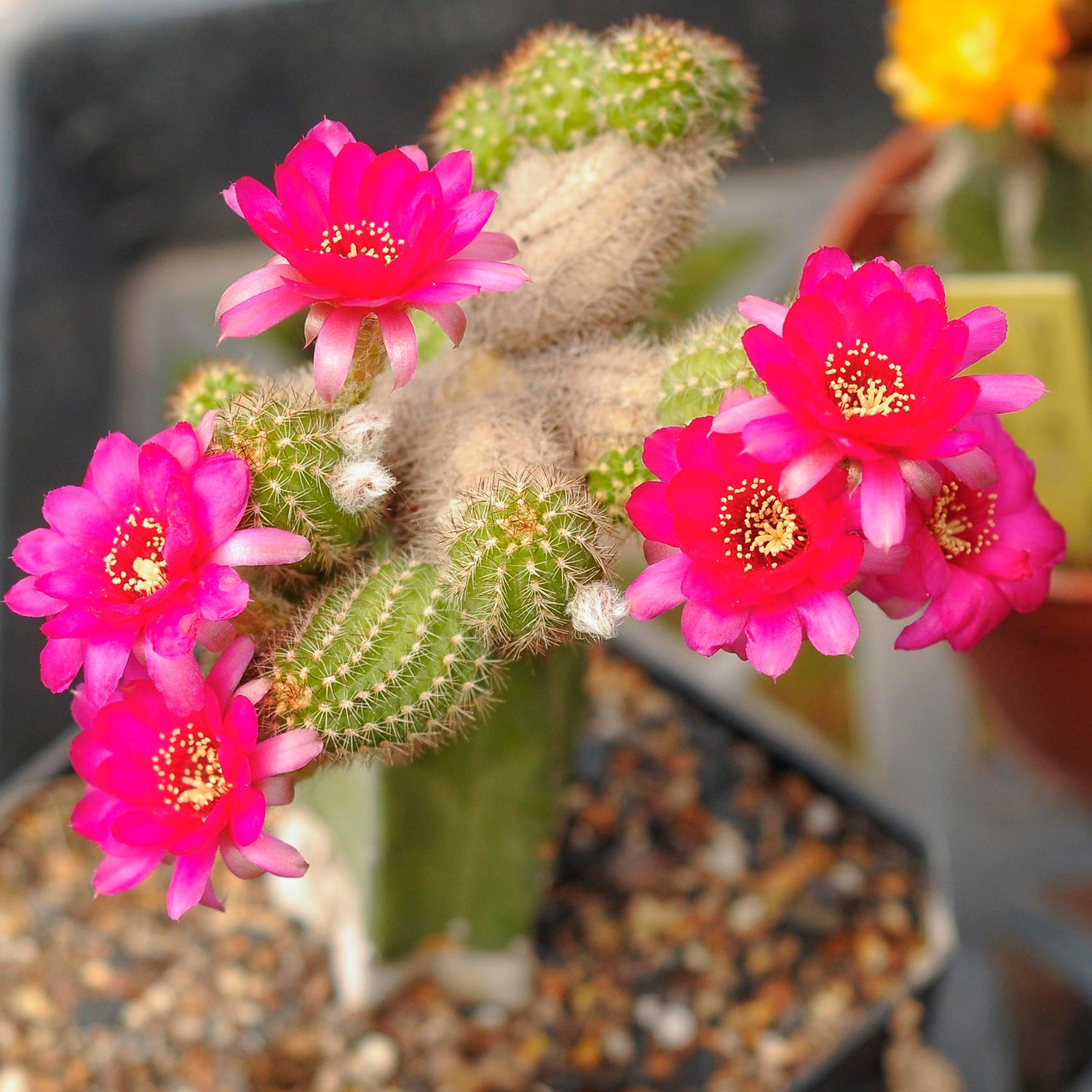
Chamaelobivia cv Pauline (Peanut Cactus)
Product Details
Radiant Blooms: Chamaelobivia cv. 'Pauline' (Peanut Cactus)
A striking intergeneric hybrid prized for its prolific, deep violet-pink blooms and architectural clumping form.
- Origin & History of Name The name Chamaelobivia is a portmanteau reflecting its hybrid lineage: the Greek chamai (on the ground/dwarf) and Lobivia (an anagram of Bolivia, the genus's primary habitat). The cultivar name 'Pauline' follows the horticultural tradition of naming exceptional hybrids after individuals—in this case, part of a series of crosses developed to enhance flower size and color intensity compared to the standard "Peanut Cactus" (Echinopsis chamaecereus).
- Morphology This cactus features elongated, cylindrical stems known as costae (ribs), which are densely covered in soft, white bristles (spines). The epidermis is a matte light green, but its most distinct feature is the "clumping" habit, where it offsets rapidly to form a dense mat.
During spring, it produces large, funnel-shaped flowers that are disproportionately large relative to the stem diameter, emerging from the areoles along the ribs. - Habitat & Origin Chamaelobivia cv. 'Pauline' is a horticultural cultivar; it does not exist in the wild.
It is a man-made hybrid, typically resulting from crosses between Echinopsis chamaecereus and various Lobivia species. This plant is a sustainable choice for collectors as it is easily propagated via stem cuttings rather than being harvested from fragile wild ecosystems. - Cultivation Profile
- Substrate: Requires a highly porous, mineral-based mix. Use a ratio of 50% coarse sand/perlite and 50% organic matter to ensure rapid drainage during monsoon seasons.
- Light: Thrives in bright, indirect sunlight. In the Indian subcontinent, provide 40-50% shade during peak summer afternoons to prevent epidermal scorching, while allowing full morning sun to encourage budding.
- Water/Dormancy: Follow a "soak and dry" cycle. In India, reduce watering significantly during the winter (November–February) to induce a cool dormancy, which is essential for flower production in the following spring.
- Scientific/Historical Anecdote The parent species of this hybrid, Echinopsis chamaecereus, was first discovered by the Italian botanist Carlo Spegazzini in the mountains of Argentina in the late 19th century. Interestingly, while it became one of the most common houseplants globally due to its "un-killable" nature, it was considered exceptionally rare in its native habitat for decades, highlighting the role of cultivation in preserving botanical lineages.
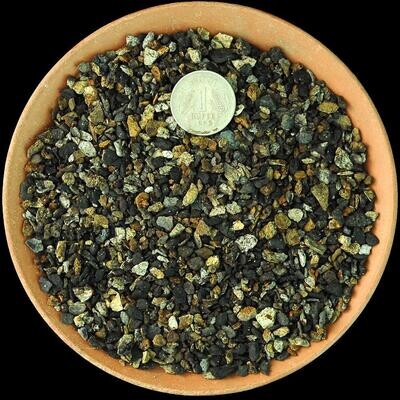
Cactus & Succulent Planting Mix COARSE (aka Cactus Soil Mix or Succulent Soil Mix)
Cactus & Succulent Planting Mix COARSE (aka Cactus Soil Mix or Succulent Soil Mix)
Washed, Free-Draining Mineral Mix for Cactus & Succulents
SKU MNS003
₹44.85
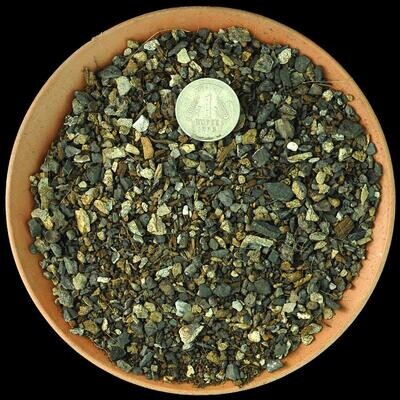
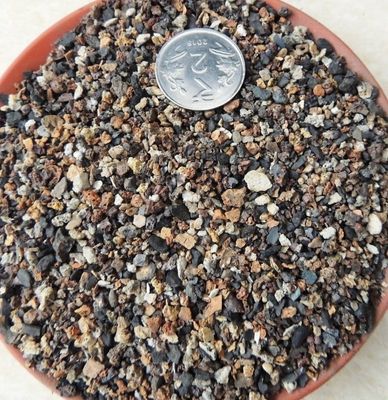
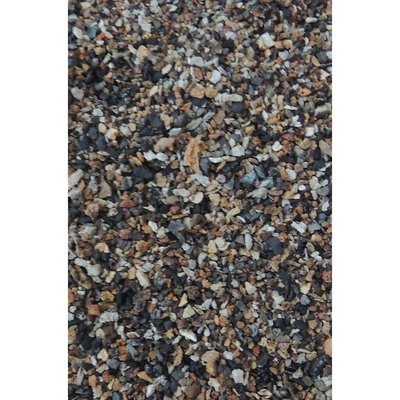
Cactus & Succulent Planting Mix FINE (aka Cactus Soil Mix or Succulent Soil Mix)
Cactus & Succulent Planting Mix FINE (aka Cactus Soil Mix or Succulent Soil Mix)
Fine-Grain Potting Mix for Cactus & Succulent Roots
SKU MNS001
₹39.85

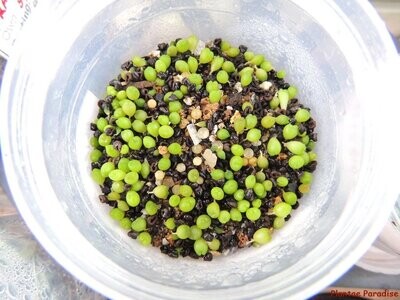
Cactus Seed Planting Mix
Cactus Seed Planting Mix
Sterile, Fine-Grain Media for Cactus & Succulent Seeds
SKU MNS005
₹74.85