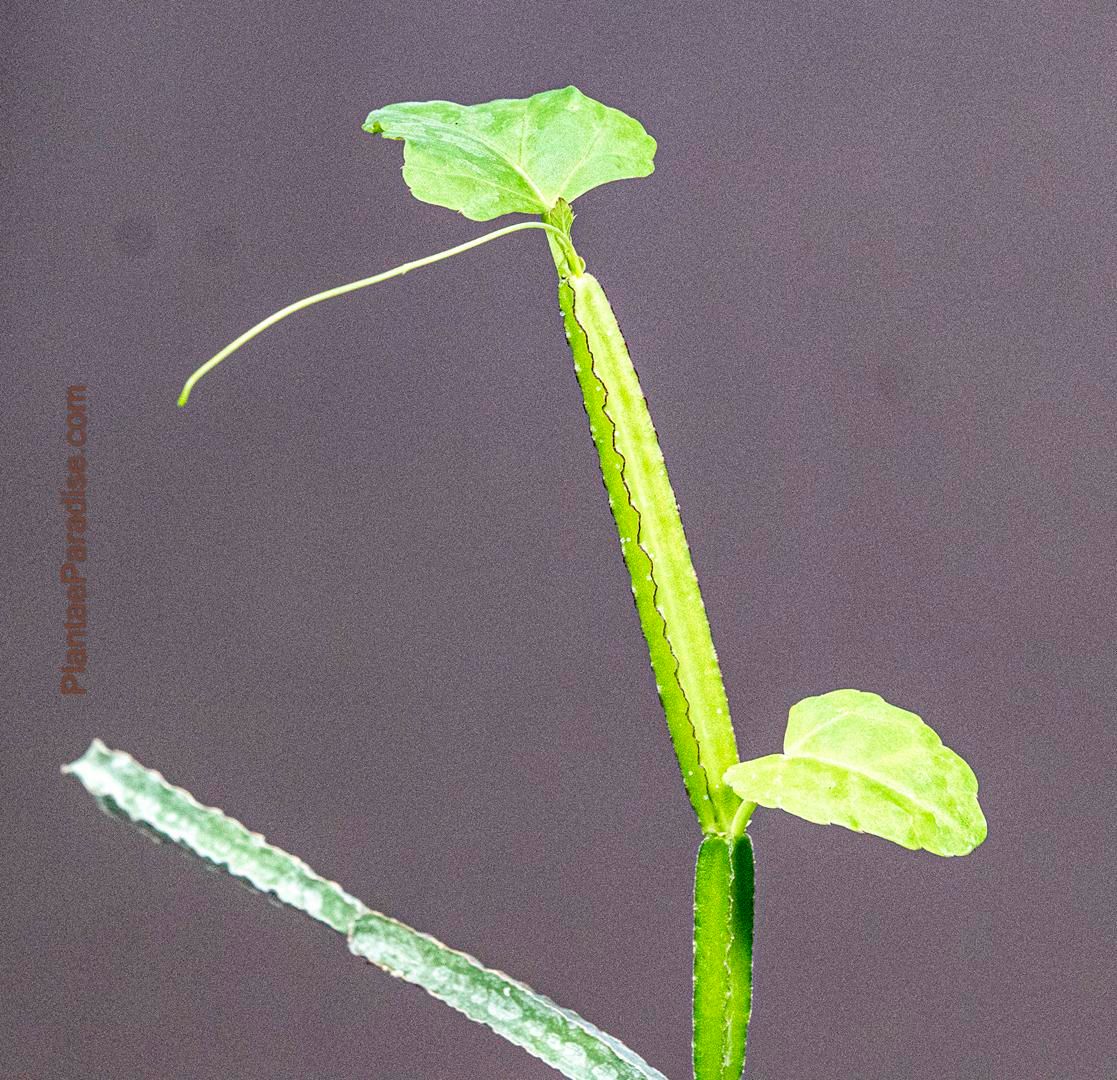
A Set of Two rooted cuttings
Cissus quadrangularis is a vine that grows in Africa and parts of Asia. Traditionally, its plant parts are dried and made into powder to use as medicine. Cissus quadrangularis might have antioxidant, pain-relieving, and anti-inflammatory effects. It might also help stimulate bone growth. People use Cissus quadrangularis for obesity, fractures, joint pain, low bone mass, and many other conditions, but there is no good scientific evidence to support most of these uses.
Cissus quadrangularis is a versatile and intriguing vine valued for its medicinal properties, unique quadrangular stem, and lush, climbing growth. Its dense, vibrant foliage makes it an attractive addition to gardens, vertical installations, or indoor plant collections.
1. Origin of Name:
The genus "Cissus" is derived from Greek, meaning "ivy," referencing its vine-like, climbing habit. The species name "quadrangularis" describes its distinctively quadrangular or four-sided stem, which is a key characteristic of the plant’s structure. Known commonly as "Veldt Grape" or "Bone Setter," its name highlights its traditional medicinal use for healing fractures and bone health in Ayurvedic medicine, where it has been prized for centuries. The name “quadrangularis” emphasizes the plant’s unique, square-shaped stems that resemble architectural features or ancient columns, symbolizing strength and resilience.
2. Origin of Plant:
Cissus quadrangularis is native to tropical regions of Africa, India, Sri Lanka, and Southeast Asia. It naturally grows in dry, rocky, or bushy areas where its climbing or sprawling vines can cling to trees, rocks, or fences. It has been cultivated and traditionally used in herbal medicine for thousands of years, especially in India, where it’s regarded as a vital and healing plant. Its hardy growth habit and medicinal fame have made it a popular plant in both traditional and modern herbal practices.
3. Description:
Cissus quadrangularis is a fast-growing, climbing or spreading vine with sturdy, four-sided, green stems that are often thick and slightly woody in mature plants. The leaves are compound, consisting of three to five leaflets, which are glossy, ovate, and bright green, creating a lush canopy. The plant produces small, greenish-white flowers followed by edible, grape-like berries. Its most distinctive feature is the four-sided, angular stem—hence the name—forming a geometric, architectural appearance that is both functional and ornamental. The dense foliage and unique stem structure make it an attractive choice for vertical gardens or as a ground cover.
4. Conservation Status:
Cissus quadrangularis is widely cultivated and available globally, especially because of its medicinal importance. It is not threatened in the wild and is often propagated in herbal and ornamental settings. Responsible cultivation helps preserve wild populations while providing the plant for nutritional, medicinal, and decorative uses.
5. Care:
- Lighting: Prefers bright, indirect sunlight; can tolerate some direct sun, especially in outdoor settings.
- Watering: Keep soil consistently moist during the growing season; reduce watering in winter when growth slows.
- Soil: Use well-draining soil rich in organic matter; a mix suitable for tropical vines or potted plants.
- Temperature: Prefers warm tropical climates, ideally between 65°F and 85°F (18°C to 29°C); protect from cold and frost.
- Additional Tips: Regular pruning encourages bushier growth and maintains shape. Fertilize every few weeks with a balanced, water-soluble fertilizer during active growth.
6. Interesting Anecdote:
In traditional medicine, Cissus quadrangularis is renowned for its healing properties—particularly for bone fractures and tissue regeneration. Historically called the “Bone Setter,” the plant’s stem is believed to accelerate healing and strengthen bones, a belief supported by recent scientific studies exploring its anti-inflammatory and regenerative effects. Its unique, four-sided stems inspired ancient architects and herbalists to think of structured strength and resilience—symbolic of healing and vitality in many cultures.
Add Cissus quadrangularis to your plant collection and enjoy a lush, medicinal vine with architectural stems, vibrant foliage, and a storied history of healing and resilience!