Conophytum bilobum
Product Details
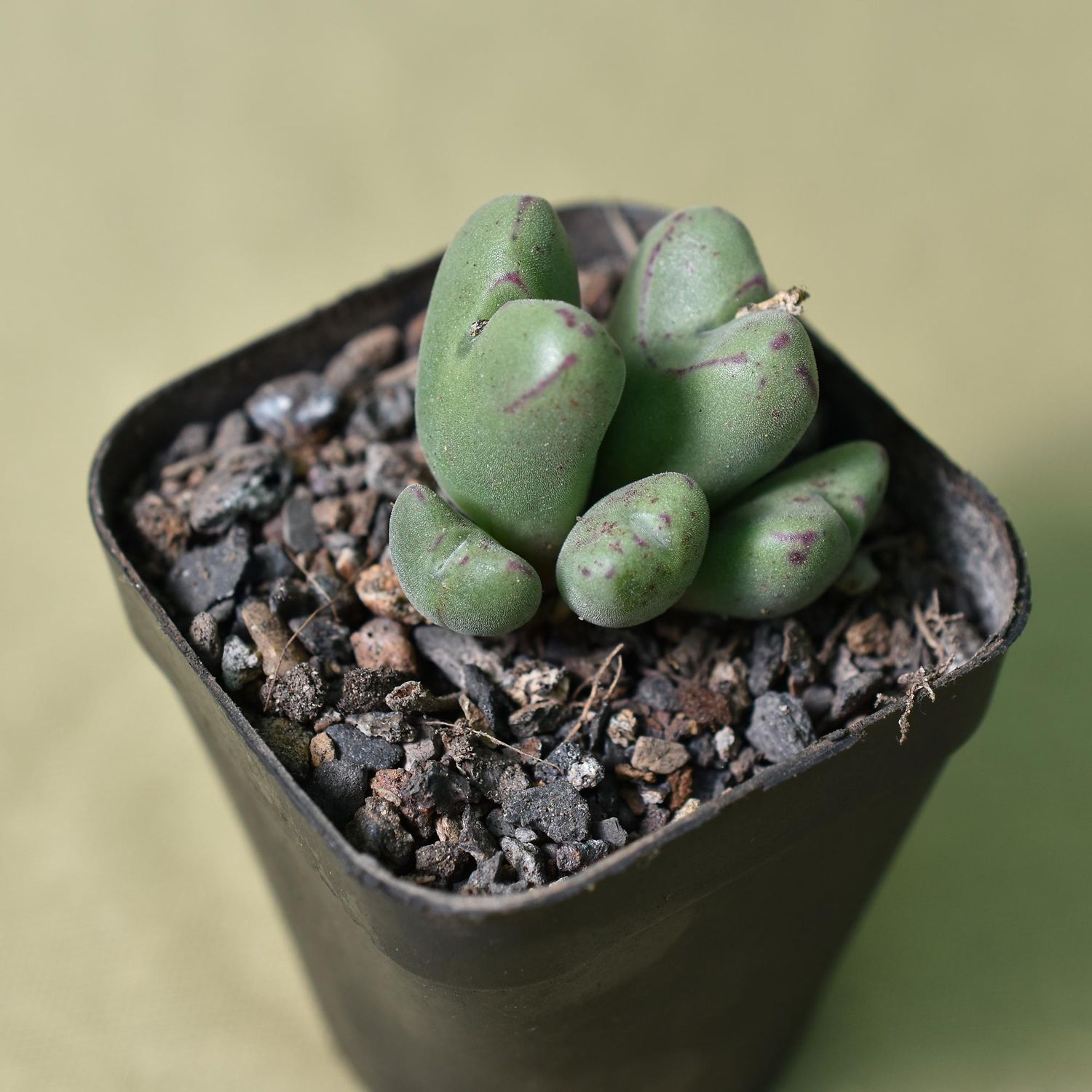
Living Sculpture: Conophytum bilobum
Own a piece of botanical minimalism with these tactile, "living pebble" succulents prized for their heart-shaped form and vibrant autumn blooms.
- Origin & History of Name: The genus name Conophytum is derived from the Greek konos (cone) and phyton (plant), referring to the fused, cone-like shape of the leaves. The specific epithet bilobum comes from the Latin bi (two) and lobus (lobe), accurately describing the distinct two-lobed structure that resembles a cleft heart or animal ears.
- Morphology: This species is characterized by its succulent paired leaves, which are fused together except for a small fissure at the apex.
- Habitat & Origin: This is a wild species native to the winter-rainfall regions of South Africa (Little Namaqualand).
- Cultivation Profile:
- Substrate: Use a strictly mineral-based mix (70% pumice/perlite, 30% coarse sand/fine gravel) with minimal organic matter to prevent rot.
- Light: Requires bright, indirect light; in the Indian context, provide filtered sunlight and avoid the harsh midday sun of May and June.
- Water/Dormancy: Enter a dry dormancy during the peak Indian summer (March to June); resume light watering in late monsoon/early winter as temperatures drop, mirroring its natural growth cycle.
- Scientific/Historical Anecdote: Conophytum bilobum is one of the most variable species in the genus, leading early 20th-century botanists to mistakenly describe dozens of different "species" that were actually just regional variations of the same plant.