Crassula rupestris var. marnieriana: The Rugose Stonecrop with Stunning Silver-Green Foliage
1. Origin of Name:
The genus "Crassula" is derived from the Latin "crassus," meaning "thick" or "fat," referring to the succulent, fleshy nature of its leaves. The species "rupestris" means "rock-loving" or "growing among rocks" in Latin, highlighting its natural habitat among rocky outcrops. The variety "marnieriana" honors the French botanist and plant collector Marnier-Lapostolle, who contributed to the study and popularization of succulent plants. The name "Crassula rupestris var. marnieriana" emphasizes its natural adaptation to rocky terrains and its distinct, textured leaves that resemble miniature stones, making it a beautiful and hardy drought-tolerant plant.
2. Origin of Plant:
Native to the arid regions of South Africa and Namibia, Crassula rupestris var. marnieriana is naturally found thriving among rocky slopes, cliffs, and gravelly soils where it endures intense desert sunlight and minimal water. Its discovery traces back to early 20th-century botanical explorations of Southern Africa’s rocky landscapes, where explorers noted its resilience and ornamental appeal. Its preference for rocky, well-drained terrains makes it an ideal plant for xeriscaping, container gardening, or rock gardens, where it can mimic its natural environment.
3. Description:
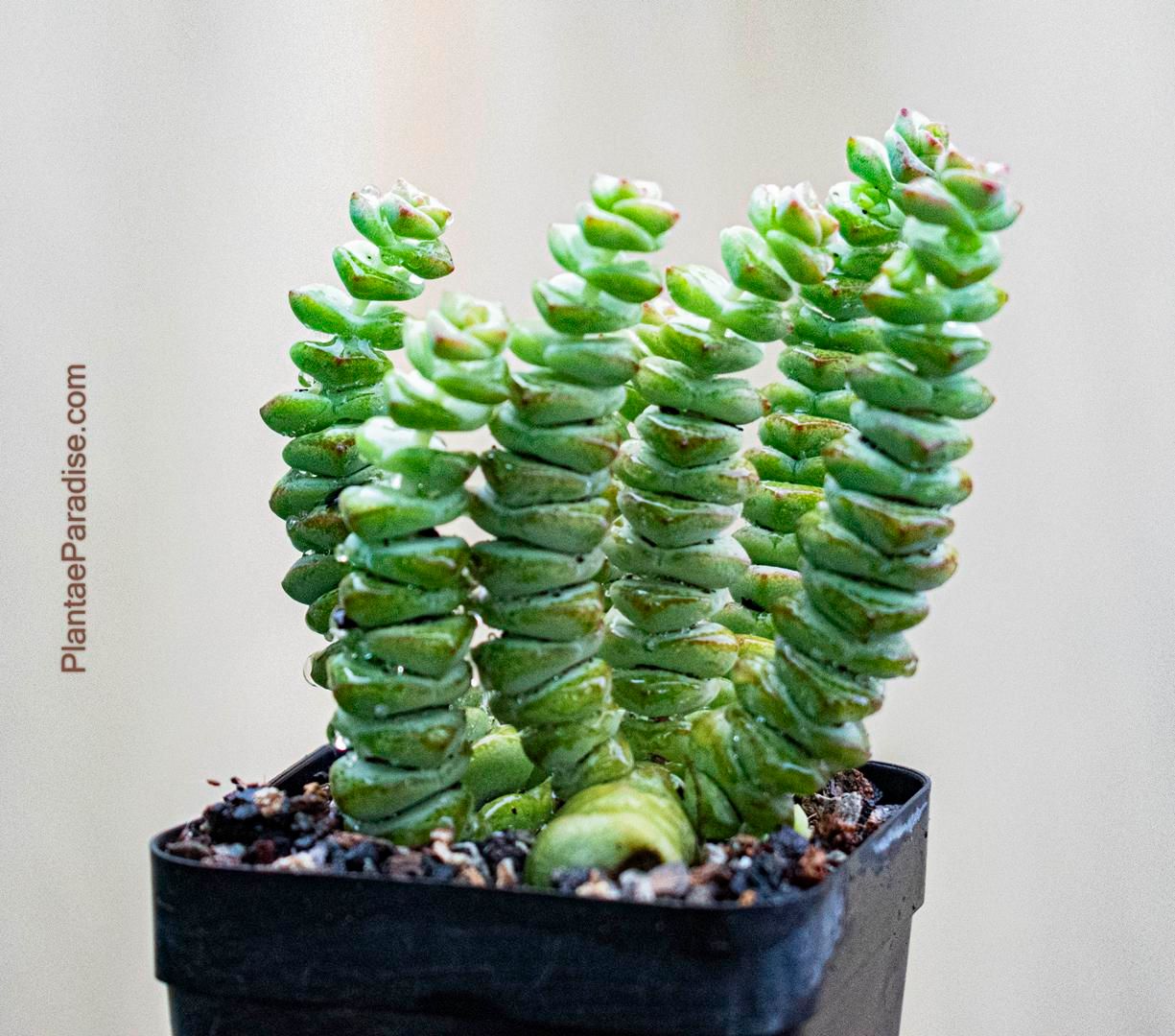
This charming succulent forms dense, low-growing mats, with each rosette measuring about 2-4 inches in diameter. Its small, oval, fleshy leaves cluster tightly and have a textured, almost wrinkled surface that enhances its stone-like appearance, often exhibiting a silvery-green or grayish hue with reddish margins in bright sunlight. During the warmer months, it produces tiny, star-shaped, white or pink flowers on upright stalks, adding a delicate ornamentation that contrasts beautifully with its rugged leaves. Its compact, textured form and striking coloration make it a perfect for urban gardens, potted arrangements, or as ground cover, bringing a rugged natural charm to any setting.
4. Conservation Status:
Crassula rupestris var. marnieriana is not currently threatened or endangered. Its popularity and ease of cultivation in nurseries have helped preserve its wild populations. Nonetheless, sustainable collection practices and habitat protection remain important to ensure its bright future and the continued beauty of South Africa’s rocky landscapes.
5. Care:
For healthy growth and vibrant appearance:
- Watering: Water sparingly, allowing the soil to dry thoroughly between waterings. Reduce watering during winter dormancy.
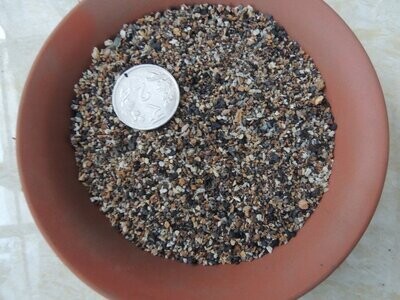
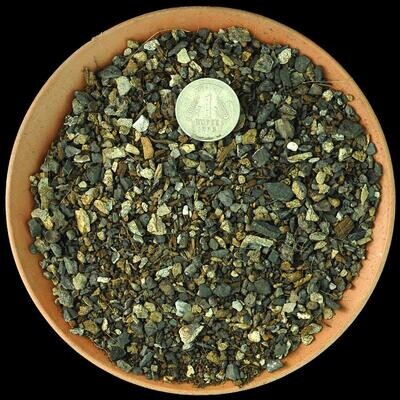
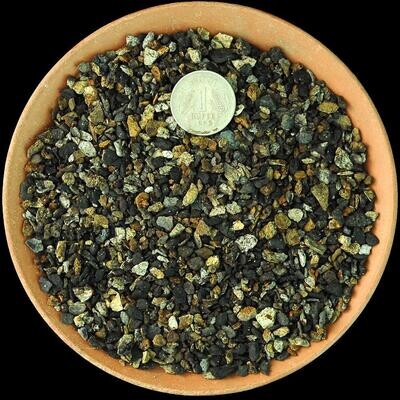
- Soil: Use a well-draining cactus or succulent mix with added coarse sand or pumice.
- Light: Requires full sun to develop its colorful, stone-like appearance. Bright outdoor sun or a sunny windowsill is best.
- Temperature: Tolerant of heat, thriving between 65°F and 85°F (18°C - 29°C). Protect from frost—bring indoors or provide frost protection in cooler climates.
- Additional Tips: Fertilize lightly during the active growing season with a diluted cactus fertilizer. Handle with care—its leaves are small and delicate, and repot every 2-3 years to reinforce root health.
Interesting Fact:
Native to the rocky, arid terrains of Southern Africa, Crassula rupestris var. marnieriana has long been admired for its resilience and rugged beauty. Indigenous communities and early explorers prized its stone-like leaves, which blend seamlessly into the rocky environment. Its ability to thrive in harsh conditions has made it a symbol of endurance and adaptability, with many gardeners appreciating its miniature, natural “stone” appearance. Often called “Sandstone Plant,” it’s a living piece of the desert’s natural art—beautiful, tough, and perfectly suited to survive where few others can.