

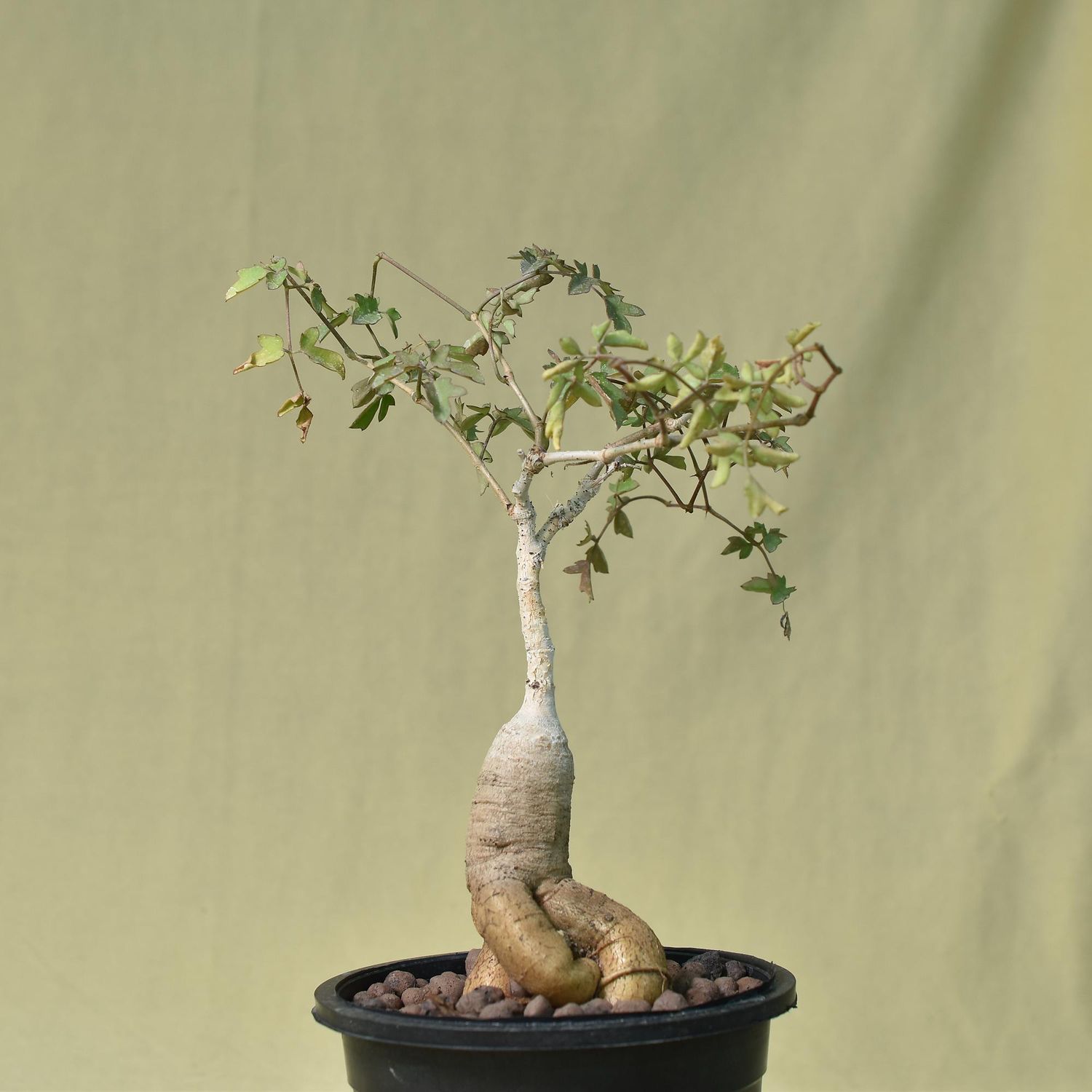
Cyphostemma elephantopus
Product Details
Sculptural Rarity: Cyphostemma elephantopus
A legendary pachycaul prized by collectors for its massive, textured caudex and prehistoric silhouette.
- Origin & History of Name: The genus name Cyphostemma is derived from the Greek words kyphos (hump) and stemma (garland), referring to the shape of the flower petals.
- Morphology: This deciduous succulent is defined by its massive caudex (swollen water-storage stem) covered in a yellowish-grey, peeling epidermis. It produces seasonal, vining branches with deeply lobed, serrated leaves.
- Habitat & Origin: This is a wild species endemic to the seasonally dry tropical forests of Madagascar.
- Cultivation Profile:
- Substrate: Use a strictly mineral-based mix (70% inorganic). Combine crushed brick, pumice, or coarse perlite with a small amount of coco-peat to ensure rapid drainage.
- Light: Requires bright, indirect light. In the Indian context, midday summer sun (12 PM – 4 PM) will scorch the epidermis; use 50% shade cloth or a bright east-facing balcony.
- Water & Dormancy: Water thoroughly during the hot growing season (March–September) only when the medium is bone dry. Strictly withhold all water during the winter dormancy (November–February) when the leaves drop to prevent caudex rot in humid Indian winters.
- Scientific/Historical Anecdote: Though it looks like a desert monolith, Cyphostemma belongs to the family Vitaceae, making it a distant, succulent relative of the common grapevine.