

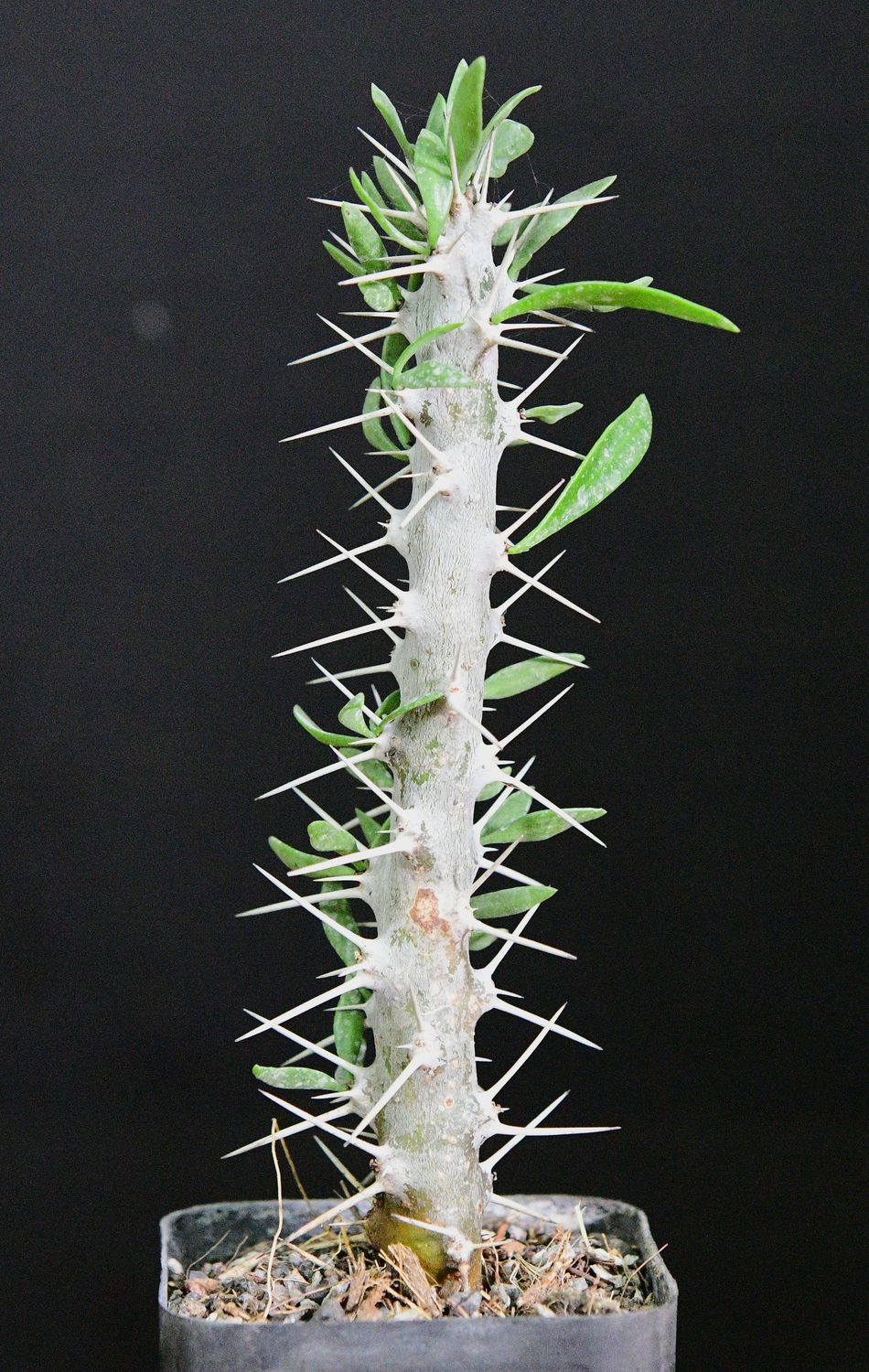
Didierea trollii
Product Details
The Madagascan Octopus: Didierea trollii
A structural masterpiece of the spiny thicket, this rare succulent is a living sculpture for the serious collector.
- Origin & History of Name: The genus Didierea honors Alfred Grandidier, a 19th-century French naturalist and explorer of Madagascar.
The specific epithet trollii was named by German botanist Werner Rauh in 1961 to honor Wilhelm Troll, a prominent botanist known for his extensive work on plant morphology and growth patterns. - Morphology: Didierea trollii is characterized by its "dimorphic" growth habit. It initially grows procumbent (flat along the ground) before developing an upright, woody trunk. The stems are covered in grayish-white epidermis and armed with radiating clusters of sharp spines. Small, succulent green leaves emerge from the areoles during the growing season, creating a stark contrast against the architectural, octopus-like branches.
- Habitat & Origin: This is a wild species endemic to the arid spiny forests of Southwest Madagascar.
It is a slow-growing desert specialist. Our specimens are nursery-grown from cultivated stock to ensure the protection of wild populations and the sustainability of the Malagasy ecosystem. - Cultivation Profile:
- Substrate: Use a strictly mineral-based mix. A 70:30 ratio of inorganic grit (pumice, crushed brick, or perlite) to washed coco-peat works best in the Indian climate to prevent root rot.
- Light: Requires full sun to very bright indirect light. In the intense heat of Indian summers (April–June), provide slight afternoon shade to prevent epidermal scorching.
- Water/Dormancy: Water deeply when the medium is completely dry during the active summer growth. As humidity rises in the monsoon, reduce frequency. It enters a strict winter dormancy; withhold water almost entirely from November to February.
- Scientific/Historical Anecdote: Didierea trollii belongs to the Didiereaceae family, which is often called the "Cacti of the Old World."
Despite being native to Madagascar, they are so evolutionarily similar to American cacti that they can actually be grafted onto certain cactus rootstocks (like Pereskia), demonstrating a remarkable example of convergent evolution.
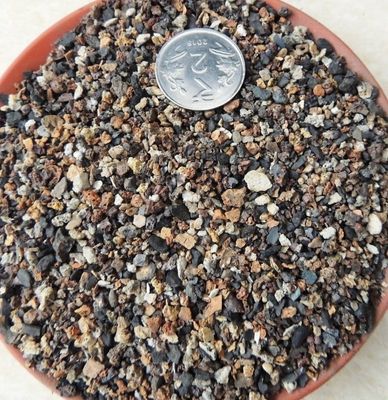
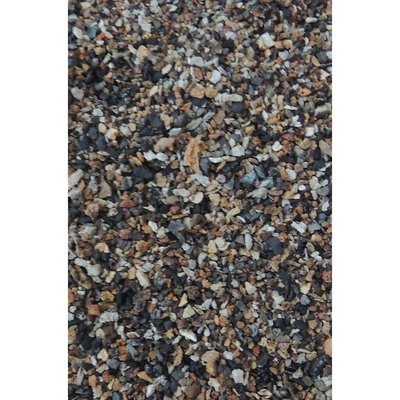
Cactus & Succulent Planting Mix FINE (aka Cactus Soil Mix or Succulent Soil Mix)
Cactus & Succulent Planting Mix FINE (aka Cactus Soil Mix or Succulent Soil Mix)
Fine-Grain Potting Mix for Cactus & Succulent Roots
SKU MNS001
₹39.85
New
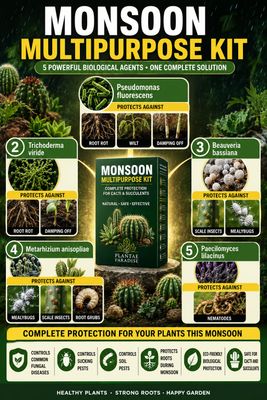
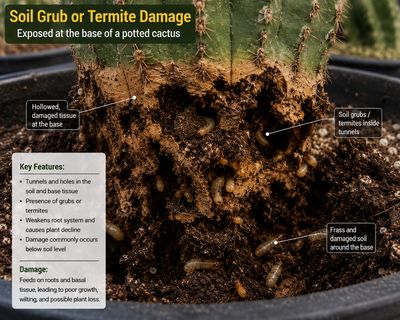
Monsoon Guardian Kit (5 in 1)
Monsoon Guardian Kit (5 in 1)
Complete 5-in-1 biological protection kit for cacti & succulents
SKU MNS024
₹850.00
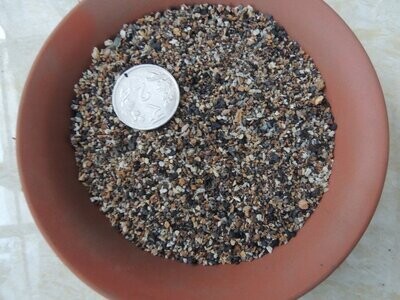
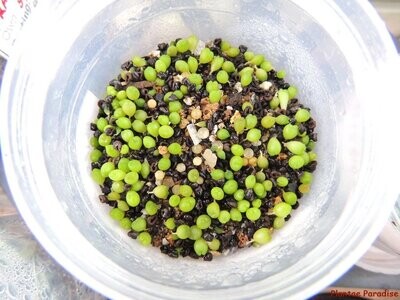
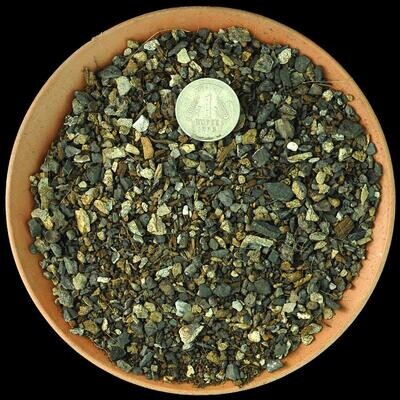
Cactus Seed Planting Mix
Cactus Seed Planting Mix
Sterile, Fine-Grain Media for Cactus & Succulent Seeds
SKU MNS005
₹74.85