Origin of Name
Discocactus crystallophilus is named so because the name reflects its characteristics. "Discocactus" refers to the flattened shape of the cactus. "Crystallo-" means relating to crystals and "-philus" means loving, so "crystallophilus" implies that the cactus loves crystals. This is because the plant grows naturally on quartzite rocks in Brazil, and its spines and areoles are covered in tiny crystals, giving it a glittering appearance.
Technical Description of Plant
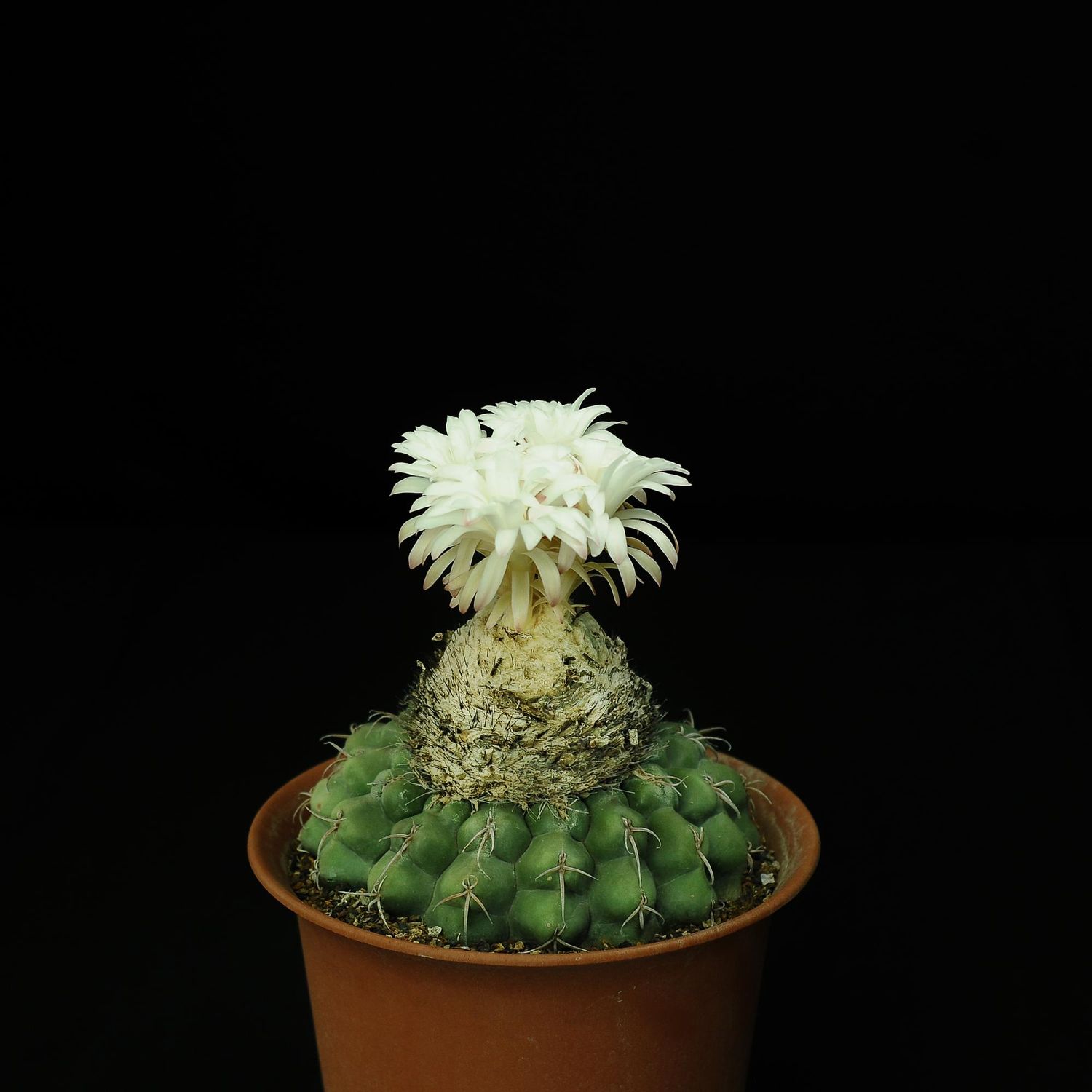
Discocactus crystallophilus is characterized by its solitary, globular to slightly flattened stem that can grow up to 15 cm in diameter. The surface of the plant is smooth, with a glossy green appearance, segmented by shallow ribs lined with small areoles from which spines emerge. The spines are generally short, allowing the plant's surface to remain visible. One of the most remarkable features of Discocactus crystallophilus is its large, white, nocturnal flowers that bloom from the crown of the plant, emitting a strong, sweet fragrance designed to attract nocturnal pollinators.
Origin of Plant
This species is native to specific regions within Brazil, where it grows in rocky, arid environments. The precise ecological niche of Discocactus crystallophilus contributes to its rarity and the challenges associated with cultivating it outside its natural habitat.
Conservation Status
Discocactus crystallophilus is considered rare and faces threats from habitat loss, overcollection, and environmental changes. While detailed conservation status may vary, efforts to protect its natural habitats and regulate collection are crucial for its survival. Cultivation by enthusiasts can help preserve this species by reducing demand for wild-collected specimens.
Care Instructions
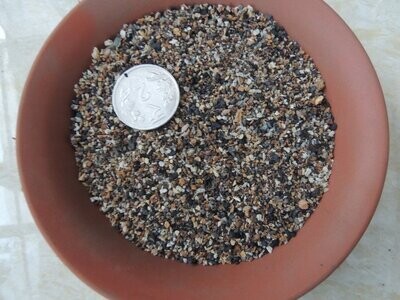
Discocactus crystallophilus requires a well-draining soil mix, typical of cacti, to prevent root rot. It thrives in bright, indirect light, with some protection from the hottest midday sun. Water moderately during the active growing season, allowing the soil to dry completely between waterings, and reduce watering significantly during the dormant winter months. This species is not frost-tolerant and should be kept in temperatures above 10°C (50°F). Due to its rarity, cultivating Discocactus crystallophilus may require patience and attention to its specific environmental needs.