

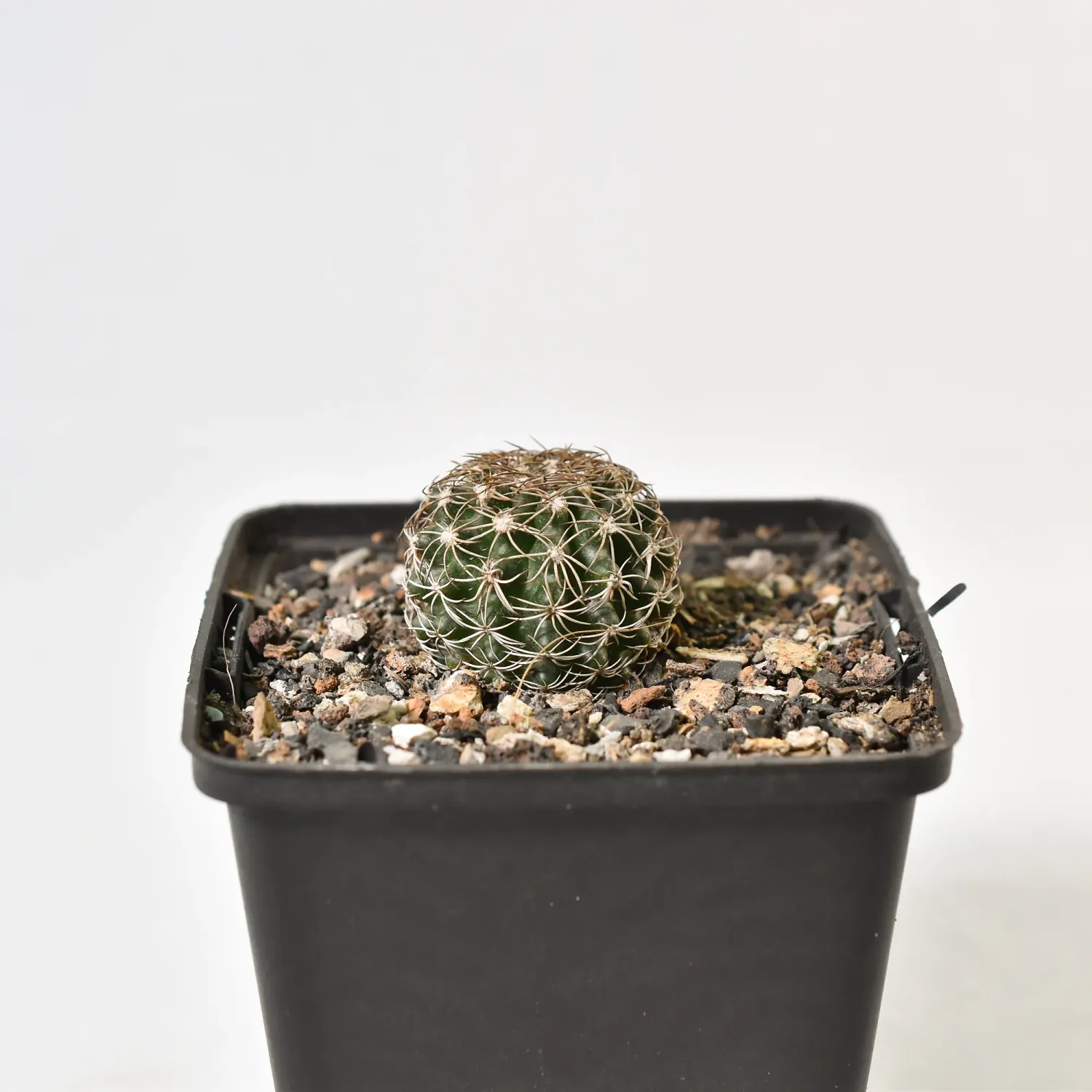
Discocactus zehntneri
Product Details
Moonlit Marvel: Discocactus zehntneri
A rare, night-blooming gem prized for its woolly cephalium and enchanting fragrance.
- Origin & History of Name: The genus name Discocactus is derived from the Greek diskos (flat plate), referring to its characteristic flattened-globular shape.
- Morphology: This cactus features a globose, dark green epidermis with numerous costae (ribs) lined with small, pectinate spines that lay flat against the body. Upon reaching maturity, it develops a cephalium—a specialized structure at the apex composed of dense white wool and bristles—from which nocturnal, tubular white flowers emerge.
- Habitat & Origin: This is a wild species native to the rocky, arid regions of Bahia, Brazil.
- Cultivation Profile:
- Substrate: A strictly mineral-based mix is required. Use a blend of crushed gravel, perlite, and coarse sand with minimal organic matter to prevent root rot.
- Light: Requires bright, indirect sunlight. In the intense Indian summer, provide 50% shade cloth to avoid scorching the epidermis.
- Water/Dormancy: Water sparingly during the growing season (March–October), allowing the medium to dry completely. In the Indian monsoon and winter, maintain a strict dry dormancy to protect the sensitive root system from humidity-induced decay.
- Scientific/Historical Anecdote: Unlike most cacti, members of the genus Discocactus stop growing vegetatively once the cephalium forms. All the plant's energy is then redirected into this specialized "head" for the sole purpose of producing flowers and seeds, making the appearance of the woolly cap a milestone for collectors.
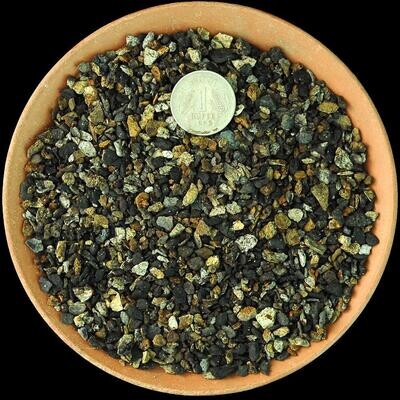
Cactus & Succulent Planting Mix COARSE (aka Cactus Soil Mix or Succulent Soil Mix)
Cactus & Succulent Planting Mix COARSE (aka Cactus Soil Mix or Succulent Soil Mix)
Washed, Free-Draining Mineral Mix for Cactus & Succulents
SKU MNS003
₹44.85
New

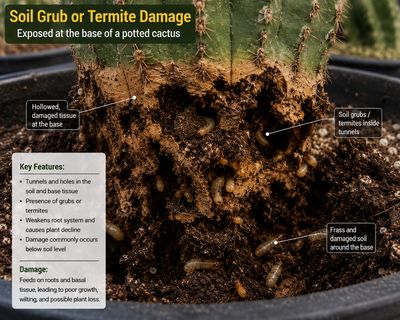
Monsoon Guardian Kit (5 in 1)
Monsoon Guardian Kit (5 in 1)
Complete 5-in-1 biological protection kit for cacti & succulents
SKU MNS024
₹850.00


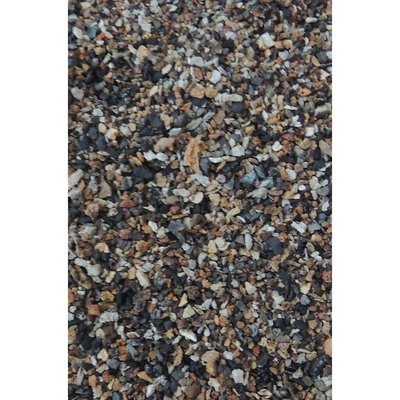
Cactus & Succulent Planting Mix FINE (aka Cactus Soil Mix or Succulent Soil Mix)
Cactus & Succulent Planting Mix FINE (aka Cactus Soil Mix or Succulent Soil Mix)
Fine-Grain Potting Mix for Cactus & Succulent Roots
SKU MNS001
₹39.85