

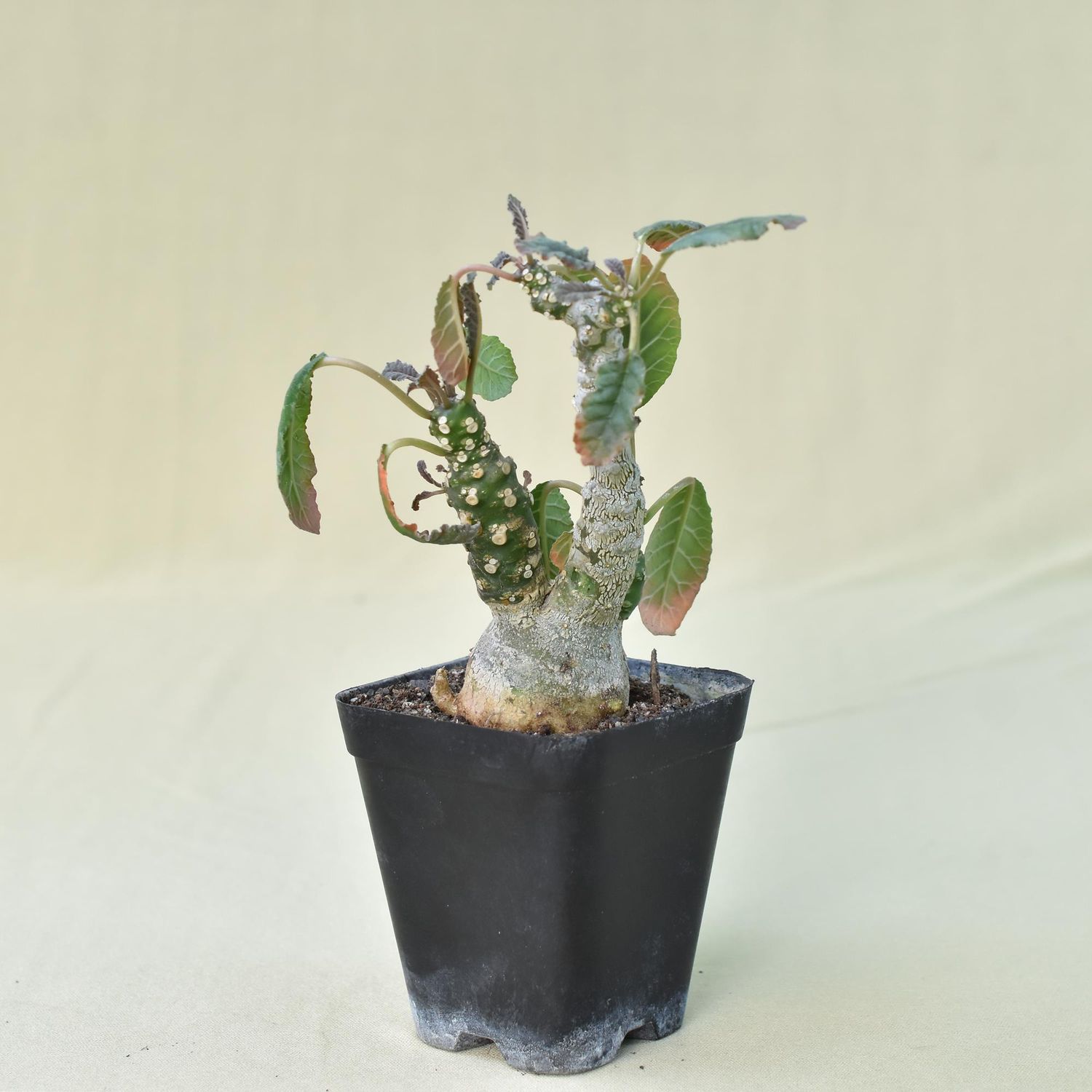
Dorstenia foetida
Dorstenia foetida
1. Origin of Name:
The genus "Dorstenia" is named in honor of Theodor Dorsten (1490–1552), a German botanist and physician who was one of the early explorers and describers of plants from the New World and Africa during the 16th century. The species "foetida" is Latin for "foul-smelling" or "malodorous", referring to the plant’s characteristic odor when its leaves or sap are crushed. This pungent scent was likely a defense mechanism against herbivores and was noted by early botanists, although it adds to the plant’s interesting botanical profile.
2. Origin of Plant:
Dorstenia foetida is native to arid regions of northeastern Africa, primarily found in Somalia, Ethiopia, and Yemen. It was first described scientifically in the late 19th century, during explorations of the Afar Triangle and the Arabian Peninsula. The plant thrives in rocky, dry limestone plateaus and deserts, where it has adapted to survive with minimal water and intense sunlight. Its discovery was part of broader botanical investigations into desert flora during the colonial era, helping illuminate the resilience of succulents and xerophytes in harsh environments.
3. Description:
This intriguing plant is a small, herbaceous or succulent perennial that forms a rosette of deeply lobed or fingered leaves, often covered with glandular hairs that emit a faint, unpleasant scent—hence the name. The leaves can be from 4 to 8 inches long, with a rough texture and a greenish-grayish hue. Dorstenia foetida produces distinctive, star-shaped, or segmented inflorescences that emerge from the center of the rosette, featuring tiny, tubular flowers in shades of yellow, pink, or purple. The plant’s most ornamental trait is its unusual, flat, disc-shaped or star-shaped “flower” (a type of inflorescence called a hypanthium) that often has a decorative, sculptural quality. It is appreciated for its architectural form and unusual foliage, making it a favorite among succulent collectors and enthusiasts of exotic plants.
4. Conservation Status:
Dorstenia foetida is not currently listed as threatened or endangered, but habitat loss due to overgrazing, agriculture, and improper collection from the wild threaten natural populations. It is increasingly cultivated in nurseries worldwide, which helps reduce wild harvesting. Promoting responsible cultivation and propagation ensures its survival and supports sustainable use.
5. Care:
- Watering: Water sparingly, allowing the soil to dry completely between watering. During winter or dormancy, water only once a month or less.
- Soil: Uses a well-draining cactus or succulent mix, preferably with added coarse sand or pumice to mimic rocky, arid conditions.
- Light: Prefers bright, direct sunlight for at least 4-6 hours daily. It thrives in full sun but can tolerate some partial shade.
- Temperature: Prefers warm temperatures between 60°F–85°F (16°C–29°C). It’s frost-sensitive and should be kept indoors or protected in cooler temperatures.
- Additional Tips: Its glandular hairs and odorous leaves discourage pests, but avoid overwatering to prevent root rot. For best display, place in a sunny spot with good airflow.
Interesting Botanical Fact & Anecdote:
Dorstenia foetida is part of a fascinating plant family, Moraceae, which includes figs and rubber trees. Its unusual, decorative inflorescence has fascinated botanists and collectors alike, often described as looking like a miniature, alien landscape. Historically, some indigenous cultures in Africa have used the plant’s sap medicinally, although caution is advised due to its odorous, irritant nature. Its resilience and odd appearance have made it a symbol of desert survival and adaptation, reminding us that even the most unassuming plants can have intriguing stories and important ecological roles.
