

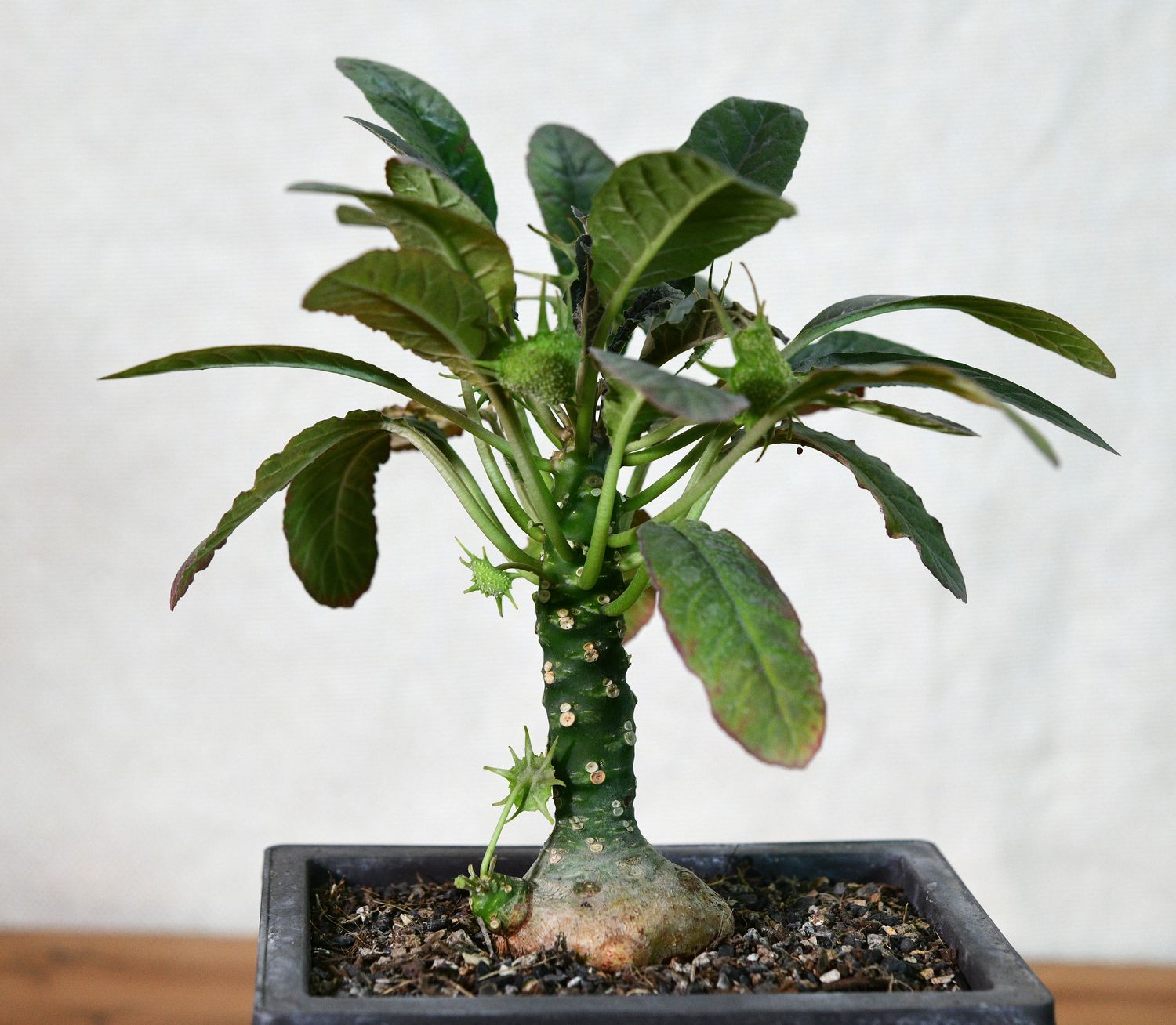
Dorstenia foetida var somalensis
Product Details
Grows tall!
Alien Architecture: Dorstenia foetida var. somalensis
A sought-after caudiciform prized for its prehistoric morphology and unique, star-shaped "shield" flowers.
- Origin & History of Name: The genus Dorstenia honors German physician and botanist Theodor Dorsten (1492–1552). The specific epithet foetida is Latin for "stinking," referencing the pungent aroma of its sap, while the varietal name somalensis denotes its geographic concentration in the Somali region of the Horn of Africa.
- Morphology: This succulent herb features a thick, dark-green to grayish caudex (swollen stem) that stores water. Its epidermis is often scarred with prominent leaf bases, giving it a rugged, palm-like appearance. The most distinct feature is the hypanthodium, a specialized disk-shaped inflorescence where the flowers are embedded, surrounded by tentacle-like bracts that resemble a celestial body or a sunburst.
- Habitat & Origin: This is a wild-type variety native to the arid regions of Somalia, Ethiopia, and Kenya. It typically grows in rocky crevices or under the shade of acacia scrub. Specimens offered are generally nursery-grown from seed to prevent the poaching of wild populations and ensure environmental sustainability.
- Cultivation Profile:
- Substrate: A highly porous, mineral-based mix (e.g., 70% inorganic grit like pumice or scoria, 30% organic matter). Avoid heavy clay soils.
- Light: Bright indirect light. In the Indian subcontinent, protect from the harsh midday sun in May and June to prevent epidermal scorching; morning sun or 50% shade cloth is ideal.
- Water/Dormancy: Water thoroughly when the substrate is completely dry during the growing season. During the peak Indian monsoon, keep the plant protected from excessive rain to prevent root rot. Reduce water significantly in winter when the plant may drop leaves and enter dormancy.
- Scientific/Historical Anecdote: Dorstenia is part of the Moraceae (mulberry) family, making it a distant relative of the common Fig. Unlike most plants that rely on wind or pollinators to move seeds, Dorstenia utilizes "explosive dehiscence"—a hydraulic mechanism within the flower head that literally shoots seeds several feet away when they reach maturity.