Dyckia fosteriana
Product Details
Silver Serrations: Dyckia fosteriana
A shimmering, metallic terrestrial bromeliad featuring aggressive spines and a brilliant architectural silhouette.
- Origin & History of Name: The genus Dyckia was named in 1830 by Johann Georg Christian Lehmann in honor of Prince Joseph Salm-Reifferscheid-Dyck, a Prussian botanist and succulent expert. The specific epithet fosteriana honors Mulford B. Foster, a prolific American plant collector and "Father of the Bromeliad" who discovered the species in the mid-20th century.
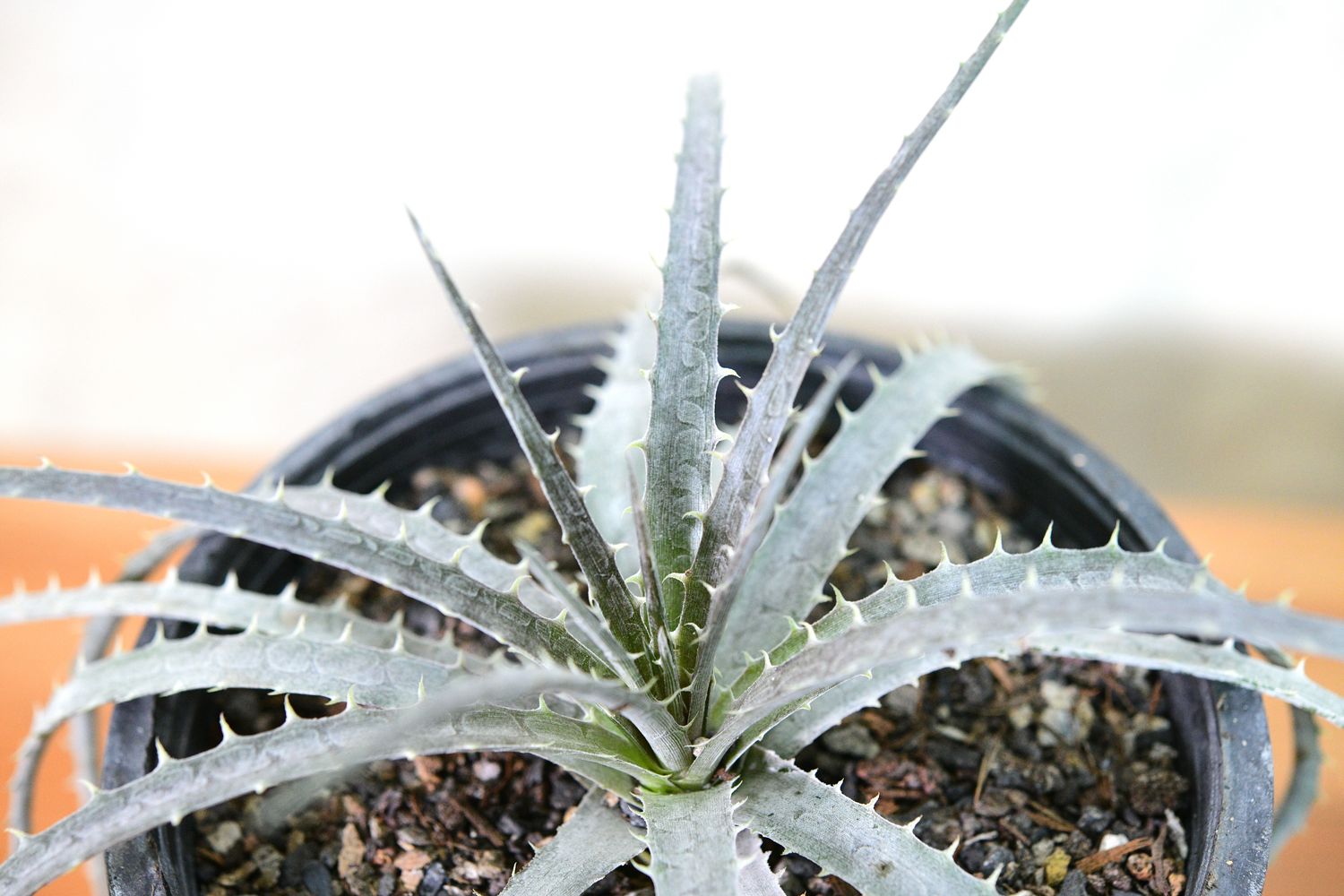
- Morphology: This plant forms a dense, symmetrical rosette of stiff, succulent leaves.
The epidermis is covered in a thick layer of silvery-white peltate scales (trichomes) that give it a metallic sheen. The leaf margins are armed with prominent, hooked marginal spines, and unlike most bromeliads, it lacks a central water-holding tank, instead absorbing moisture through its extensive root system. - Habitat & Origin: This is a wild species native to the rocky outcrops and high-altitude grasslands of central Brazil.
It is a lithophyte, meaning it is adapted to growing directly on rocks. Our plants are ethically propagated from nursery stock to ensure the protection of its native Brazilian habitat and support sustainable trade. - Cultivation Profile:
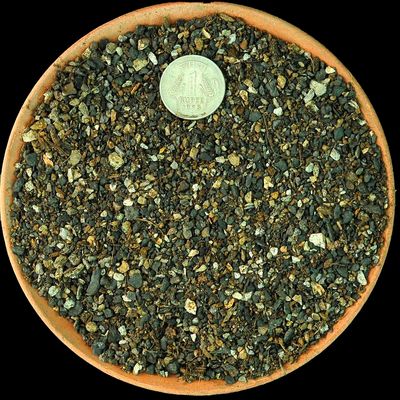
- Substrate: Requires a rapidly-draining mineral mix (50% crushed gravel or scoria, 50% peat/cocopeat). Unlike desert cacti, it prefers a slightly more acidic medium.
- Light: Thrives in full, direct sun.
In the Indian subcontinent, maximum light exposure is necessary to maintain the silver coloration and compact rosette form. - Water/Dormancy: Highly drought-tolerant but enjoys regular watering during the hot growing season (March–September). Reduce watering significantly during the winter months, but do not allow the roots to desiccate completely, as it does not have a true dormancy period in tropical Indian climates.
- Scientific/Historical Anecdote: Despite their appearance, Dyckia are members of the pineapple family (Bromeliaceae).
They are unique "evolutionary survivors" because they adapted to survive on dry, sun-scorched rocks while most of their cousins retreated into the shade of the rainforest canopy.

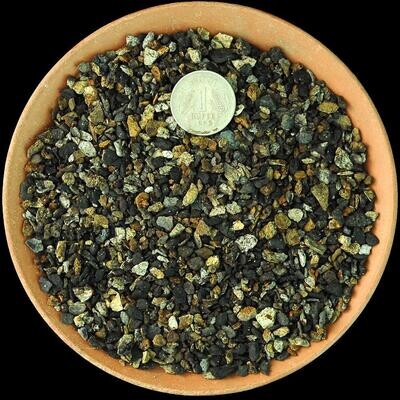
Cactus & Succulent Planting Mix COARSE (aka Cactus Soil Mix or Succulent Soil Mix)
Cactus & Succulent Planting Mix COARSE (aka Cactus Soil Mix or Succulent Soil Mix)
Washed, Free-Draining Mineral Mix for Cactus & Succulents
SKU MNS003
₹44.85
New
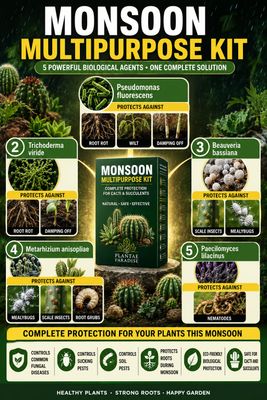
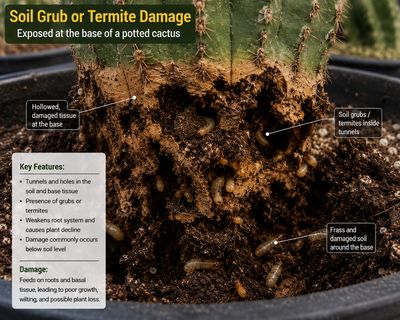
Monsoon Guardian Kit (5 in 1)
Monsoon Guardian Kit (5 in 1)
Complete 5-in-1 biological protection kit for cacti & succulents
SKU MNS024
₹850.00