Echeveria pulidonis 'Red Tip'
1. Origin of Name:
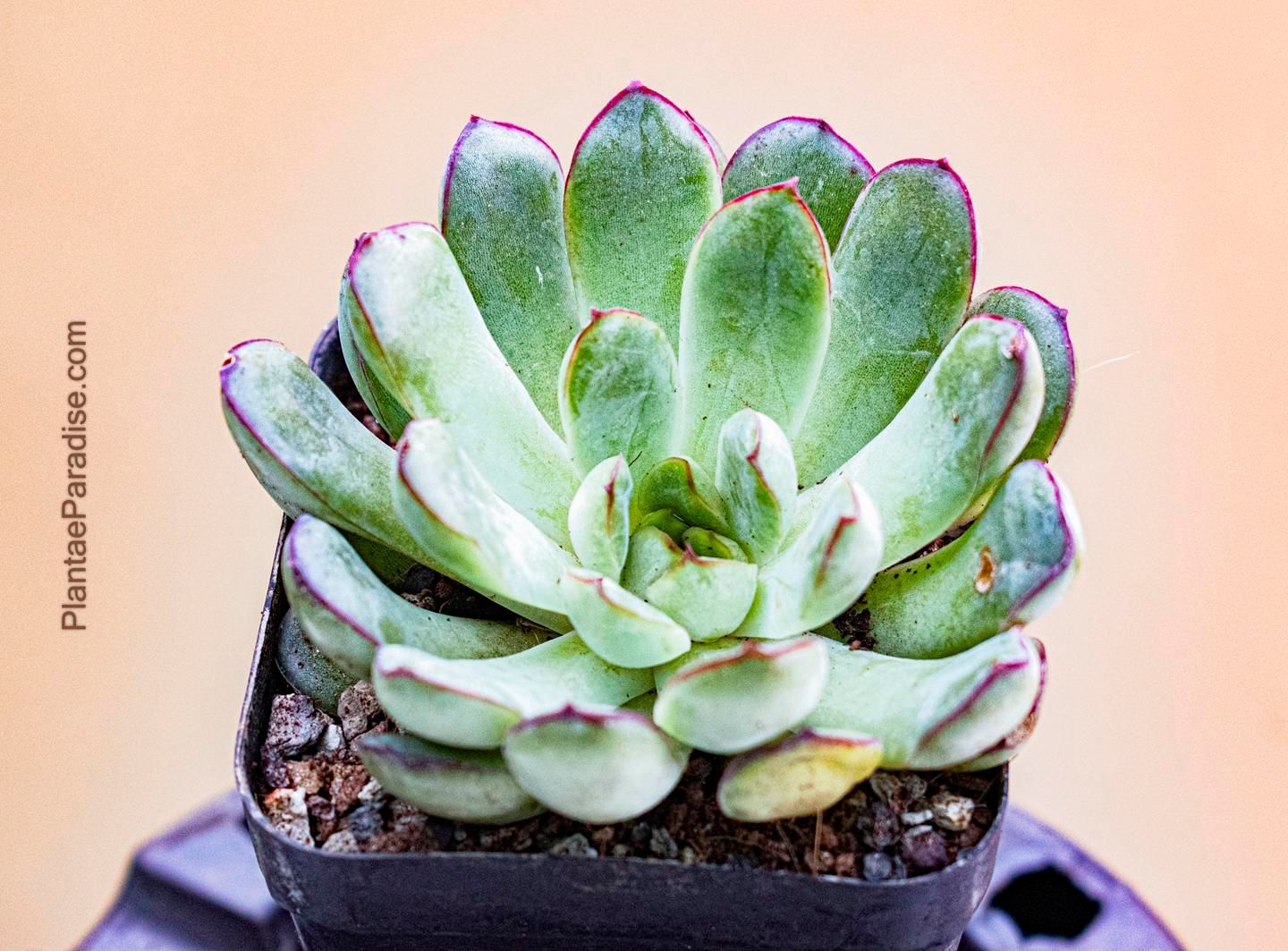
The genus Echeveria is named after the 18th-century Mexican botanist Atanasio Echeverría y Godoy, who made significant contributions to Mexican botany and natural history. The species pulidonis references its native habitat in Mexico, with pulido meaning “polished” or “glossy” in Latin, describing its smooth, shiny leaves. The cultivar 'Red Tip' highlights its most striking feature—tips of the rosette’s leaves turn a vibrant, fiery red during stress or when exposed to bright sunlight, adding dramatic flair to its elegant form.
2. Origin of Plant:
Native to the rocky, arid regions of Mexico, Echeveria pulidonis has adapted to survive in environments with minimal water, intense sunlight, and well-draining soil. Its natural habitat includes rugged hillsides and rocky slopes, where it forms small, rosette-shaped clusters. Since its discovery in the wild, horticulturists have cultivated and propagated this species for its aesthetic appeal, especially prized for its colorful, sun-stressed leaf tips. The 'Red Tip' variety is a cultivated selection developed specifically for its vibrant coloration.
3. Description:
This compact, rosette-forming succulent features thick, fleshy leaves arranged in a symmetrical, star-like pattern. The leaves are a soft, pale green or bluish-green with a smooth, matte finish, serving as a perfect canvas for the fiery red tips that appear when exposed to sunlight or during periods of stress. The rosette typically reaches 3-4 inches in diameter, making it ideal for small pots, terrariums, or as a tabletop centerpiece. Throughout the year, it may produce small, orange or yellow bell-shaped flowers on slender flower stalks, adding to its ornamental charm.
4. Conservation Status:
Echeveria pulidonis 'Red Tip' is widely cultivated and propagated in the plant trade, and there is no current threat to its native populations. Its popularity in succulent collections encourages responsible cultivation and sustainable propagation, contributing to conservation efforts and ensuring availability for future enthusiasts.
5. Care:
- Watering: Water sparingly—allow the soil to dry out completely between watering. Overwatering can cause roots to rot, especially in winter dormancy.
- Soil: Use a well-draining cactus or succulent mix, enriched with coarse sand or perlite to ensure quick drainage.
- Light: Prefers bright, direct sunlight to maximize the red coloration on leaf tips. It can tolerate some shade but may lose its vibrant red hue without sufficient light.
- Temperature: Thrives in warm conditions between 65°F and 80°F (18°C to 27°C). Protect from frost—bring indoors or provide cold protection in cooler climates during winter.
- Additional Tips: Fertilize lightly during the active growing season with a diluted succulent fertilizer. Its low-maintenance nature makes it perfect for beginners and a striking addition for creating colorful succulent arrangements.