1. Origin of Name:
The genus "Echeveria" honors Atanasio Echeverría y Godoy, a renowned 19th-century Mexican botanist and illustrator celebrated for documenting Mexico’s rich flora with artistic precision. The species name "strictiflora" derives from Latin roots: “stricta” meaning upright, straight, or strict, and “-flora” meaning flower. The name describes the plant’s characteristic upright flower stalks, which rise boldly above the rosette, emphasizing its elegant, vertical floral display. This designation highlights a key feature—its stiff, erect flowering stems—that set it apart from other rosette-forming succulents, symbolizing resilience and altitude.
2. Origin of Plant:
Native to the high-altitude regions of Mexico, particularly in states like Hidalgo and Puebla, Echeveria strictiflora thrives in rocky, mountainous environments with well-drained soil. Its natural habitat includes cliffs, rocky slopes, and open, arid highlands where it endures intense sunlight, low humidity, and significant temperature swings. Discovered during early 20th-century botanical surveys, it quickly became a favorite among collectors for its striking form and upright flowering habit. Its adaptation to elevation and harsh terrain makes it a symbol of endurance and elegant survival.
3. Description:
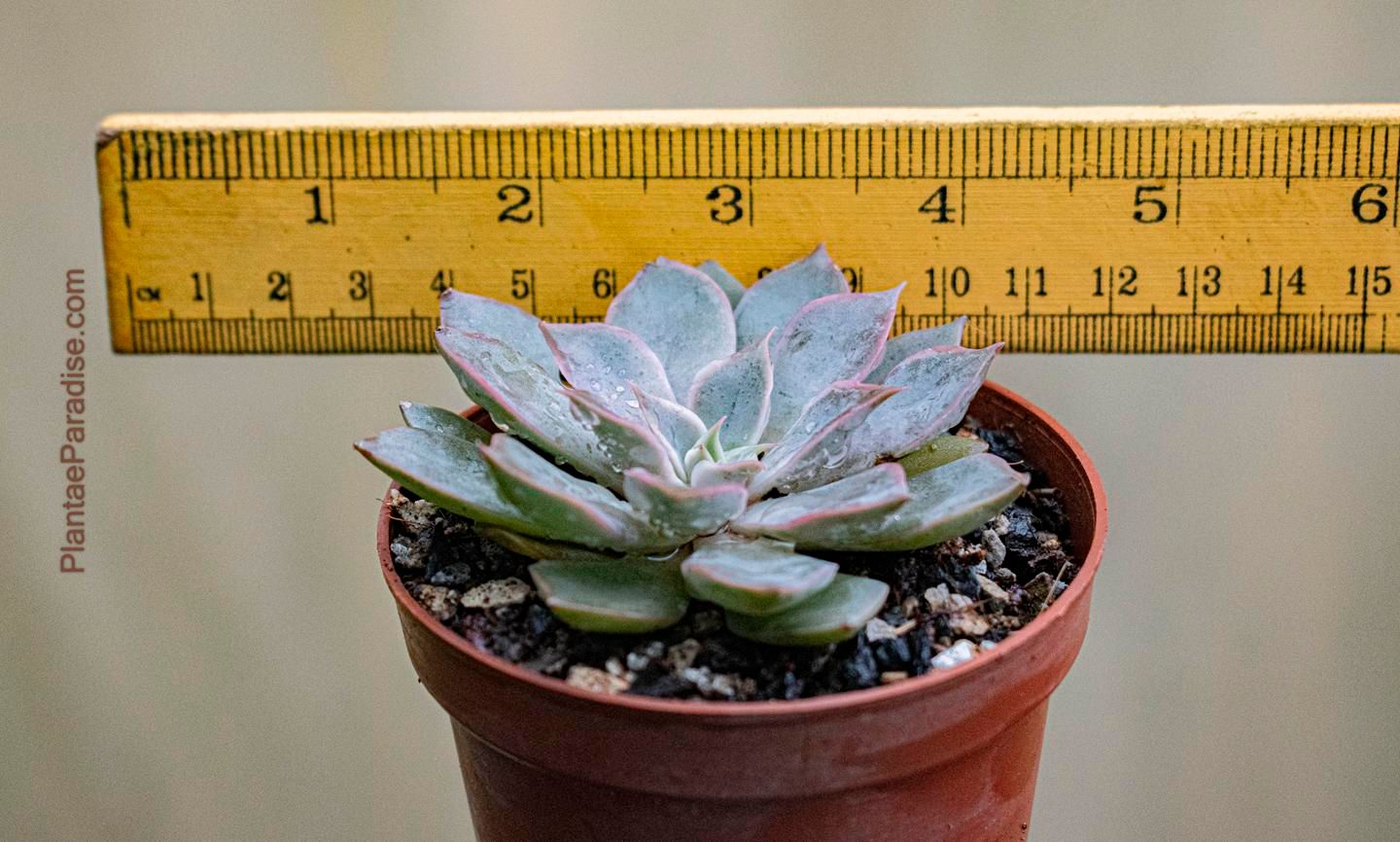
Echeveria strictiflora forms a compact, symmetrical rosette about 3-5 inches across, with fleshy, pale green to bluish leaves that are slightly pointed and corrugated. Its most distinctive feature is the tall, rigid flower stalks that rise straight upward from the center of the rosette, bearing bright orange, coral, or reddish tubular flowers that appear during the spring to early summer. The flowers—clustered in tight, elongated racemes—create a stunning vertical contrast against the low-growing leaves, giving the plant a regal, fountain-like appearance. Its elegant, upright floral display makes it a prized specimen for collectors seeking a dramatic, architectural complement to their succulent arrangements.
4. Conservation Status:
Echeveria strictiflora is not currently listed as threatened, but like many high-altitude succulents, its wild populations are vulnerable to habitat disturbance and overcollection. Supporting responsible cultivation and propagation in nurseries helps ensure its preservation and availability, fostering appreciation for this piece of highland Mexico’s botanical heritage.
5. Care:
To keep your Echeveria strictiflora thriving:
- Watering: Water sparingly, about once every 2-3 weeks, allowing the soil to dry thoroughly between watering. During winter, water even less.
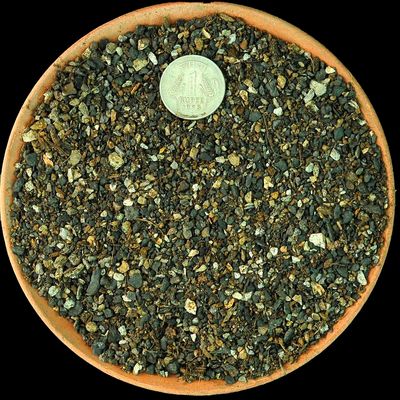
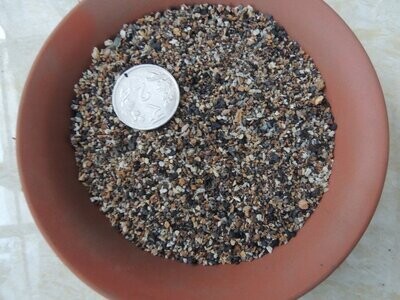
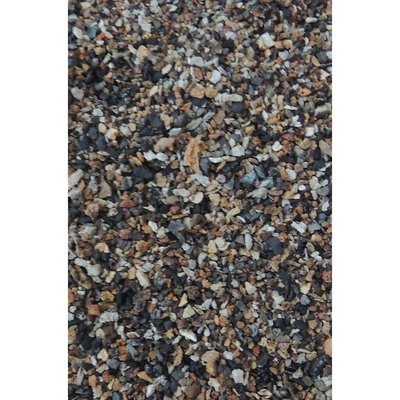
- Soil: Use a fast-draining succulent or cactus mix with added coarse sand or pumice to mimic its rocky, mountainous terrain.
- Light: Requires full sun to maintain its vibrant colors and strong structure. Indoors, a bright south-facing window is ideal.
- Temperature: Prefers warm conditions, thriving between 65°F and 80°F (18°C - 27°C). Protect from frost—bring indoors or insulate if temperatures drop below 50°F (10°C).
- Additional Tips: Fertilize lightly with a diluted cactus or succulent fertilizer during the active growing season. Handle the plant carefully—its upright flower stalks are delicate but dramatic—and repot every 1-2 years to promote healthy growth and soil refreshment.
Interesting Fact:
Native to Mexico’s highlands, Echeveria strictiflora often appears as if crowned with a “flower fountain,” symbolizing purity, resilience, and vertical grace. Indigenous peoples and early explorers revered this succulent for its upright, prominent flowers, which are seen as symbols of strength reaching toward the sky. Its stunning, architectural growth habit makes it a striking centerpiece in collections or desert gardens. As a plant that elevates both beauty and stature, Echeveria strictiflora is a testament to the elegance that can flourish in extreme environments, standing proudly as a highland treasure.