

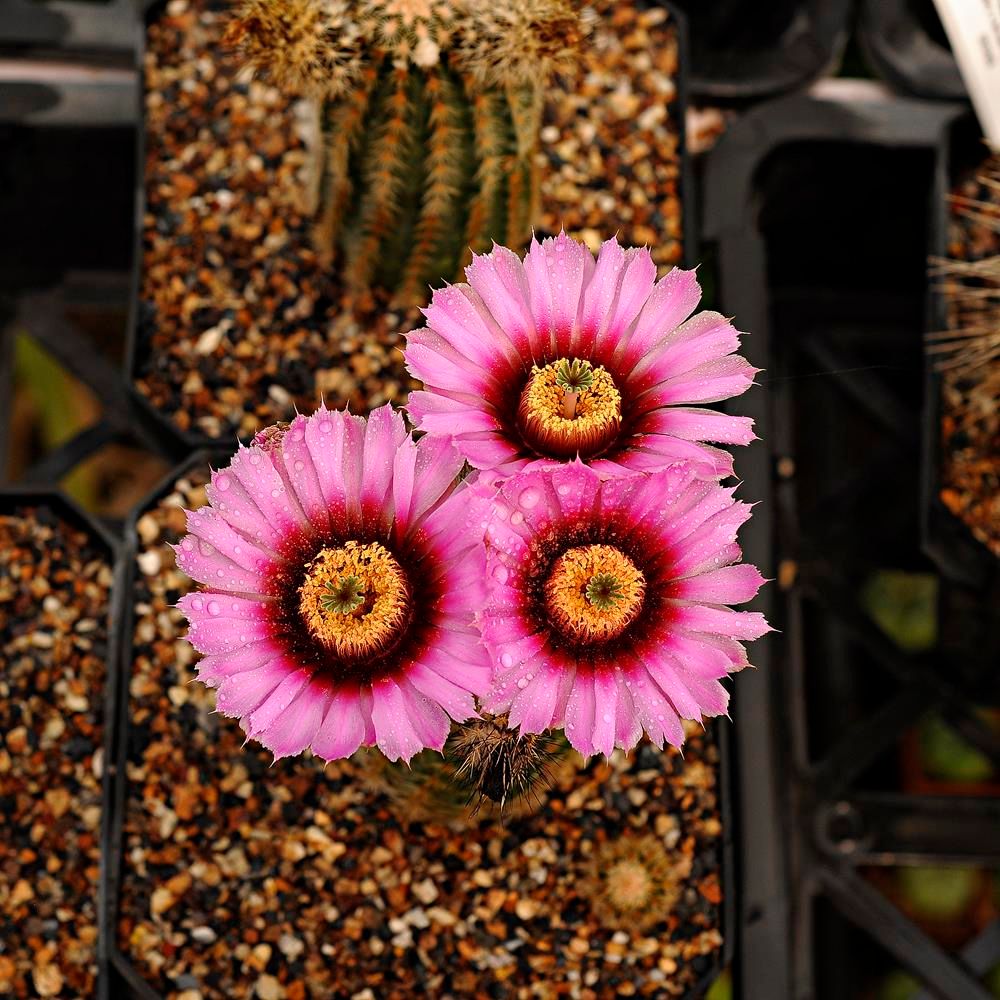
Echinocereus baileyi var. brunispinus
Product Details
Golden Spine Hedge: Echinocereus baileyi var. brunispinus
A rare, copper-spined gem for collectors seeking cold-hardy resilience and a radiant metallic luster.
- Origin & History of Name The genus name Echinocereus combines the Greek echinos (hedgehog) with the Latin cereus (candle), referencing its spiny, columnar form. This variety honors Liberty Hyde Bailey, a foundational American botanist. The varietal epithet brunispinus is derived from the Latin brunneus (brown) and spinus (thorn), specifically identifying the characteristic reddish-brown hue of its central spines.
- Morphology This cactus features a cylindrical epidermis that typically grows upright. It is distinguished by its dense, pectinately arranged radial spines that almost entirely obscure the plant body. Unlike the standard species, var. brunispinus exhibits deep copper to chocolate-brown central spines. It produces large, funnelform flowers in brilliant shades of magenta, emerging from the areoles on the upper half of the stem.
- Habitat & Origin This is a naturally occurring wild variety primarily found in the granite-rich soils of the Wichita Mountains in Oklahoma, USA. All specimens are sourced via ethical propagation from mother plants to ensure the protection of wild populations and adhere to sustainability standards.
- Cultivation Profile
- Substrate: Requires a strictly mineral-based mix. Use a ratio of 70% inorganic grit (crushed brick, pumice, or perlite) and 30% organic matter to prevent root rot in humid Indian climates.
- Light: Thrives in full, direct sun. In extreme heat zones like Rajasthan or Central India, provide 30% shade cloth during peak May-June afternoons to prevent scorching.
- Water/Dormancy: Follow a "soak and dry" method during the growing season. In the Indian monsoon, keep completely dry and well-ventilated. Maintain strict winter dormancy from November to February to trigger spring blooming.
5. Scientific/Historical Anecdote Members of the Echinocereus baileyi complex are renowned among botanists for their "extremophile" biology. While most cacti are frost-tender, these plants can survive temperatures as low as 18°C by physically dehydrating their cells to prevent ice crystals from rupturing their internal tissue—a process known as extracellular freezing.
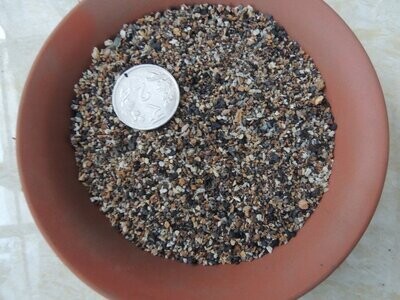
Cactus Seed Planting Mix
Cactus Seed Planting Mix
Sterile, Fine-Grain Media for Cactus & Succulent Seeds
SKU MNS005
₹70.51
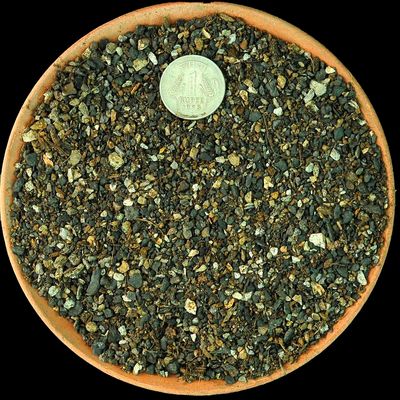
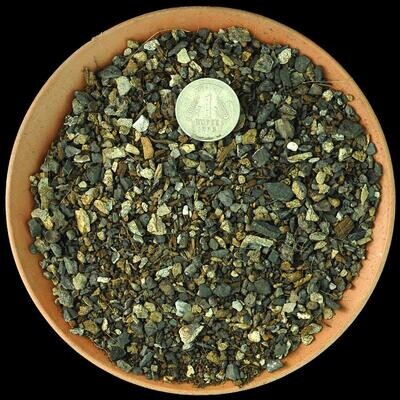
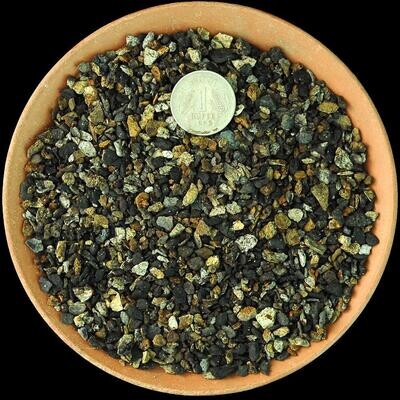
Cactus & Succulent Planting Mix COARSE (aka Cactus Soil Mix or Succulent Soil Mix)
Cactus & Succulent Planting Mix COARSE (aka Cactus Soil Mix or Succulent Soil Mix)
Washed, Free-Draining Mineral Mix for Cactus & Succulents
SKU MNS003
₹40.51