

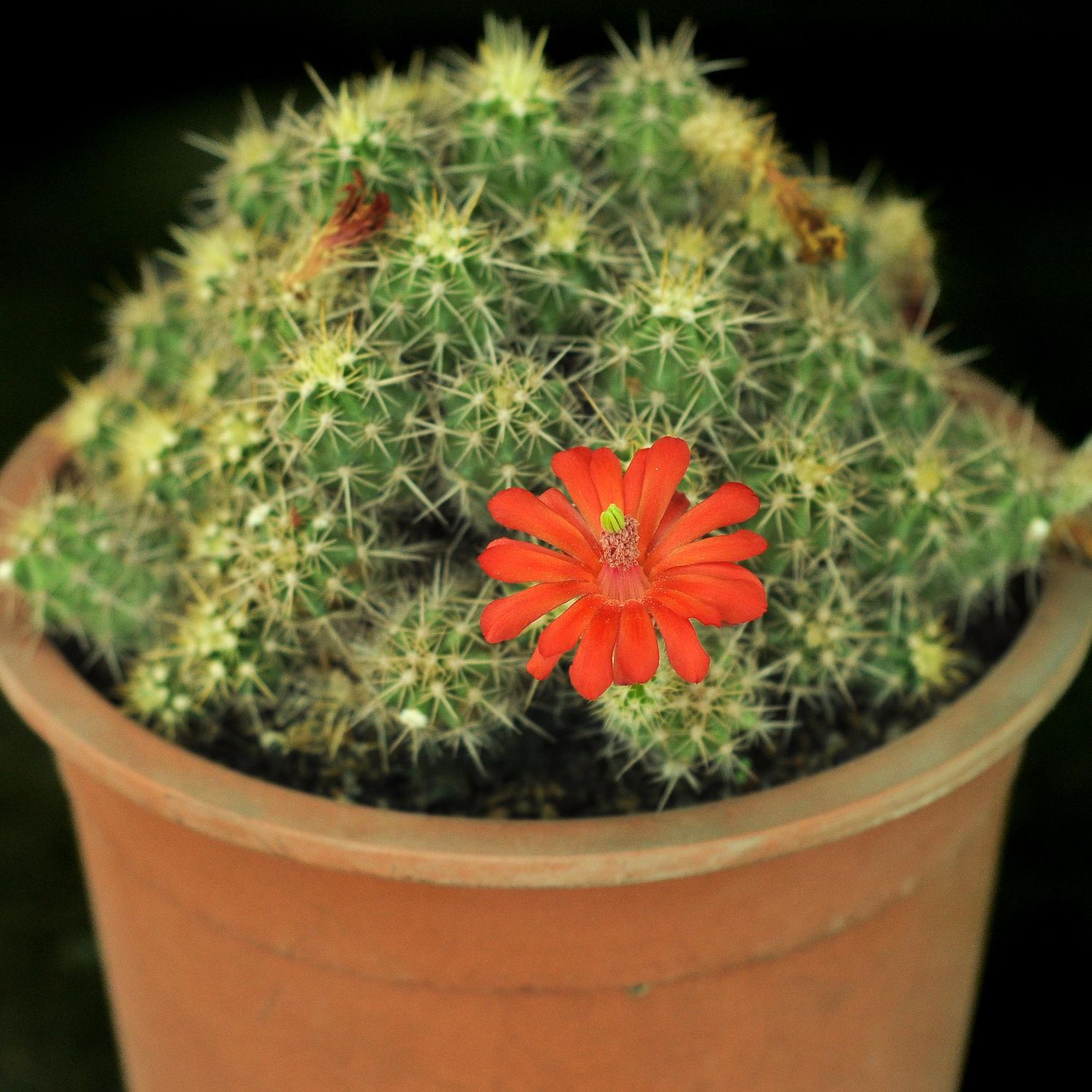
Echinocereus coccineus engelmann
Product Details
Scarlet High-Altitude Icon: Echinocereus coccineus (Engelmann)
A hardy, cold-tolerant marvel known for its brilliant waxy blooms and geometrically perfect clustering habit.
- Origin & History of Name: The genus name Echinocereus is derived from the Greek echinos (hedgehog) and the Latin cereus (candle), describing the spiny, columnar appearance.
The specific epithet coccineus stems from the Latin for "scarlet," referencing the flower color. It was formally described in 1848 by George Engelmann, a prominent German-American botanist who categorized much of the flora of the American West during the Mexican-Boundary Survey. - Morphology: This species is a clumping cactus that forms dense mounds of cylindrical stems.
The epidermis is a deep olive green, featuring 5 to 11 distinct costae (ribs) that are often undulated or tuberculated. Each areole (growth point) bears a cluster of straight to slightly curved radial spines. Its most striking feature is the funnel-shaped, dioecious flower, which possesses a thick, waxy texture and vibrant red-to-orange pigmentation designed to attract hummingbirds. - Habitat & Origin: This is a wild species native to the Southwestern United States and Northern Mexico, typically found at high elevations in rocky outcrops and coniferous forests.
The specimens offered are nursery-propagated from cultivated seeds, ensuring the protection of wild populations and adherence to sustainable horticultural practices. - Cultivation Profile:
- Substrate: Requires a high-porosity mineral mix. Combine 60% coarse sand/crushed gravel with 40% organic compost. In high-humidity Indian regions, increase the mineral content to ensure rapid drainage.
- Light: Thrives in full solar exposure. In the Indian subcontinent, it benefits from maximum sunlight; however, in extreme heat zones like Rajasthan, light afternoon shading prevents epidermal scorching during peak summer.
- Water/Dormancy: Implement a strict seasonal watering regime. Provide moderate water from March to September. To trigger flowering, the plant must undergo a dry winter dormancy from November to February; withhold water entirely during this cool phase to simulate its high-altitude native environment.
- Scientific/Historical Anecdote: Echinocereus coccineus is one of the few cactus species that exhibits trioecy, a rare sexual system where a single population may contain male, female, and hermaphroditic individuals. This genetic flexibility is believed to be an evolutionary adaptation to the unpredictable pollinators found in its rugged, high-altitude mountain habitats.
New


Monsoon Guardian Kit (5 in 1)
Monsoon Guardian Kit (5 in 1)
Complete 5-in-1 biological protection kit for cacti & succulents
SKU MNS024
₹850.00

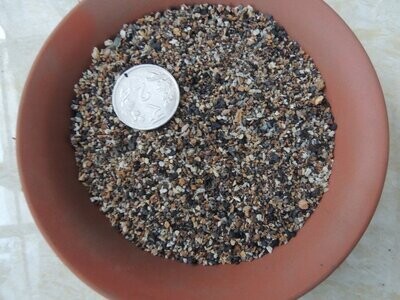
Cactus & Succulent Planting Mix COARSE (aka Cactus Soil Mix or Succulent Soil Mix)
Cactus & Succulent Planting Mix COARSE (aka Cactus Soil Mix or Succulent Soil Mix)
Washed, Free-Draining Mineral Mix for Cactus & Succulents
SKU MNS003
₹44.85

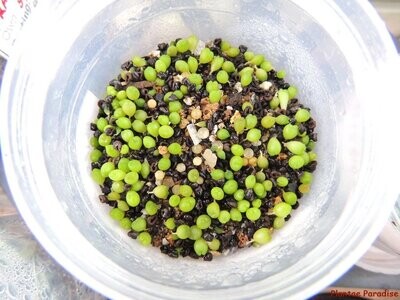
Cactus Seed Planting Mix
Cactus Seed Planting Mix
Sterile, Fine-Grain Media for Cactus & Succulent Seeds
SKU MNS005
₹74.85