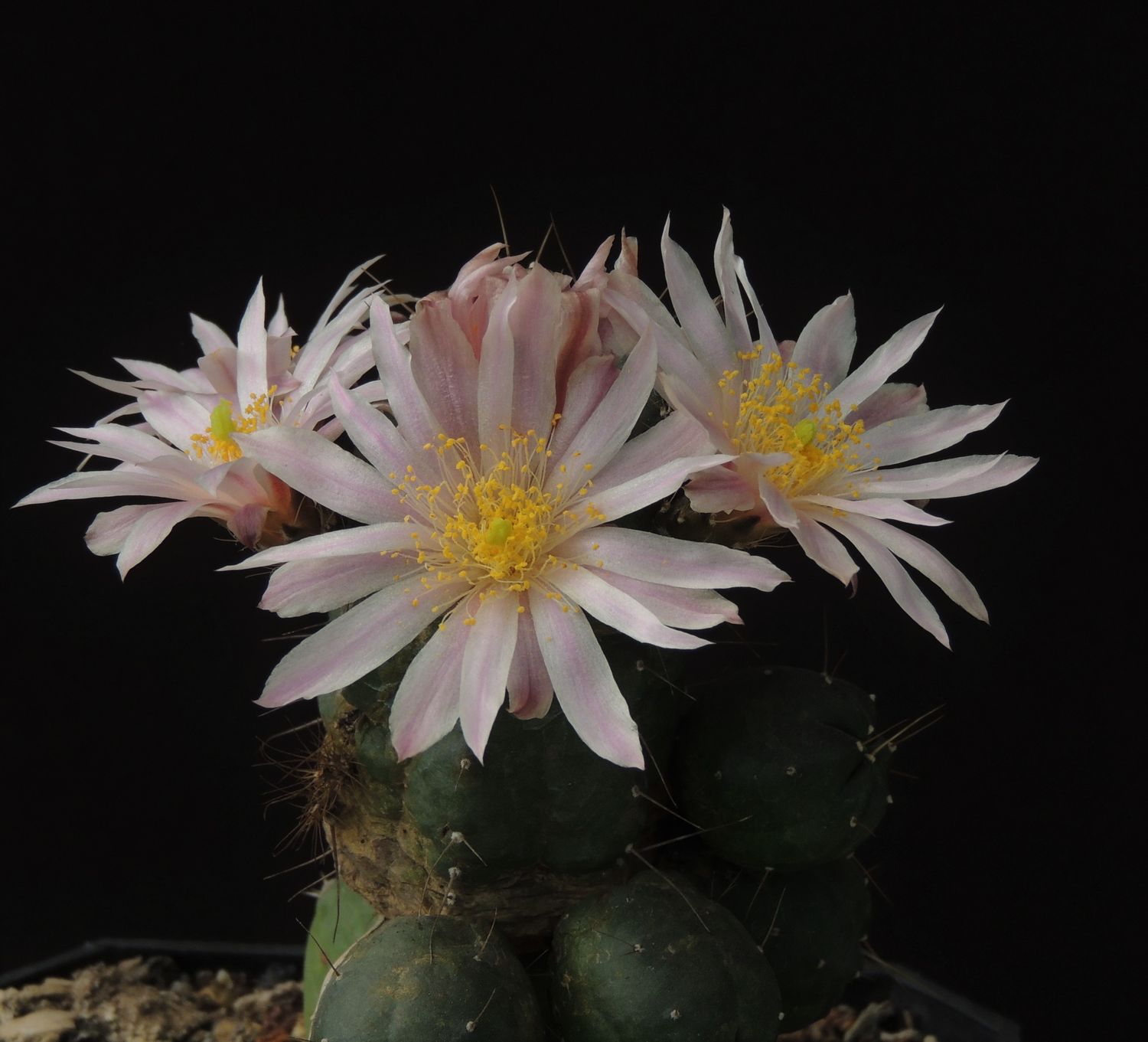
Grafted Plant
Echinocereus knippelianus: The Vibrant Heart of the Mexican Desert
1. Origin of Name:
The genus "Echinocereus" derives from the Greek words “echinos” meaning hedgehog or sea urchin, and “cereus,” meaning wax or torch, referencing the spiny, torch-like appearance of these cacti. The species name "knippelianus" honors the German botanist and cactus collector Friedrich Knippel, who extensively studied and documented Mexican cacti in the early 20th century. The Latin suffix “-ianus” indicates “belonging to,” honoring Knippel’s contributions to cactus taxonomy. The name reflects both the plant’s striking spiny texture and its dedication to the botanist who first brought it to scientific attention, emphasizing its ornamental resilience and cultural significance.
2. Origin of Plant:
Echinocereus knippelianus is native to the rugged, arid regions of northeastern Mexico, primarily found in the state of Coahuila. It thrives in rocky slopes and open desert plains where it endures high temperatures and minimal water. Discovered during early 20th-century botanical explorations, it was first described in scientific literature around 1915 by botanists who recognized its distinctive bright flowers and robust spines. Its adaptation to extreme conditions has made it a favorite among desert plant enthusiasts and collectors worldwide.
3. Description:
This medium-sized, columnar cactus reaches heights of up to 2 to 4 feet tall. Its thick, green stems are covered with prominent, radiating spines that are often reddish or yellowish in color, creating an eye-catching contrast. During the flowering season, typically in spring and summer, it produces spectacular, fragrant, tubular flowers with bright pink or magenta petals topped with yellow stamens—these blooms open mostly at night and bring a burst of color and fragrance to any collection. The combination of its striking spines, vibrant flowers, and tall, upright growth gives it a commanding presence, making it a focal point for succulent and desert gardens.
4. Conservation Status:
Echinocereus knippelianus is currently not listed as threatened or endangered, but habitat destruction and collection pressures in its native Mexico pose potential risks. It benefits from sustainable cultivation efforts, both in the wild through habitat preservation and in nurseries. Responsible sourcing and conservation awareness are crucial to ensuring its continued presence in natural ecosystems and ornamental collections.
5. Care:
Ensure your Echinocereus knippelianus thrives by following these simple care tips:
- Watering: Water sparingly, allowing the soil to dry out completely between waterings. During winter dormancy, reduce watering further.
- Soil: Use a well-draining cactus or succulent mix, supplemented with coarse sand or gravel for excellent drainage.
- Light: Needs full sun to produce vibrant blooms. Place in a sunny outdoor spot or a bright, south-facing window.
- Temperature: Prefers warm temperatures from 65°F to 85°F (18°C - 29°C). Protect from frost—bring indoors or provide frost protection in colder months.
- Additional Tips: Fertilize lightly during active growth with a cactus fertilizer diluted to half. Handle carefully due to its spines, and consider repotting every 2-3 years to accommodate growth and refresh soil.
Interesting Anecdote:
In Mexican folklore, Echinocereus species like knippelianus are regarded as symbols of resilience—vivid reminders that life persists in the most extreme environments. Stories tell of native communities that used the plant’s bright flowers as natural ornaments and symbols of hope. Its night-blooming flowers are like fleeting jewels—beautiful yet elusive—offering a brief, spectacular display that celebrates the desert’s delicate, fleeting beauty. The proud, spiny stature of Echinocereus knippelianus continues to inspire desert gardeners and botanical explorers, embodying the rugged strength and vibrant spirit of the Mexican desert.