Origin of Name
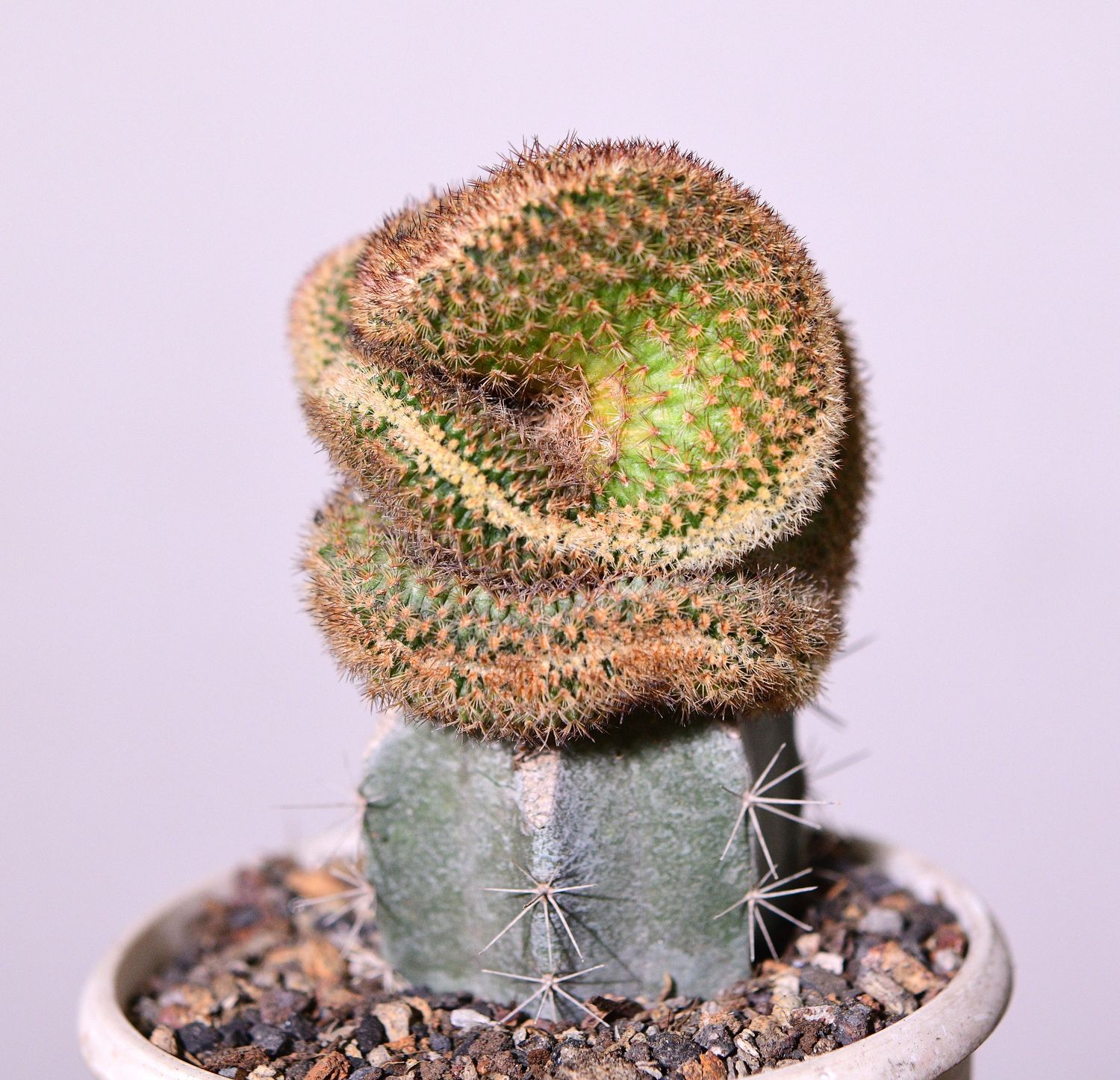
The genus name "Echinocereus" comes from the Greek "echinos," meaning hedgehog, and "cereus," meaning wax candle, which describes the plant's spiny, candle-like appearance. The species name "reichenbachii" honors Heinrich Gustav Reichenbach, a distinguished German botanist. The term "f. cristatus" indicates the cristate, or crested, form of the plant, where normal radial growth is altered, leading to a fan-like or wavy growth pattern. "Hort." signifies that this form was selected or cultivated within horticulture, rather than occurring naturally in the wild.
Technical Description of Plant
Echinocereus reichenbachii f. cristatus hort. is known for its unique and striking growth form. Unlike the typical columnar shape of Echinocereus reichenbachii, the cristate form features a broad, fan-shaped or wavy growth, creating a natural sculpture. This form is green to blue-green, with densely packed areoles that give rise to numerous thin, needle-like spines. These spines can range in color from white to pinkish or brown. The cristate form rarely blooms, but when it does, the flowers are large, vividly colored in shades of pink to lavender, and highly attractive to pollinators.
Origin of Plant
Echinocereus reichenbachii is native to the south-central United States and into Mexico, thriving in rocky and sandy soils in desert and scrubland environments. The cristate form, however, arises due to mutation or damage and is propagated by enthusiasts for its ornamental value.
Conservation Status
The standard form of Echinocereus reichenbachii is not currently listed as endangered, but habitat destruction and over-collecting do pose threats. The cristate form is primarily cultivated and does not have a specific conservation status, but its propagation helps to reduce pressure on wild populations.
Care Instructions
Echinocereus reichenbachii f. cristatus hort. prefers bright, indirect light or partial sun. Direct, harsh sunlight can scorch the plant, especially during the hottest parts of the day. It requires a well-draining cactus mix to prevent root rot. Water moderately during the growing season, allowing the soil to dry out completely between waterings, and reduce watering in the winter. This plant is cold-resistant to a point but should be protected from frost. Fertilization is not essential but can be done sparingly with a diluted cactus fertilizer during the active growing season.