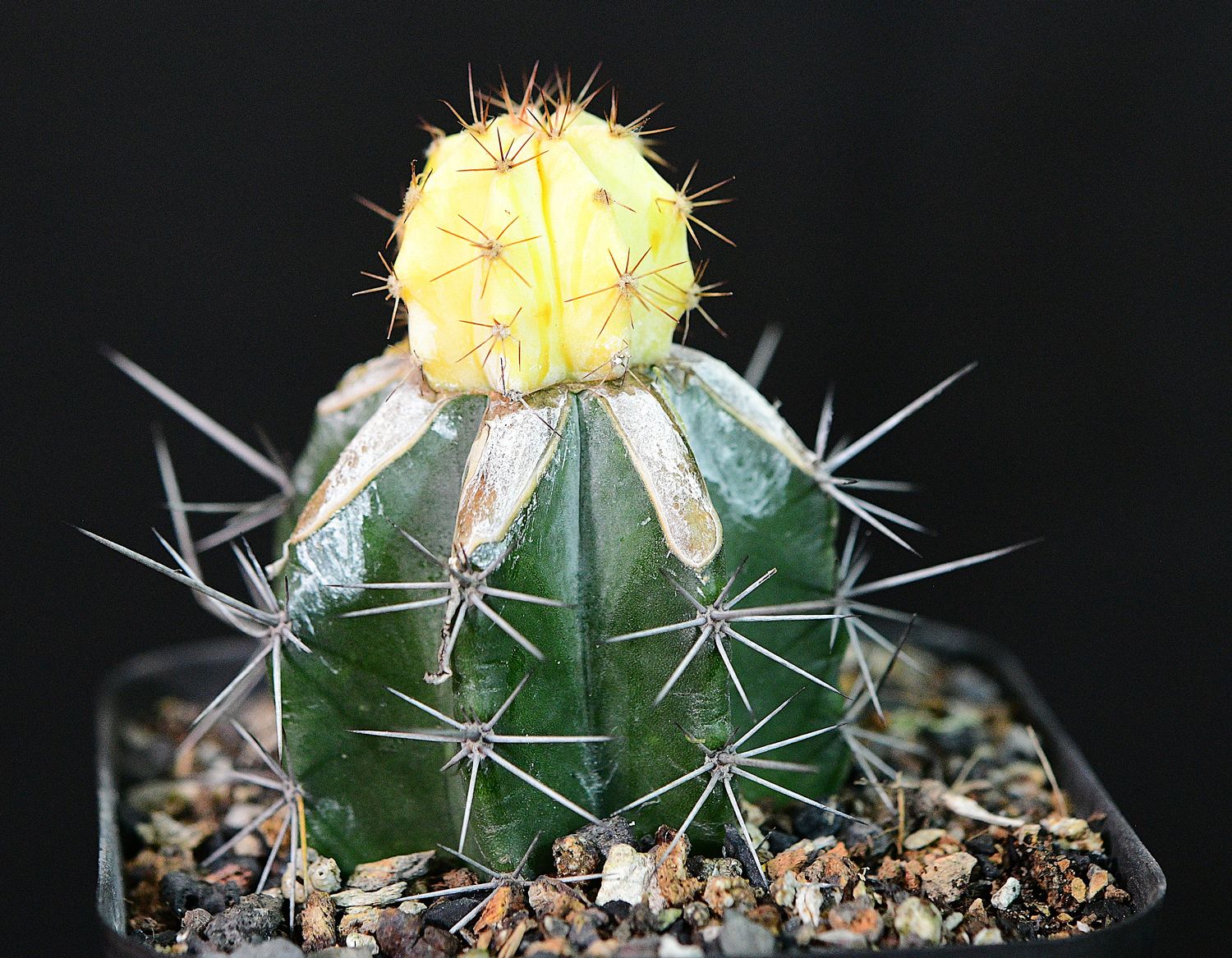
A clustering Mexican hedgehog cactus whose typically bright green stems here run instead in erratic streaks of cream and yellow against green — a chlorophyll mutation that makes every stem, and every plant, genuinely one-of-a-kind.
Origin of Name
The species epithet viereckii honors Hans Wilhelm Viereck (1903–1946), a German plant collector active in Mexico, where he gathered the type specimen. German botanist Erich Werdermann formally described the species in 1934, publishing it in the journal Kakteenkunde. "Variegated" here isn't a named cultivar or botanical variety but a descriptive term for this individual plant's chimeral mutation — random sectors of the stem lack chlorophyll, producing patches of cream, yellow, or pale pink against the normal green. Such variegation crops up sporadically across many Echinocereus species in cultivation and is prized by collectors precisely because no two variegated plants, or even two stems on the same plant, pattern alike.
Origin of Plant
The straight species is native to a fairly small range in northeastern Mexico, primarily the states of Nuevo León and Tamaulipas, where it grows among rocky, semi-arid scrub. Like other variegated cacti, this particular mutation has no wild population of its own — it was selected and propagated in cultivation from a variegated seedling or offset that arose spontaneously within the species.
Description
A clustering, branching cactus with cylindrical stems that may grow upright, ascending, or sprawling, typically reaching 20–30 cm long and 4–6 cm in diameter, with 6 to 9 tuberculate ribs. In this variegated form, the usual bright to yellowish-green coloring is broken up by irregular streaks and blotches of cream, pale yellow, or pink running along the stem — the visual result of patches of tissue lacking chlorophyll. Areoles carry 7 to 9 golden-yellow radial spines and several thicker central spines. In season, the species produces large, funnel-shaped, brilliant magenta flowers up to 10–11 cm across, though variegated growth can sometimes divert energy from flowering and reduce vigor compared to fully green plants.
Conservation Status
Echinocereus viereckii is assessed by the IUCN as Least Concern in the wild and is listed under CITES Appendix II, with artificially propagated specimens like this one exempted from the trade restrictions that apply to wild-collected plants. The variegated form has no wild population at all — it exists only through deliberate propagation of a cultivated mutation.
Care
Light: Bright light is essential, but variegated sections are more prone to sunburn than solid green tissue, so moderate the plant's exposure compared to a normal-green E. viereckii — bright, slightly filtered light often works better than harsh, all-day direct sun.
Watering: Water thoroughly through the growing season, letting the soil dry out fully between waterings. Reduce sharply in winter; the stems will naturally shrivel and dull somewhat in dry dormancy, then plump back up with spring watering.
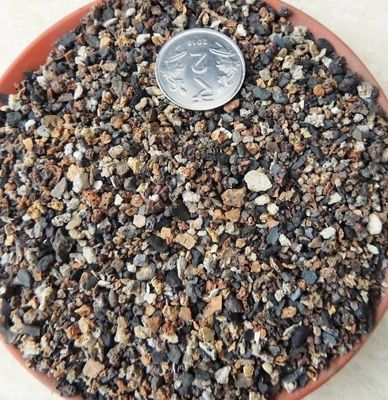
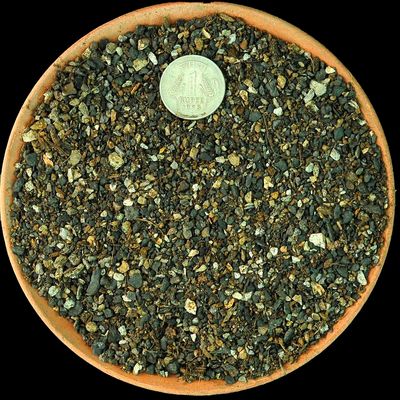
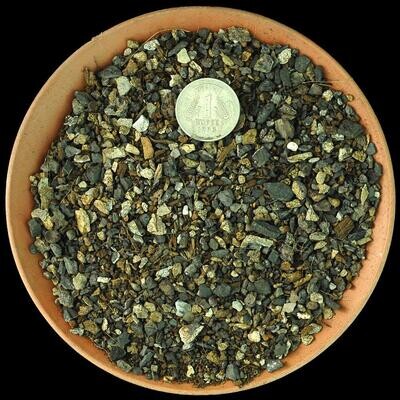
Soil: A gritty, fast-draining cactus mix, ideally cut with 50% or more mineral grit such as pumice or coarse sand.
Temperature: Not frost-hardy; protect below about 0°C (32°F) and bring container plants under cover well before winter chill sets in.
General tips: Because variegated tissue lacks chlorophyll and photosynthesizes less efficiently, growth is typically slower than a fully green plant of the same species — patience, plus a slightly more sheltered position than you'd give the species type, gets the best long-term results.
A Story Worth Telling
Variegation in cacti is essentially a beautiful accident: a random genetic mutation during cell division leaves some tissue unable to produce chlorophyll, and because cactus stems grow from a ring of dividing cells around their tip, that mutation can show up as a clean streak running the whole length of the stem rather than a single spot. Growers can't breed for it reliably or predict where the next patch will appear — every variegated Echinocereus, this one included, is essentially a one-off, propagated onward from whichever chance seedling or offset first displayed the trait.