Bring the vibrant colors of a desert sunset into your collection with the Echinopsis hybrid 'Idalia'. Known for its breathtaking blooms and hardy nature, this hybrid is a masterpiece of botanical breeding, designed to captivate and flourish.
1. Breeding History
The history of Echinopsis hybridizing is a pursuit of the "perfect bloom." For decades, breeders have crossed various species—including those formerly classified as Lobivia and Trichocereus—to produce flowers of extraordinary size and an almost neon palette of colors. Our nursery continues this tradition with rigorous precision. We maintain a comprehensive library of original mother plants and assign each hybrid a unique identification number to ensure pedigree accuracy. To guarantee that your plant produces the exact flower described, all our 'Idalia' specimens are vegetatively propagated (from offsets), preserving the genetic integrity and spectacular floral characteristics of the parent plant.
2. Origin of Name
The name 'Idalia' finds its roots in Greek mythology and classical geography. Derived from Idalium, an ancient city on the island of Cyprus, it is a traditional epithet for Aphrodite, the goddess of beauty and love (often called Aphrodite Idalia). The name was chosen to reflect the divine, radiant beauty of the flower. Historically, the name has been used in various botanical and literary contexts to signify "shining" or "beholden to beauty," perfectly matching the luminous orange glow of this hybrid’s petals.
3. Origin of Plant
While 'Idalia' is a cultivated hybrid, its ancestors hail from the high-altitude grasslands and rocky slopes of the South American Andes, spanning across Bolivia, Argentina, Peru, and Brazil. These rugged landscapes have endowed Echinopsis with the ability to store water efficiently and produce massive, trumpet-shaped flowers designed to attract pollinators across vast distances.
4. Description
The Echinopsis 'Idalia' is a showstopper. The plant itself features a classic globular to slightly columnar dark green body, segmented by deep ribs and protected by neat, radial spines.
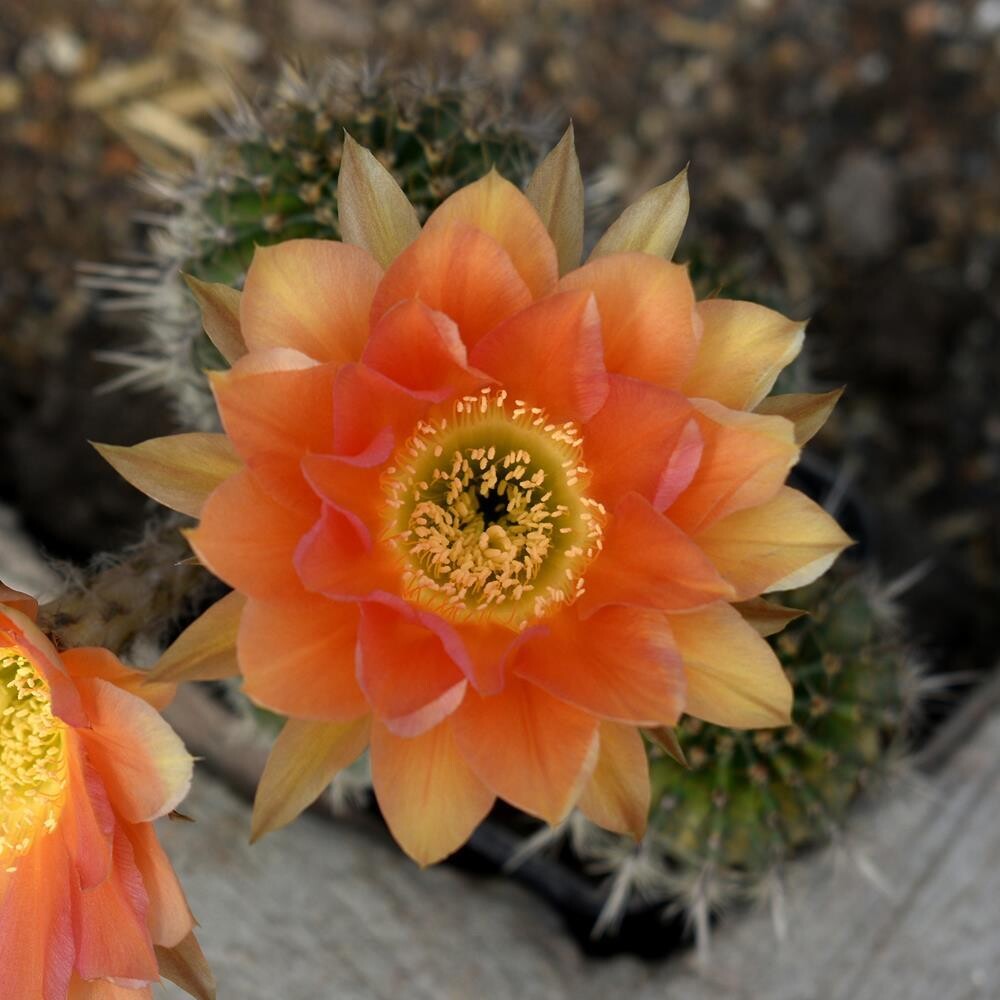
However, the true spectacle occurs during the flowering season. 'Idalia' produces large, multi-layered blossoms with a sophisticated color gradient. The petals are a deep, saturated orange at their base, transitioning into delicate, light orange tips that seem to catch the sunlight. At the heart of the flower sits a light orange core composed of a dense cluster of vibrant orange stamens, giving the bloom a "fire-lit" appearance from within. The contrast between the dark green body and the warm, glowing flowers makes it a centerpiece for any succulent arrangement.
5. Conservation Status
As a cultivated hybrid, Echinopsis 'Idalia' is not found in the wild and therefore does not have an official conservation status. However, many of its parent species in South America are protected under CITES Appendix II to prevent over-collection. By choosing nursery-grown hybrids like 'Idalia,' collectors help reduce the demand for wild-harvested plants, supporting global conservation efforts.
6. Care
- Light: Thrives in bright, indirect sunlight. In cooler climates, full morning sun is beneficial, but provide afternoon shade in extreme heat to prevent scorching.
- Watering: Use the "soak and dry" method. Water deeply, then allow the soil to dry out completely before watering again. Reduce watering significantly in the winter dormant months.
- Soil: Requires a fast-draining cactus mix. A blend of potting soil with 50% grit, perlite, or pumice is ideal.
- Temperature: Prefers temperatures between 50°F and 85°F. While it can tolerate brief dips toward freezing if kept bone-dry, it is best protected from hard frosts.
- Feeding: Apply a low-nitrogen cactus fertilizer during the spring and summer growing season to encourage those signature massive blooms.
7. Interesting Anecdote
The Echinopsis genus was once nicknamed the "Easter Lily Cactus" because of the massive, trumpet-like shape of its flowers. In the 19th century, these plants became a sensation among European collectors who were baffled by how such a small, prickly "hedgehog" of a plant could produce a flower nearly as large as itself. The 'Idalia,' with its goddess-inspired name, carries on this "miracle of the desert" reputation—waiting all year in a humble green form only to explode into a divine, orange radiance that lasts just long enough to leave a lasting impression on all who see it.