Echinopsis hybrid Barbara S
Product Details
Amber Glow: Echinopsis hybrid 'Barbara S'
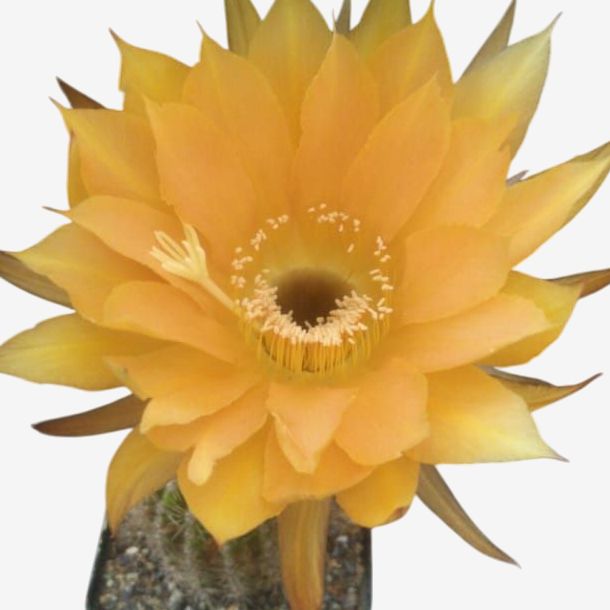
An exquisite German-bred hybrid featuring rare, multi-tiered golden-amber petals and a striking high-contrast dark throat.
- Origin & History of Name: The genus name Echinopsis stems from the Greek echinos (hedgehog) and opsis (appearance), characterizing its spiny, globular form. 'Barbara S' is a specific cultivar name assigned by the hybridizer—likely within the prolific German breeding circles of the late 20th century—to distinguish this unique color mutation from other Schick or Wessner-influenced lineages.
- Morphology: This specimen exhibits a classic globose to semi-columnar epidermis with well-defined costae (ribs) that allow for hydraulic expansion. It is prized for its multi-seriate flower structure; many layers of acute, pointed petals create a sunburst effect. The transition from golden-amber outer petals to a dark, recessed throat provides a dramatic visual depth, anchored by a ring of cream-colored, pollen-laden stamens.
- Habitat & Origin: 'Barbara S' is an anthropogenic cultivar, not found in nature. It is the result of complex cross-breeding between various South American Echinopsis and Lobivia species to achieve specific floral pigments. Our stock is produced through sustainable laboratory-grade offsets and grafting, ensuring no impact on wild succulent populations.
- Cultivation Profile:
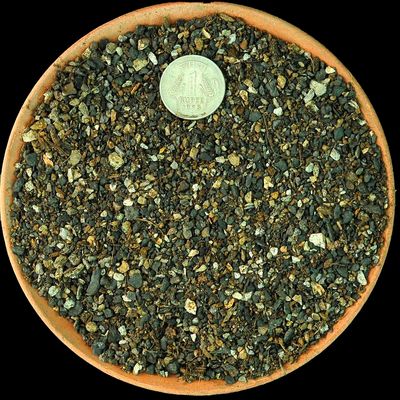
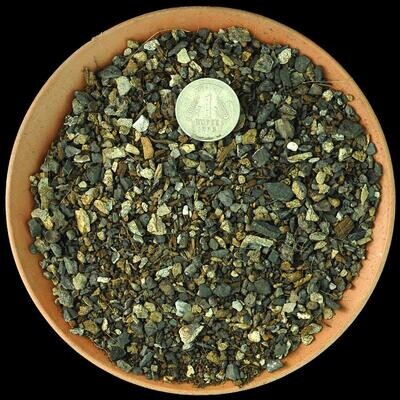
- Substrate: Utilize a mineral-based mix comprising 60% inorganic material (coarse sand, volcanic rock, or burnt clay) and 40% organic matter. This is critical in the Indian subcontinent to ensure rapid drainage during high-humidity periods.
- Light: Requires intense, filtered light. While it enjoys the Indian morning sun, it should be protected by a 50% shade net during the extreme heat of North Indian summers to prevent epidermal burning.
- Water/Dormancy: Practice a strict dry winter rest from late October to February. Resume watering in March to stimulate the angiosperm reproductive cycle (flowering). Avoid overhead watering during the monsoon to prevent fungal rot in the areoles.
- Scientific/Historical Anecdote: Many modern Echinopsis hybrids like 'Barbara S' owe their existence to the "Cactus Craze" in Europe, where breeders spent decades crossing night-blooming species (for size) with day-blooming Lobivias (for color). This specific lineage is a biological "clock," as the flowers typically open at dawn and are engineered to attract specific pollinators with their vivid, amber-toned spectral reflectance.
New

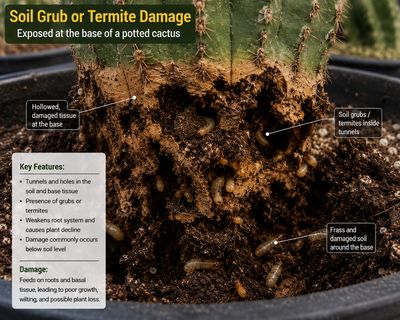
Monsoon Guardian Kit (5 in 1)
Monsoon Guardian Kit (5 in 1)
Complete 5-in-1 biological protection kit for cacti & succulents
SKU MNS024
₹850.00
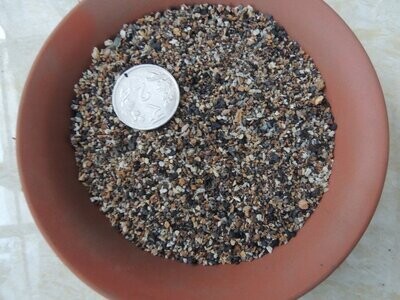
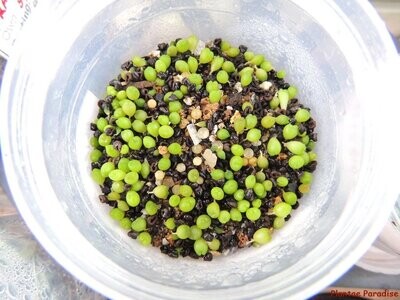
Cactus Seed Planting Mix
Cactus Seed Planting Mix
Sterile, Fine-Grain Media for Cactus & Succulent Seeds
SKU MNS005
₹74.85