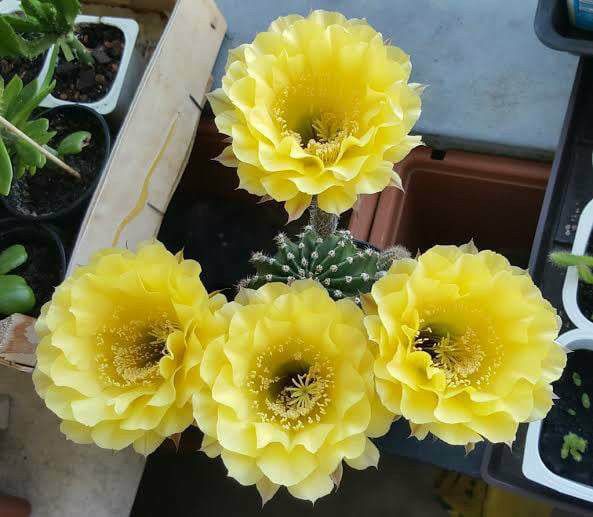
Add a touch of playful elegance to your collection with Echinopsis 'Coquette'. This celebrated Schick hybrid is famous for its delicate, ruffled appearance and refreshing citrus-colored blooms, making it a standout favorite among succulent connoisseurs.
1. Breeding History
The 'Coquette' is a product of the legendary breeding program of Bob Schick. For decades, Schick worked to transform the Echinopsis genus into a palette of vibrant colors and complex petal shapes. This specific plant is identified by several prestigious catalog numbers: ISI 98-6 (International Succulent Introductions), HBG 81758 (Huntington Botanical Gardens), and Schick’s original cross number, 1405-30. To preserve the unique "frilly" petal mutation, every plant we sell is vegetatively propagated, ensuring that your specimen will bloom exactly like the original mother plant.
2. Origin of Name
The name 'Coquette' is derived from the French word for a woman who is flirtatious or charmingly playful. This name was chosen by Bob Schick to describe the flower's character. Unlike the stark, rigid petals of many cacti, the petals of this hybrid are frilly and ruffled, dancing in the breeze like the hem of a dress. The linguistic roots trace back to the French coq (cock/rooster), implying a sense of "showing off" or being "jaunty." In the botanical world, it perfectly encapsulates the plant’s lighthearted and decorative aesthetic.
3. Origin of Plant
While 'Coquette' was developed in the controlled environment of a California breeding program, its genetic ancestors are native to the rugged terrains of the South American Andes, specifically Argentina and Bolivia. These wild species evolved to survive high-UV exposure and rocky soils, traits that the 'Coquette' retains, allowing it to be a hardy and resilient grower in cultivation. This hybrid was officially introduced to the public in 1998 via the Huntington Botanical Gardens’ ISI program.
4. Description
Echinopsis 'Coquette' is defined by its stunning lemon-yellow flowers. The blooms are medium-sized and feature multiple layers of petals that are distinctly frilly or fimbriate at the edges, giving the flower a soft, pom-pom-like texture. The center of the flower often glows with a slightly deeper yellow hue, accentuated by a crown of delicate stamens. The plant body is a tidy, globular dark green stem with about 12 to 14 ribs. It is adorned with short, light-colored spines that remain relatively unobtrusive, making the plant as easy to handle as it is beautiful to look at.
5. Conservation Status
As a man-made cultivar, Echinopsis 'Coquette' does not exist in the wild and is therefore not listed as an endangered species. However, its popularity in the horticultural trade serves as a vital tool for conservation by providing enthusiasts with high-quality, nursery-produced alternatives to wild-collected cacti. It is considered a stable and common hybrid in specialized collections.
6. Care
- Light: Enjoys bright, filtered light. To achieve the best "frilly" blooms, provide plenty of morning sun. Protect from intense, scorching midday sun in desert climates.
- Watering: Follow a consistent "dry out" schedule. Water thoroughly when the soil is dry to the touch, and keep the plant nearly dry during the winter to trigger the spring flowering cycle.
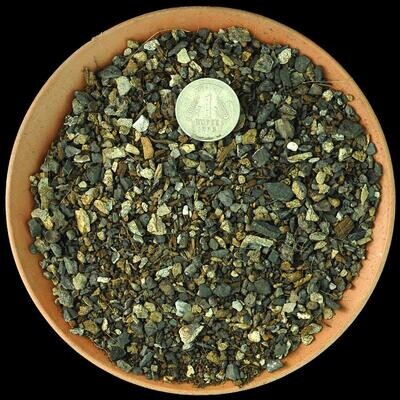
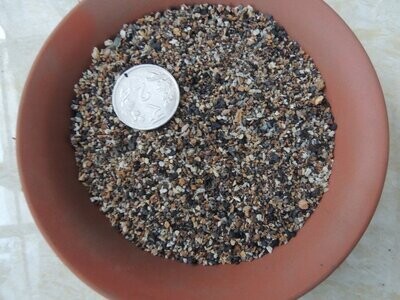
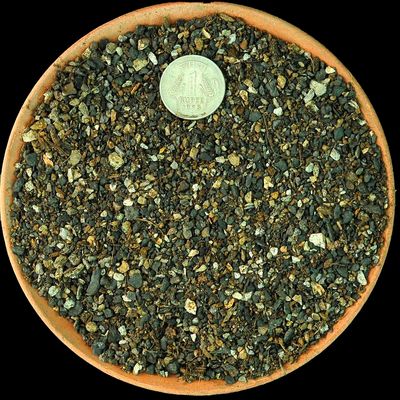
- Soil: Use a porous, mineral-heavy cactus mix. Adding extra pumice or perlite will ensure the roots stay aerated and dry.
- Temperature: Cold hardy to approximately 30°F (-1°C) for short periods if dry, but it thrives best when kept in a frost-free environment between 50°F and 85°F.
7. Interesting Anecdote
Bob Schick’s hybrids are often referred to as the "Technicolor Cacti." Before his work, many Echinopsis flowers were limited to white or light pink. When 'Coquette' was released in 1998, it caused a stir because of the "frilly" gene. Most cactus petals are smooth-edged; the ruffled texture of 'Coquette' was a breakthrough in breeding, proving that cacti could be just as "feminine" and delicate as a carnation or a peony. It remains one of the most sought-after yellow hybrids because of this unique, flirtatious texture.