The Echinopsis 'Dobby' is a hybrid that defies the standard expectation of a cactus bloom. With its dense, rose-like architecture and rich, warm tones, it is a sturdy yet sophisticated addition to any collection, perfect for those who appreciate "double" flowers with significant presence.
1. Breeding History
The focus of Echinopsis hybridizing has always been to push the limits of floral density and color depth. 'Dobby' represents a successful endeavor in creating a "full-bodied" flower. In our nursery, we maintain rigorous standards for our hybrids, ensuring each one is cataloged with a unique number and linked to our library of original mother plants. Because the thick, multi-layered petal structure is a specific genetic mutation that does not reliably transfer via seed, all our 'Dobby' plants are vegetatively propagated. This ensures that every plant we sell will produce the same dense, ornate bloom as the parent.
2. Origin of Name
The name 'Dobby' is often associated with the Old English and Scottish dialect for a "household spirit" or a helpful, hardworking character. In modern popular culture, it evokes a sense of loyalty and hidden strength. Linguistically, the name implies something compact, sturdy, and endearing. The choice of 'Dobby' for this hybrid likely refers to the plant’s robust nature and its "loyal" blooming habit—consistently producing high-quality, dense flowers that seem far more magical than the prickly exterior of the plant would suggest.
3. Origin of Plant
While 'Dobby' is a modern cultivated hybrid, its ancestors hail from the high-altitude, rocky terrains of Bolivia and Argentina. These wild species were first collected by 19th-century explorers and botanists who were fascinated by the genus's ability to survive extreme UV exposure and drought. Hybridizers have taken that rugged Andean "DNA" and refined it through generations of selective crossing to produce the large, sophisticated flowers seen in 'Dobby' today.
4. Description
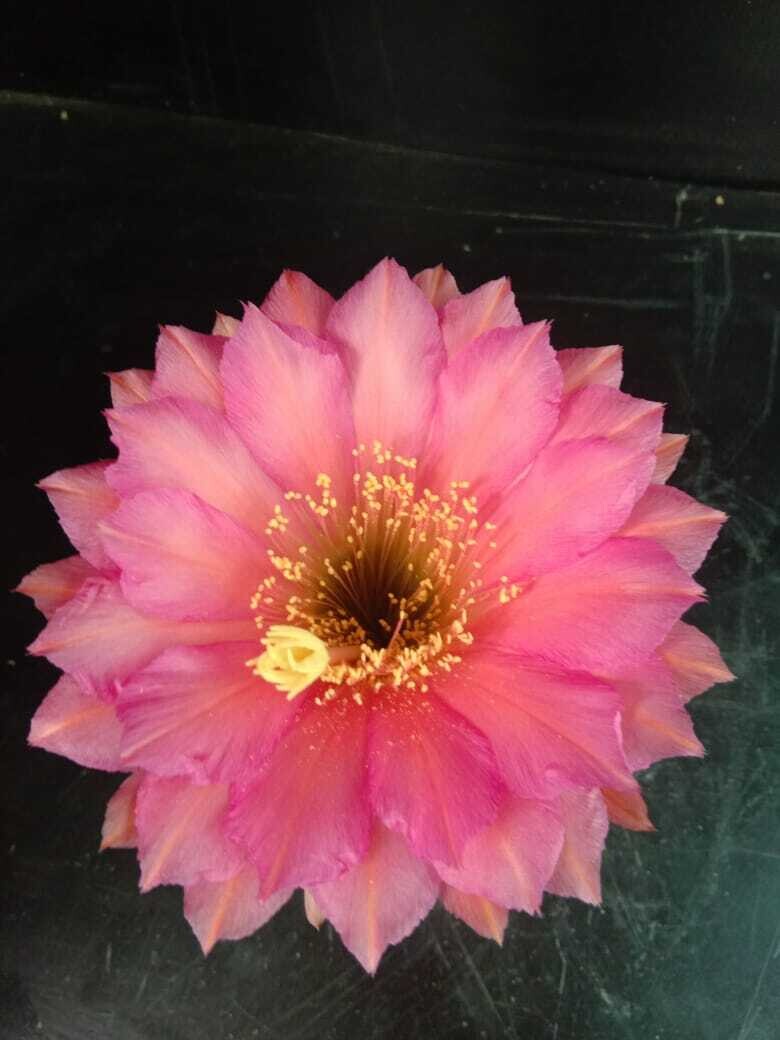
Based on the floral analysis (pictured), Echinopsis 'Dobby' is a master of texture and saturation:
- Petal Structure: This hybrid is characterized by an exceptionally thick layer of petals, arranged in multiple overlapping rows that give the bloom a "double" or "semi-double" appearance, similar to a dahlia or a camellia.
- Color Palette: The petals exhibit a rich deep magenta-pink at the edges, which fades into a warm, sunset orange-pink toward the midsection.
- The Core: The center features a dark, recessed throat that creates a dramatic sense of depth, surrounded by a ring of vibrant yellow-gold stamens that provide a brilliant contrast to the dark core.
- Plant Body: The cactus is a classic dark green, globular variety with sturdy ribs and short spines, allowing the heavy, multi-layered flowers to be the undisputed focal point.
5. Conservation Status
As a man-made cultivar, 'Dobby' is not found in the wild and is therefore not an endangered species. It is a stable and common hybrid within the succulent hobby. By focusing on nursery-propagated hybrids like 'Dobby,' collectors contribute to conservation efforts by reducing the illegal trade of wild-collected South American cacti, which are often protected under CITES regulations.
6. Care
- Light: Enjoys bright, indirect light or filtered sun. Strong light is necessary to ensure the plant has enough energy to produce its thick, heavy layers of petals.
- Watering: Use the "soak and dry" method. Be sure the soil is completely dry before watering again. During the winter, keep the plant in a cool, dry place to trigger the following season's blooms.
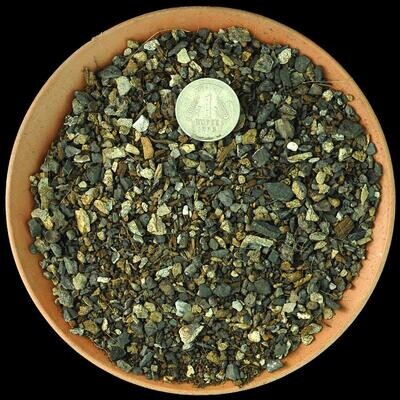
- Soil: Requires a porous, fast-draining cactus mix with a high mineral content (pumice, perlite, or grit).
- Temperature: Best grown between 50°F and 85°F. Protect from hard frost to prevent damage to the plant body.
7. Interesting Anecdote
Among Echinopsis collectors, thick-petaled varieties like 'Dobby' are often nicknamed "The Heavyweights." While many Echinopsis flowers have thin, almost translucent petals that last only a day, the "thick-petal" trait in 'Dobby' gives the flower more structural integrity. There is a common story among hobbyists that 'Dobby' was named by a breeder who noticed that the plant, though small and unassuming, "worked tirelessly" to produce blooms that were surprisingly large and complex for its size—much like the helpful spirits of folklore.